
In the ever-evolving world of HVAC systems, energy efficiency and operational flexibility are paramount. Chillers, the backbone of large-scale cooling, consume significant power in commercial and industrial settings. Integrating Variable Speed Drives (VSDs) with chillers has emerged as a game-changer, delivering substantial energy savings, enhanced performance, and environmental benefits.
What Are VSDs in Chillers?
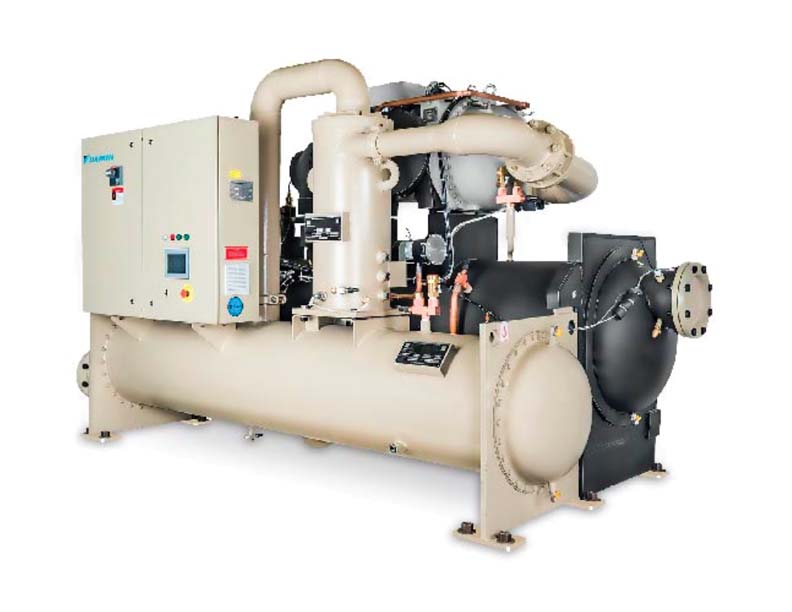
A Variable Speed Drive (VSD), also known as a Variable Frequency Drive (VFD), is an electronic device that controls the speed of a chiller’s compressor motor by adjusting the frequency and voltage of the power supply. Unlike traditional fixed-speed chillers, which run at full capacity regardless of demand, VSD-equipped chillers modulate compressor speed to match real-time cooling needs. This dynamic adjustment optimises energy use, reduces wear, and aligns with global sustainability goals.
Significant Energy Savings
The most compelling benefit of VSDs is their ability to slash energy consumption, often by 20-50% compared to fixed-speed chillers. Chillers typically operate at part-load conditions (e.g., 50-80% capacity) for most of their runtime, especially in offices, hotels, or factories with variable occupancy.
Fixed-speed compressors cycle on/off or use inefficient methods like inlet guide vanes, wasting energy. VSDs, however, follow the Affinity Laws – reducing speed by 20% cuts power by ~50% (Power µ Speed3). Real-World Data: A 500-ton chiller retrofitted with a VSD saved 30% energy (200,000 kWh/year) in a commercial building, as per ASHRAE studies. At `8/kWh, that’s `16 lakhs annually.
- Part-Load Efficiency: VSD chillers achieve Integrated Part Load Value (IPLV) ratings of 0.3-0.4 kW/ton, vs. 0.6-0.8 kW/ton for fixed-speed units, per AHRI standards.
- Impact: For a 1000-ton chiller running 12 hours/day, savings can reach 300,000-500,000 kWh/year, or `24-40 lakhs in India’s tariff context.
Enhanced System Longevity
VSDs reduce mechanical stress on chiller components by enabling soft starts and gradual speed ramps, unlike the abrupt on/off cycles of fixed-speed systems. This minimises wear on compressors, bearings, and motors, extending equipment life by 20-30%.
- Maintenance Savings: Fewer start-stop cycles cut maintenance costs by 10-15%, per Trane’s field data. For a `5 lakh annual maintenance budget, this saves `50,000-75,000.
- Example: Magnetic bearing VSD chillers (e.g., Carrier AquaEdge) report 40% lower repair frequency, with lifespans exceeding 25 years.
Improved Comfort and Precision
VSDs ensure precise temperature control by adjusting compressor speed to match cooling demand, maintaining setpoints within ±0.5°C (vs. ±2°C for fixed-speed). This is critical for applications like data centers, hospitals, or pharma plants requiring stable conditions. Case Study: A Bangalore IT campus using VSD chillers reported 99.9% uptime and zero temperature deviations, boosting tenant satisfaction.
- Benefit: Consistent comfort enhances occupant productivity and reduces complaints, vital for commercial leasing.
Reduced Peak Demand Charges
Commercial buildings face hefty peak demand charges (`200-500/kVA in India). VSD chillers lower peak power draw by ramping up gradually and operating efficiently at part-load, cutting demand by 15-25%. Example: A 750-ton chiller with VSD reduced peak demand from 600 kW to 450 kW, saving ` 3-5 lakhs/year on demand charges in Delhi.
- Impact: This frees up budget for other facility upgrades, like IoT integration.
Environmental Sustainability
With global pressure to reduce carbon footprints (e.g., India’s Kigali Amendment targeting HFC cuts by 2028), VSD chillers align with green building norms like ECBC 2024. They lower energy use, reducing CO₂ emissions by 100-300 tons/year for a 500-ton chiller (at 0.8 kg CO₂/kWh). Green Certifications: VSDs help buildings earn LEED/IGBC points, increasing property value by 5-10%.
- Low-GWP Synergy: Pairing VSDs with A2L refrigerants (e.g., R-32) amplifies eco-benefits, cutting emissions by 20% further.
Flexibility for Variable Loads
Chillers with VSDs adapt seamlessly to fluctuating loads, ideal for mixed-use buildings or seasonal climates. They handle low-load conditions (e.g., 20% capacity) without short-cycling, maintaining efficiency where fixed-speed units falter. Application: Hotels with daytime surges or factories with shift-based cooling save 25-40% energy during off-peak hours.
- Data: ISHRAE reports VSD chillers maintain CoP of 6-7 at 50% load, vs. 3-4 for fixed-speed.
Noise Reduction
VSDs enable quieter operation by running compressors at lower speeds during off-peak times, reducing noise by 5-10 dB. This is a boon for urban settings or noise-sensitive sites like hospitals.
- Example: A Mumbai hospital retrofitted with VSD chillers dropped noise from 80 dB to 70 dB, meeting local regulations and improving patient comfort.
Financial Incentives and ROI
Governments and utilities offer subsidies for energy-efficient HVAC upgrades. In India, schemes like HSIIDC’s 25% capex grant or BEE’s star-rating programmes reduce VSD retrofit costs by `5-10 lakhs for a 500-ton chiller.
- Payback Period: Retrofit costs (`10-20 lakhs) yield ROI in 18-24 months, as per an OEM’s field data. New VSD chillers (`50-100 lakhs) pay back in 3-4 years.
- Long-Term Gains: Annual savings of `20-50 lakhs continue for 15+ years.
- Claim Subsidies: Apply for HSIIDC or MNRE grants via local DISCOMs.

Driving operational excellence in the HVAC sector, Aman Taluja is a pivotal professional at Brightflow Engineers Pvt. Ltd. Kundli, Haryana-based leader in manufacturing Air Handling Units, Evaporative Cooling Units, Dry Scrubbers, and Fan Coil Units. His impressive track record spans successful installations for prestigious clients such as NTPC Dadri, Deloitte Gurugram, Le Meridien Hyderabad, Marriott Amritsar, and GAIL, Dibiyapur. His profound expertise in crafting superior air management solutions underscores a steadfast commitment to elevating indoor air quality and optimising operational efficiency.