
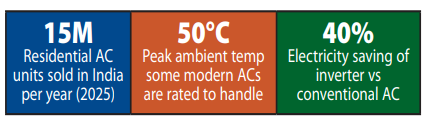
India is getting hotter. The summer of 2024 broke heat records across the North and Central plains, with Delhi recording temperatures above 50°C for the first time. In 2025, the trend continued. By 2026, the air conditioner has ceased to be a luxury appliance in Indian homes – it has become a survival tool for a significant and growing segment of the population. The Indian AC market sold over 10 million units in 2023 and is projected to add between 130 and 150 million new room air conditioners between 2025 and 2035. That is an extraordinary number, and it raises an equally extraordinary question: are Indian consumers buying the right air conditioners?
The answer, for many, is no. Choices are still too often driven by upfront price, brand familiarity, or well-meaning but outdated advice. Buyers over-pay in electricity bills for years because they selected the wrong capacity or the wrong star rating. Technicians install units improperly, undermining performance. Filters go uncleaned for months. This article exists to change that – to put the right information in the hands of every Indian homeowner who is considering an air conditioner, owns one, or simply wants to understand what they are paying for when the summer electricity bill arrives.
The Landscape: What Types of Air Conditioners Are Available?
Before buying any air conditioner, you must understand what is actually available in the market and which type suits your home. The Indian residential market offers five primary categories, each designed for different living situations and budgets.
Split Air Conditioners
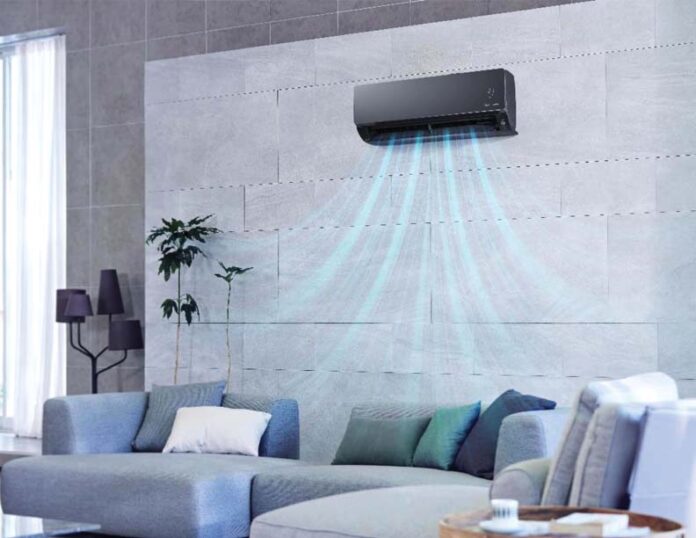
The split AC is the dominant choice in Indian homes today, and with good reason. It consists of two units – an indoor unit that mounts on the wall and an outdoor unit (the compressor) that sits outside. Because the noisy compressor is placed outdoors, split ACs operate much more quietly than alternatives. They distribute cool air evenly through horizontal and vertical swing louvers, and modern models are available with a vast range of smart features. For bedrooms, living rooms, and dining areas, the split AC is almost always the correct choice.
Window Air Conditioners
Window ACs house all components in a single unit that sits in a dedicated wall or window opening. They are cheaper to purchase and easier to service, since everything is accessible in one box. They remain the go-to option for rental apartments, budget housing, and situations where wall mounting is not possible. Their primary disadvantage is noise – the compressor is inside the room – and reduced energy efficiency compared to modern inverter split systems.
Portable Air Conditioners
Portable ACs require no installation and can be moved from room to room. They are ideal for tenants who cannot modify walls, or for supplementary cooling in spaces used occasionally. Their cooling efficiency is lower than fixed systems, and they require a duct to vent heat outside – typically through a window or a small wall opening. For primary cooling in a regularly occupied room, a split or window AC will almost always outperform and outlast a portable unit.
Cassette and Ceiling Air Conditioners
Cassette ACs are recessed into the ceiling and distribute air in four directions simultaneously, making them ideal for larger rooms, open-plan living areas, and premium residences. They offer a far more discreet aesthetic than wall-mounted units and provide the most even air distribution of any residential option. Installation is more involved and typically requires a false ceiling.
Multi-Split and VRF Mini Systems
For larger homes with multiple rooms, multi-split systems allow a single outdoor unit to serve two, three, or four indoor units. This avoids the clutter of multiple outdoor compressors on the building facade and can reduce total installation and running costs. Variable Refrigerant Flow (VRF) systems, traditionally a commercial technology, are increasingly being specified for premium bungalows and large apartments in India.
Inverter Technology: The Single Most Important Feature
If there is one concept that every air conditioner buyer in 2026 must understand, it is inverter technology. It is not a marketing term. It is a fundamental change in how the compressor – the heart of the air conditioning system – operates, and it has dramatic consequences for your electricity bill.
A conventional (non-inverter) air conditioner works in a simple on-off cycle. The compressor runs at full power until the set temperature is reached, then switches off completely. When the room warms up again, the compressor restarts. This cycle repeats continuously. Each restart draws a large surge of electrical current, wasting energy and stressing the compressor mechanism. The compressor either runs at 100% or 0% – there is no middle ground.
An inverter air conditioner replaces this on-off cycle with a continuously variable compressor. Using sophisticated electronics, the compressor adjusts its rotational speed in real time to match exactly the cooling required at that moment. When the room is hot, it runs fast. As the set temperature is approached, it slows down – but never switches off. It maintains the set temperature with tiny, precise adjustments rather than repeated full-power bursts. The result is 40 to 50% lower electricity consumption compared to a conventional model of equivalent capacity, significantly more stable temperatures, much quieter operation, and a longer compressor lifespan because it is never subjected to the mechanical stress of repeated cold starts.
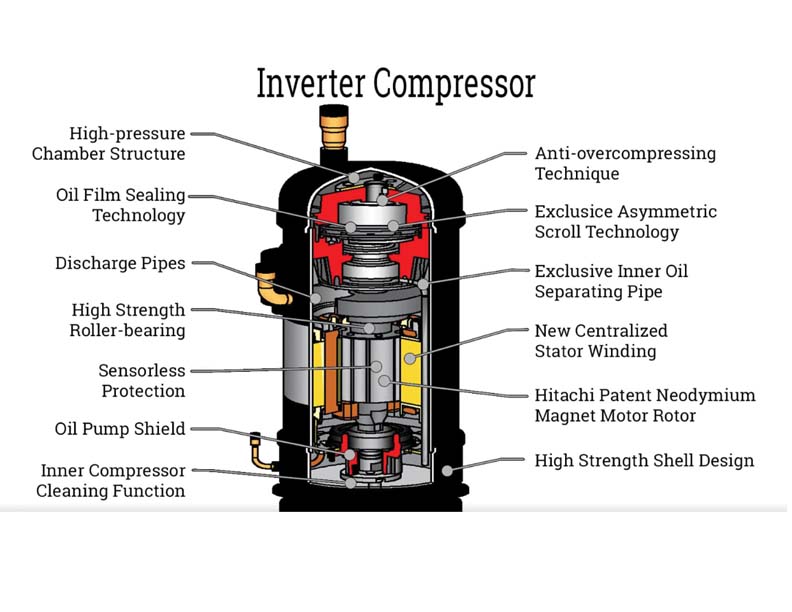
“Inverter ACs are worth buying because they automatically adjust the compressor speed to maintain the desired temperature – reducing energy consumption, improving cooling consistency, and lowering noise levels…”
— Analytics Insight Consumer HVAC Review, 2026
In 2026, there is virtually no good reason for a new residential air conditioner purchase in India to be a non-inverter unit. The price premium for inverter technology has narrowed substantially, and the energy savings typically recover the additional investment within two to three years of regular use. Beyond that payback period, every year of operation represents net savings. For an appliance expected to last 10 to 15 years, the economics are overwhelmingly in favour of inverter.
BEE Star Ratings and ISEER: How to Read the Label
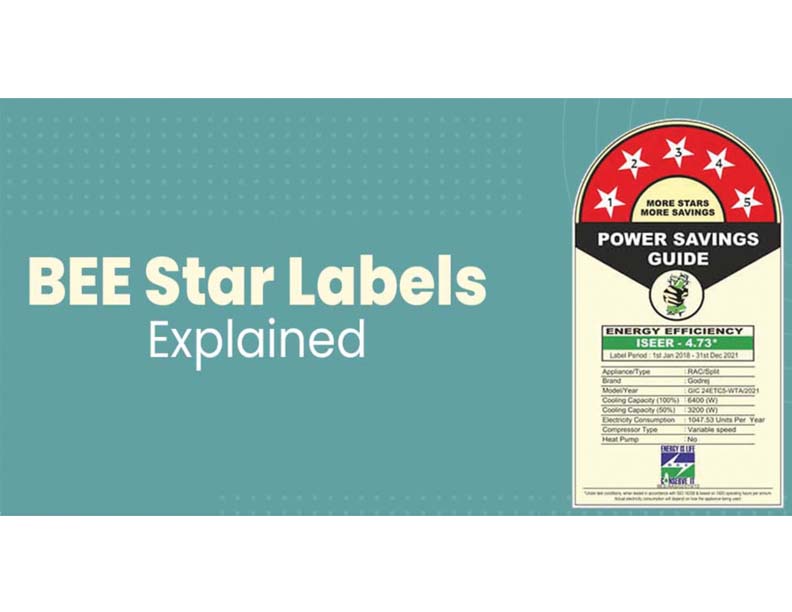
Every air conditioner sold in India carries a BEE (Bureau of Energy Efficiency) star label, and from 1 January 2026, the efficiency thresholds for these labels have been significantly raised. Understanding what this label means – and how to use it – is essential to making a smart purchase.
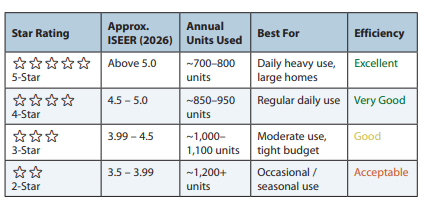
The label rates efficiency using ISEER: the Indian Seasonal Energy Efficiency Ratio. ISEER measures how many units of cooling (in watts) the air conditioner delivers for every watt of electricity it consumes, averaged across Indian seasonal temperature conditions. A higher ISEER means more cooling for less electricity. The BEE label assigns one to five stars based on the unit’s ISEER, with five stars representing the most efficient products available.
Buyer’s Rule of Thumb
If you use your air conditioner for more than 6 hours per day for 5 or more months a year, a 5-star inverter model will almost certainly pay for its premium over a 3-star model within 2–3 years of electricity savings. The higher the usage, the faster the payback…
The critical 2026 update: the BEE raised all efficiency thresholds on 1 January 2026. A product that would have been rated 5-star in 2025 is now rated 4-star under the new norms – not because it became less efficient, but because the benchmark moved higher. A 2026 3-star model is genuinely more efficient than a 2024 3-star model. The most efficient inverter ACs on the Indian market now carry ISEER ratings above 6.0, with the current top-rated model from Daikin reaching 6.3 ISEER.
Capacity: Getting the Tonnage Right
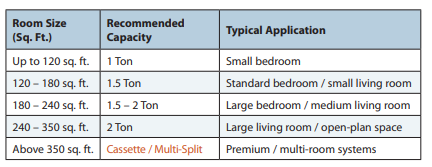
Air conditioner capacity is measured in ‘tons of refrigeration’ – a legacy unit that has nothing to do with weight. One ton of cooling equals approximately 3,500 watts (3.5 kW) of heat removal. For Indian residential applications, the most common sizes are 1 ton, 1.5 ton, and 2 ton.
The correct capacity depends on the room’s floor area, its heat load (number of occupants, electronic equipment, direct sunlight exposure), ceiling height, and the local climate zone. A unit that is too small will run continuously at full capacity, unable to achieve the set temperature on hot days. A unit that is too large will short-cycle – reaching the set temperature quickly, then switching off, leaving humidity unchecked and delivering uneven comfort.
These are starting points. In North Indian cities – Delhi, Lucknow, Jodhpur – where summer peaks approach 45–50°C and rooms are exposed to intense direct sun, you may need to upsize. In coastal cities with milder summer peaks but high humidity, correct humidity management is as important as cooling capacity. Modern convertible inverter ACs, which offer 4-in-1 to 7-in-1 capacity modes, allow you to adjust the effective tonnage based on actual conditions – an elegant solution to India’s climate variability.
Smart Features Worth Paying For in 2026
The air conditioner market in 2026 is filled with features, some genuinely useful and some more marketing than substance. Here is an honest assessment of what is actually worth your money.
Features Worth Prioritising
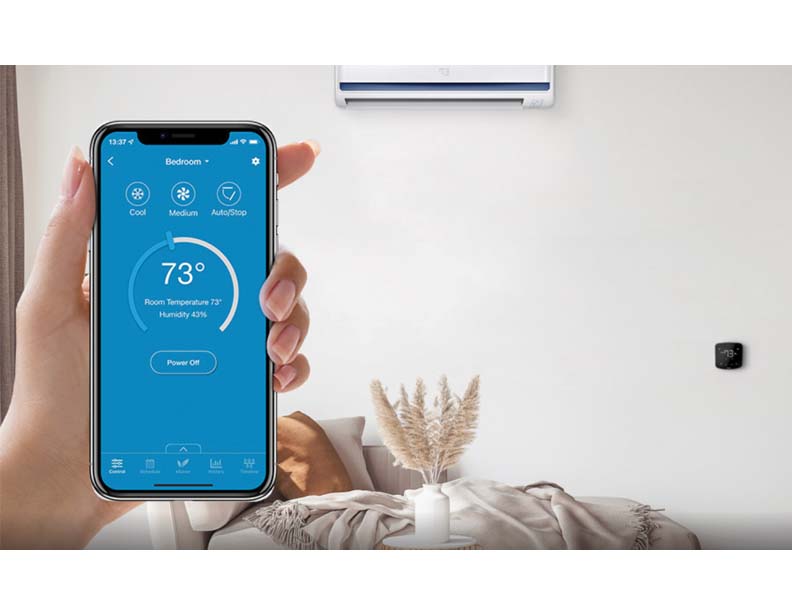
- Wi-Fi connectivity and app control – Genuinely one of the most practically valuable features available. Being able to turn on your AC 20 minutes before you arrive home, monitor energy usage, and schedule operation from a smartphone adds real daily value. Now available across most price points.
- Auto-clean and self-diagnosis – Auto-clean prevents mould buildup on the evaporator coil by running a drying cycle after the AC switches off. In India’s humid climate, this is a significant health and efficiency benefit. Self-diagnosis alerts you to filter choking or refrigerant issues before they become serious.
- Convertible / multi-mode operation (4-in-1 to 7-in-1) – Allows adjustment of effective cooling capacity based on actual room conditions. More than a gimmick – it enables a correctly sized unit to operate efficiently across a wide range of conditions throughout the year.
- PM 2.5 and antibacterial filters – Particularly relevant in Indian cities with high ambient pollution. A built-in PM 2.5 filter traps fine particulate matter, improving indoor air quality meaningfully. In Delhi, Mumbai, and other high-pollution cities, this feature has genuine health value.
Features to Treat with Scepticism
- AI ‘learning’ mode – Rarely delivers significant measurable benefit in independent testing.
- Decorative lighting features – Add cost and complexity without functional benefit.
- Voice-assistant integration – Convenient but adds complexity and potential failure points compared to a simple app.
Maintenance: The Most Neglected Aspect of AC Ownership
An air conditioner that is not maintained is an air conditioner that wastes electricity, delivers poor cooling, and fails before its time. In India, where dusty environments, construction activity, and high ambient pollution loads place unusual demands on HVAC systems, maintenance is not optional.
Filter Cleaning
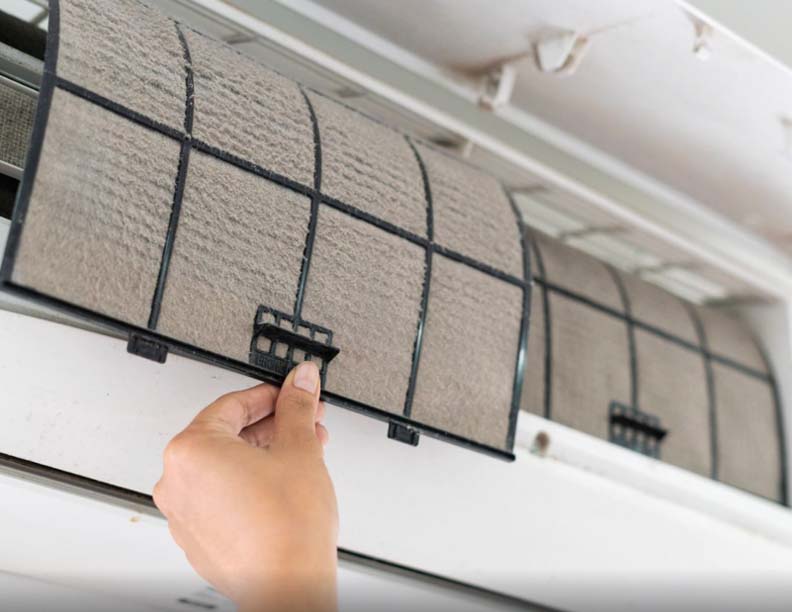
Filter cleaning is the single most impactful maintenance task an owner can perform. Dirty filters block airflow, forcing the unit to work harder for less cooling output – studies suggest dirty filters reduce efficiency by up to 20%. During peak summer usage, clean your filters every two to three weeks. Filters are typically accessible from the front panel of the indoor unit and are washable with water. Allow to dry fully before reinserting.
Quick Maintenance Checklist
- Clean indoor unit filters every 2–3 weeks during peak season
- Annual professional service including coil cleaning and refrigerant check
- Check drain pan and drain line annually for blockages
- Keep outdoor unit clear of vegetation and debris
- Set thermostat to 24–26°C for optimal energy efficiency
- Use sleep mode overnight — reduces energy use by 15–20%
Annual Professional Service
Annual professional service should include: checking and topping up refrigerant if needed, cleaning the evaporator and condenser coils, inspecting electrical connections, verifying drain line clearance (a blocked drain causes water leakage and can damage walls), and checking the fan motor and bearings. A well-maintained air conditioner will deliver consistent performance for 10 to 15 years. A neglected one often requires expensive compressor replacement within 5 to 7 years.
Refrigerant Leaks
Refrigerant leaks are more common than most owners realise. If your AC seems to have lost cooling power despite being clean and serviced, have a technician check the refrigerant charge. Most modern residential ACs use R-32 refrigerant, a lower Global Warming Potential alternative to the older R-22 and R-410A refrigerants it is gradually replacing.
The Right Temperature and Usage Habits
The BEE’s recommended setting for residential air conditioners is 24°C, a temperature at which most Indians report comfortable conditions and at which the AC operates with optimal efficiency. Every degree below 24°C increases energy consumption by approximately 6%. Running an AC at 18°C in a room that would be perfectly comfortable at 24°C wastes roughly 36% more electricity than necessary – and delivers no meaningful additional comfort for most occupants.
Sleep mode, available on virtually all modern ACs, gradually raises the set temperature by 1–2°C over the sleeping hours, reflecting the body’s reduced heat generation during sleep. This feature reduces overnight electricity consumption by 15 to 20% compared to running at a fixed low temperature through the night, with no perceptible loss of sleep comfort for most users.
Natural ventilation should be used whenever outdoor conditions permit. An air conditioner should not be the default response to every warm moment – it should be used intelligently, in conjunction with ceiling fans (which allow the AC set point to be raised by 2–3°C without discomfort), effective window management, and building insulation where possible.
The Bottom Line: Buying Smart in 2026
India’s air conditioner market is maturing rapidly, and the quality of products available to the residential buyer in 2026 is genuinely excellent by any historical standard. The combination of inverter compressors, high ISEER ratings, smart connectivity, and improved filtration means that a well-chosen air conditioner purchased today will deliver more comfort, lower running costs, and longer service life than anything available a decade ago.
The mistakes to avoid are few but consequential: buying a non-inverter unit to save on upfront cost; choosing the wrong capacity for the room; ignoring the BEE star rating; and neglecting annual maintenance. Get these four decisions right, and your air conditioner will serve your home reliably and economically for well over a decade.
As India’s cooling demand continues its extraordinary growth trajectory – towards 30 million units per year by 2030 – the quality of individual purchasing decisions has a collective significance that extends beyond comfort. A nation of well-chosen, properly maintained 5-star inverter ACs consumes dramatically less electricity than one of under-specified, poorly maintained units. That difference matters for India’s grid, India’s climate commitments, and every electricity bill in every Indian home.

Driving operational excellence in the HVAC sector, Aman Taluja is a pivotal professional at Brightflow Engineers Pvt. Ltd. Kundli, Haryana-based leader in manufacturing Air Handling Units, Evaporative Cooling Units, Dry Scrubbers, and Fan Coil Units. Aman’s impressive track record spans successful installations for prestigious clients such as NTPC Dadri, Deloitte Gurugram, Le Meridien Hyderabad, Marriott Amritsar, and GAIL, Dibiyapur. His profound expertise in crafting superior air management solutions underscores a steadfast commitment to elevating indoor air quality and optimising operational efficiency.