
Before we delve into the Air Handling Unit (AHU) zoning considerations for pharmaceutical and bio-manufacturing plants, let us first understand the difference between HVAC zoning and AHU zoning.
- HVAC zone – An HVAC zone is usually considered to be an area with one type of cleanliness classification.
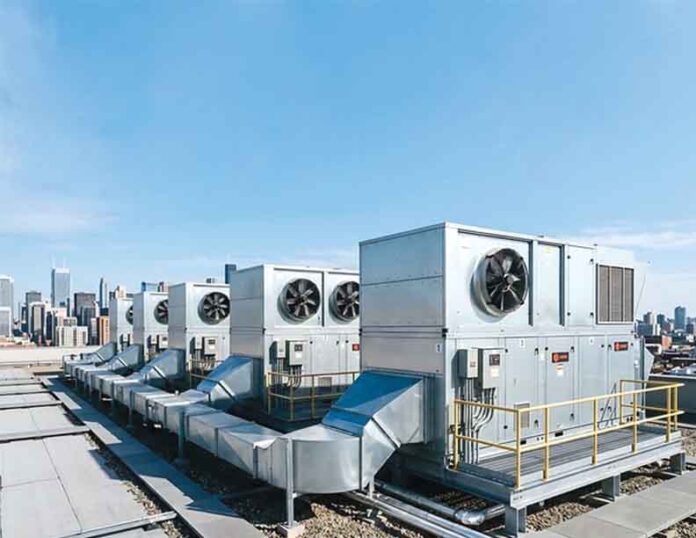
- AHU zone – An AHU zone is an area to which air is supplied by a single AHU.
Assigning number of AHU zones in a plant
Increasing the number of AHUs in a pharmaceutical production facility has various advantages and disadvantages.
Advantages
- Improvement in the reliability of the total area: it would be unusual for all AHU units to fail. If one unit fails, other zones may continue to operate.
- Air balancing becomes easier and reduces the need for automated balance or pressure controls.
- Total energy consumption might be lowered, as each zone uses only what it needs and may be turned down to using much less energy if idle, especially in cases such as prolonged inactivity during upgrades, renovations, or when an area is temporarily out of use. In such scenarios, strict isolation measures are enforced to seal off the inactive zone from adjacent active areas, ensuring no cross-contamination or unintended connectivity.
- The cross section of the main distribution ducts is reduced, and therefore, easier to route to smaller ceiling heights.
- Modifications to parts of a facility become easier. Upgrades to a small AHU serving a single zone should be easier than changing a large single AHU, which serves many zones.
- Easier separation of areas within a multi-product concurrent manufacturing plant becomes possible.
Disadvantages
- If once-through air is desired for all zones, there is less justification for multiple zonings of AHUs to reduce risk of cross-contamination between products.
- If an automated air balancing control system is employed, most of the advantages are offset by the ability of the control system to manage system changes.
- The potential reduction of the total energy consumption in pharmaceutical facilities might not be possible in cases where there is a risk of microbial growth in the affected AHU zones.
- Increased initial cost.
- Increased maintenance.
Factors for AHU zoning
Some of the factors required to be considered while assigning AHU zones in a pharmaceutical facility are listed below.
Process constraints
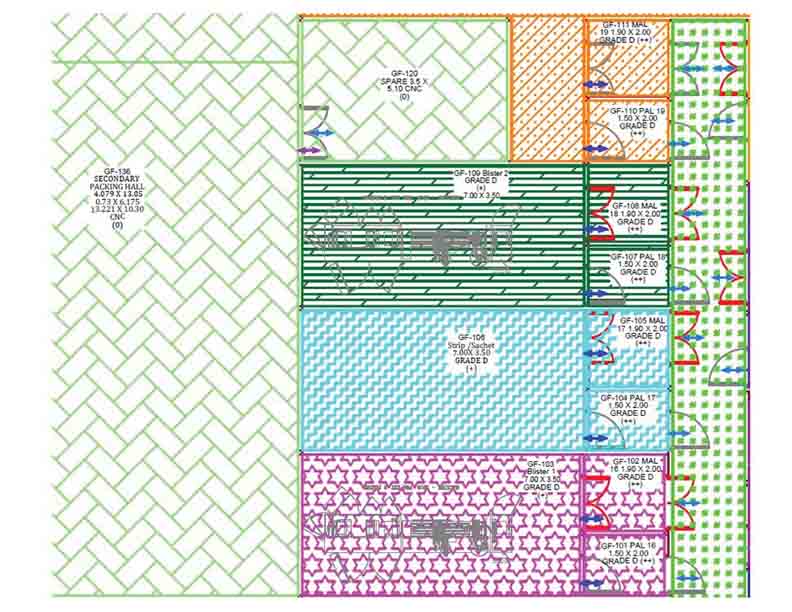
To avoid cross-contamination in a multiproduct concurrent facility, different products are required to be segregated by assigning separate AHU zones for the production rooms. Even within a single product, the upstream production processes are required to be segregated from the downstream production processes, including non-production activities such as warehousing, quality control, packaging, etc. by assigning separate AHU zones for both production as well as non-production rooms.
Room classification
Air handlers assigned to controlled areas should not service non-controlled areas; and within controlled areas – classified rooms should be segregated from non-classified rooms.
The same AHU can be used to supply air to a group of rooms with different classifications if there are no process constraints, especially if they are a complete suite including a single process.
Temperature and humidity requirements
For energy efficiency, rooms with similar internal design temperatures and humidity levels may be grouped under a single AHU, provided they serve the same product or there is no risk of product cross-contamination. However, if certain rooms exhibit significantly different sensible or latent heat loads, assigning them to separate AHUs may be considered – though this is not a strict requirement.
Containment requirements
For biocontainment, areas with different biosafety levels should be assigned separate AHUs. Rooms having live microorganisms should be segregated from those having deactivated microorganisms using different air handler zones and same should be the case for pathogenic & non-pathogenic microorganisms.
For chemical containment, high potency compounds are divided into different categories based on the Occupational Exposure Limits (OELs) and separate AHU zones for each category are assigned to rooms using these compounds.
For radioactive containment, separate air-handling units are provided.
Safety requirements for use of explosive and flammable substances
Separate AHU zones are assigned to different ‘ATmosphères EXplosibles’ (ATEX) classification areas (ATEX translates to explosive atmospheres) and these AHUs are always ‘once through’ and the area is at a significantly lower pressure than the adjacent areas (with a cascading airlock, the pressure gradient being adjacent area > airlock > ATEX room).
Decontamination by fumigation requirements
Rooms that require occasional or periodic fumigation are served by AHUs that are not shared with rooms that do not require the same decontamination process. The AHUs are designed to be recirculatory in normal mode and ‘once through’ in the ‘exhaustion’ phase to remove the fumigant rapidly and completely at the end of the fumigation period.
Maintenance and reliability requirements
In pharmaceutical facilities, AHUs serving process areas are designed to operate continuously and are not switched off under normal conditions. Maintenance of these AHUs is carried out routinely based on historical service trends, except in cases of breakdowns that necessitate unscheduled interventions.
Occupancy period requirements
Air handlers servicing production and critical areas which require controlling room parameters 24×7 for functional or energy savings requirements can be kept running whereas AHUs for other areas can be shut down when unoccupied.
Air handling system requirements
Recirculating HVAC systems need more AHU zones than once-through HVAC systems since the risk of cross contamination is more for the former.
Conclusion
The main objective of AHU zoning in pharmaceutical and biotechnological facilities is to minimize cross-contamination to levels below acceptable limits. As the use of multiple air handling units in such plants presents both benefits and drawbacks, several factors outlined in this article should be carefully considered when designing AHU zoning, ensuring full compliance with Good Manufacturing Practices (GMPs).

Rushikesh Jog possesses a bachelor’s degree in mechanical engineering and a post-graduate diploma in HVAC. He is currently working as a Jr. HVAC Design Engineer and Business Development Assistant at Proficient, a pharmaceutical consultancy firm. Proficient provides various services such as pharmaceutical facility design, validation, Good Manufacturing Practices (GMPs) compliance, etc.