
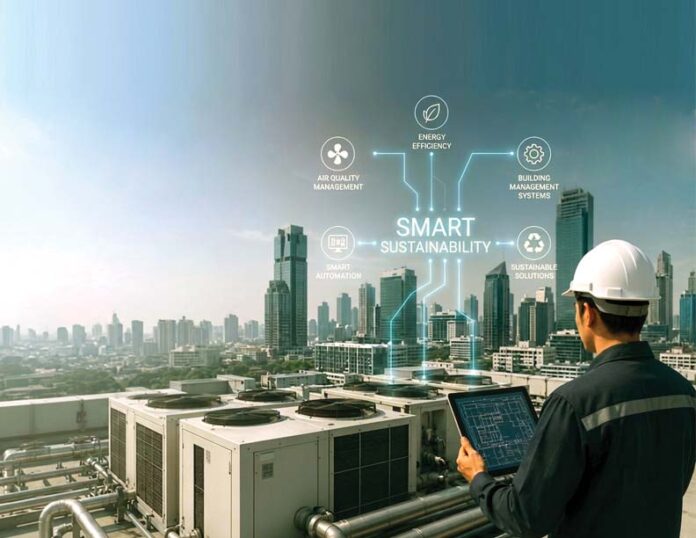
The HVAC-R industry is currently witnessing a global wave of awareness aimed at making the sector sustainable. Amidst the tide of change, the word ‘SMART’ has become linked with ‘sustainability’. So, globally the HVAC-R (Heating, Ventilation, Air Conditioning, and Refrigeration) industry is now striding through the road of smart sustainability.
In the HVAC-R industry, ‘smart sustainability’ refers to the integration of digital automation, IoT, and AI with eco-friendly hardware to minimize energy consumption, reduce carbon footprints, and proactively optimize system performance.
How does Smart Sustainability help the HVAC-R Industry?
There are multiple benefits of embracing ‘smart sustainability’ in the HVAC-R industry. Basically, it is the introduction of interconnectivity of all operations using intelligent equipment and connecting them to ease integration of all processes through real-time data analysis and proactive decision making.
Whether it is cold (supply) chain, healthcare or any other temperature-sensitive sector, smart sustainability has a big role to play to ensure seamless, economic and environment-friendly operations. A few of the very prominent benefits of adopting smart sustainable technologies include:
- Predictive Maintenance: Successful avoidance of downtime is a big achievement in any industry. Thereby, our HVAC-R industry too is not an exception. Using IoT sensors and AI, nowadays, the entire HVAC-R circuit can be continuously monitored (Realtime Monitoring), thus, it is possible to forecast a chance of failure before it actually occurs. This allows just-in-time maintenance, and saves downtime as well as reduces operational expenses.Additionally, predictive maintenance helps in optimising energy efficiency, extending equipment lifespan, streamlining next planning and so on.
- Dynamic Load Management: At present Dynamic Load Management (DLM) is a common practice in the HVAC-R industry. Depending on live occupancy (load), environmental conditions and local weather patterns, DLM helps in adjusting cooling, heating or ventilation.Beside controlling spikes in energy demand that increases electricity charge, DLM also helps in reducing wear & tear of the rotating parts that ensures long-life of the mechanical components of the HVAC-R systems.
- Demand Response Integration: Since majority of the HVAC-R systems receive power supply from the respective local powergrid, sudden fluctuations in demand affect the grid stability, interconnectivity ensures systems to participate in utility Demand Response (DR) programmes. The system automatically lowers non-critical HVAC-R loads during periods of peak grid demand.
- Contribution of Energy Analytics & Digital Twins: Advent of the ‘digital twins’ technology has enormously benefited the HVAC-R sector. It has been observed that using energy analytics & digital twins, 20 to 40% of reduction in energy consumption is possible in big HVAC-R plants. Everything can be optimised remotely in real-time using digital twins.According to World Economic Forum (WEF), “A digital twin is a virtual replica of a physical object such as a building, including all of its equipment and operating systems. Smart meters and equipment sensors transmit data wirelessly to the digital twin via the cloud, so accurate, fine-grained data can be captured and tracked in real time on a single platform.”One of the WEF reports informs, “Global home furnishings company IKEA is already using this technology. The big box furniture store has digitalized 37 of its retail stores in East Asia in only nine months to improve energy efficiency and reduce greenhouse gas emissions. It was able to connect 7,000 different data points from various building and energy management, and Internet of Things (loT) systems to a single digital twin.
Ikea’s digital twin represented nearly 42 million square feet of space and 6,000 pieces of Heating Ventilation and Air Conditioning (HVAC) equipment from 10 different manufacturers. Energy consumption by the HVAC central supply system was reduced by
30% with annual energy cost savings estimated to be in the millions.” - Lifecycle and GWP Management: Smart sustainability techniques in the HVAC-R industry drive lifecycle and Global Warming Potential
(GWP) management by integrating IoT sensors, AI diagnostics, and digital twin simulations. These tools enable predictive maintenance, prevent refrigerant leaks, optimize system staging, and maximize energy efficiency, effectively reducing the overall carbon footprint.
Glimpses of a Recent Case Report
- What, Where and Why: IPD, in partnership with ABB Australia and Equilibrium Climatech Joint Venture (ECJV), has supported the delivery of an advanced HVAC solution for the New Sydney Fish Market, one of Sydney’s most significant public infrastructure projects.Located at Blackwattle Bay and led by Infrastructure NSW, the redevelopment will deliver world-class seafood retail and dining experiences, community spaces and improved public access to the harbour.To support the project’s environmental and operational objectives, ECJV partnered with IPD to supply and commission more than 130 ABB ACH580-01 Variable Speed Drives (VSDs) across the facility’s HVAC systems. The drives form part of a broader sustainability strategy designed to improve energy efficiency, support emissions reduction goals and enhance long-term operational resilience.
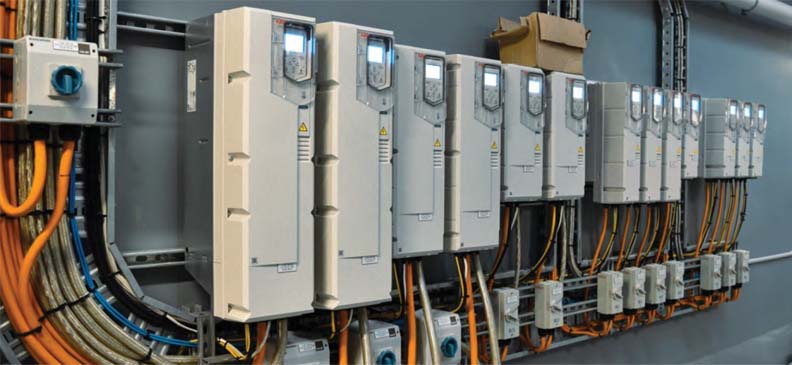
Image Courtesy: IPD
- How has it been done? The HVAC-R refrigeration systems were developed to support ambitious sustainability targets established for the project, including the delivery of a central cooling plant designed to reduce carbon emissions. According to Equilibrium, the HVAC solution was designed to achieve a 25% reduction in CO₂ emissions and reduce energy consumption by between 5 to 30% compared to conventional systems.The ABB ACH580 drives are deployed throughout the facility to control chilled water pumps, condenser water pumps, cooling tower operations, supply fans, return fans and exhaust fans. Each drive integrates with the building’s central Building Management System (BMS), enabling real-time monitoring, predictive maintenance and optimised operational control.The project team selected ABB’s ACH580 drives for their energy efficiency, seamless BMS integration, durability and HVAC-specific functionality. Features including IP55 protection and embedded EMC filters help reduce installation complexity while supporting reliable performance in demanding plant room environments.
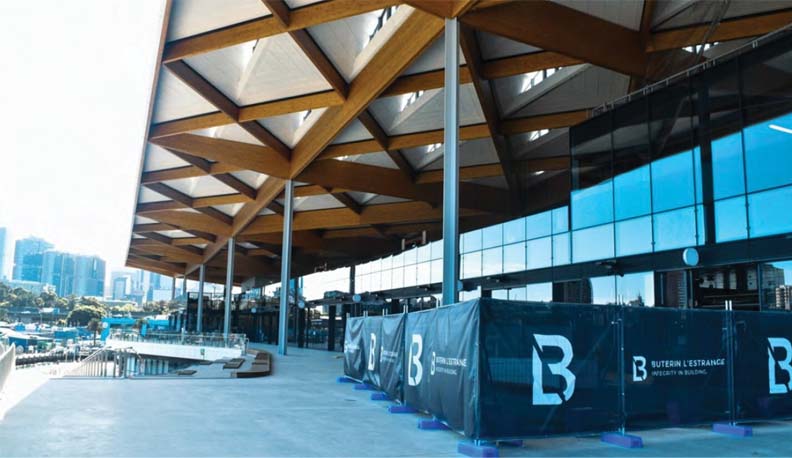
Image Courtesy: IPD
- Expectation: The value-engineered secondary design adopted for the New Sydney Fish Market is expected to deliver a 5 to 30% reduction in energy consumption compared with the original CO₂ reference design. While both design options incorporated variable speed drives, the efficiency gains are primarily attributed to the revised system configuration.
Beyond energy savings, the HVAC solution is expected to contribute to lower operating costs, improved equipment longevity and enhanced operational reliability through proactive monitoring and control.
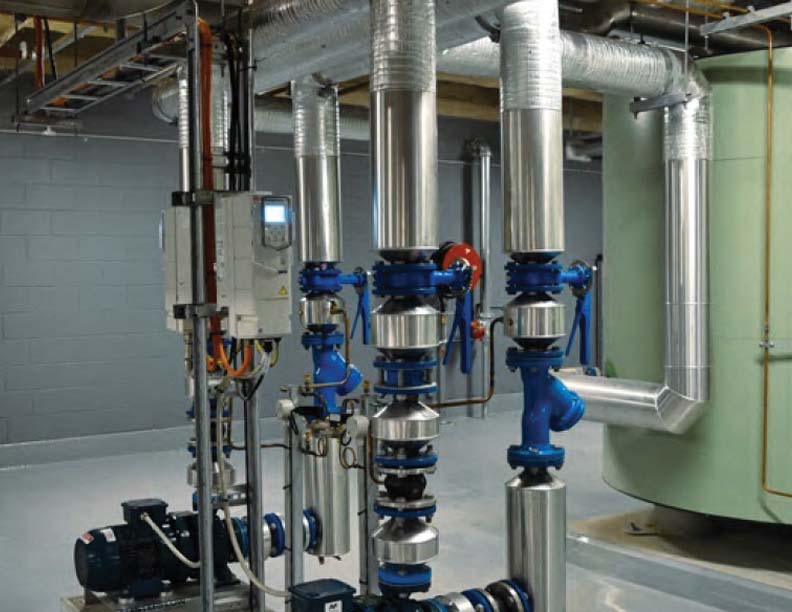
Image Courtesy: IPD
Conclusion
The integration of the ever-improving smart sustainability tools is transforming the landscape of the HVAC-R industry very rapidly. Today the combination of the highly efficient sensors, in-depth analytic tools and intelligent software is not only easing the plant manager’s job but also helping the plant owners in reducing their operation and maintenance cost.
As the technologies are highly proactive by nature today, with prior signals, a maintenance plan can be chalked out systematically, which can help in reducing unexpected downtimes.
All HVAC-R operations run on electricity. So, adoption of new technologies like Variable Frequency Drives (VFDs) and Variable Refrigerant Flow (VRF) systems can not only benefit the plant users and owners but also supports stability of the power grids.
By P. K. Chatterjee (PK)