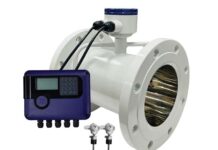

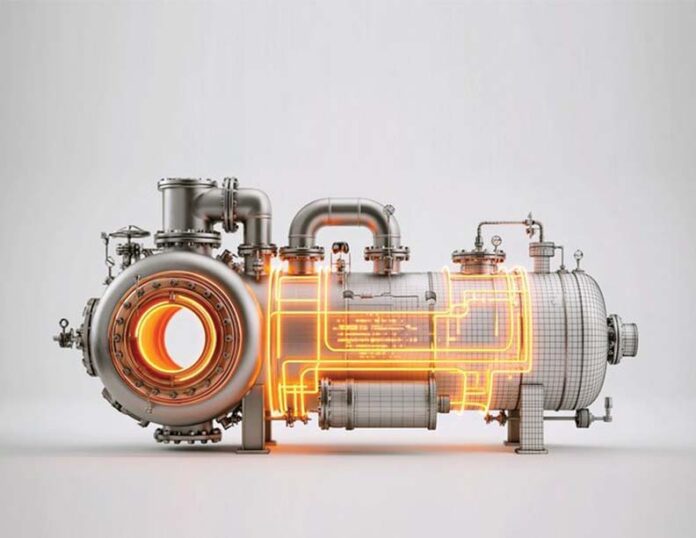
A heat exchanger is a device designed to transfer thermal energy between two or more fluids, between a solid surface and a fluid, or between solid particles and a fluid when they are at different temperatures and in thermal contact. In most heat exchangers, there are no external heat or work interactions. Their primary functions include heating or cooling fluid streams, as well as facilitating evaporation or condensation of single- or multi-component fluids.
Heat exchangers are also employed in various industrial processes such as heat recovery and rejection, sterilization, pasteurization, fractionation, distillation, concentration, crystallization, and process temperature control.
Heat transfer in exchangers may occur either through direct contact between fluids or through a separating surface. In direct-contact heat exchangers, the fluids come into physical contact and exchange heat directly. However, in most practical applications, the fluids are separated by a heat-transfer surface, preventing mixing and leakage. These are known as direct-transfer heat exchangers or re-cuperators. In contrast, indirect-transfer heat exchangers, commonly referred to as regenerators, transfer heat intermittently through a thermal storage medium or matrix that alternately absorbs heat from the hot fluid and releases it to the cold fluid.
Regenerators may experience some fluid leakage due to pressure differences and the operation of rotating matrices or switching valves. Common examples of heat exchangers include shell-and-tube heat exchangers, automobile radiators, condensers, evaporators, air pre-heaters, and cooling towers. When no phase change occurs in either fluid, the device is often referred to as a sensible heat exchanger.
Some heat exchangers contain internal thermal energy sources, such as electric heating elements or nuclear fuel rods. Others involve combustion or chemical reactions, as found in boilers, fired heaters, and fluidized-bed heat exchangers. Certain designs also incorporate mechanical devices to enhance heat transfer, such as scraped-surface heat exchangers, agitated vessels, and stirred-tank reactors.
In general, a heat exchanger is a piece of equipment specifically engineered to achieve efficient heat transfer from one medium to another. The media may be separated by a solid wall, ensuring that they never mix, or they may be brought into direct contact. Heat exchangers are extensively used in space heating, refrigeration, air-conditioning systems, power generation plants, chemical and petrochemical industries, petroleum refineries, natural gas processing facilities, and wastewater treatment plants.
A classic example of a heat exchanger is the radiator used in an internal combustion engine. In this system, a circulating fluid known as engine coolant flows through radiator tubes while ambient air passes over the external surfaces. Heat is transferred from the coolant to the air, thereby cooling the engine coolant and warming the surrounding air.
Modern Heat Exchangers
Modern heat exchangers play a crucial role in a wide range of industrial processes and thermal systems by enabling efficient heat transfer between fluids. Numerous types of modern heat exchangers are available, each characterized by distinct designs, operating principles, and application areas.
The selection of an appropriate heat exchanger depends on several factors, including the properties of the working fluids, operating temperature and pressure conditions, heat transfer requirements, fouling tendencies, and space constraints. Therefore, a thorough understanding of the various heat exchanger configurations and their performance characteristics is essential for identifying the most suitable option for a specific application.
Furthermore, continuous advancements in
materials science, manufacturing techniques, and thermal design methodologies have facilitated the development of innovative and highly efficient advanced heat exchanger technologies. These modern designs offer enhanced thermal performance, improved durability, reduced size and weight, and the capability to operate under increasingly demanding conditions, thereby expanding their applicability across diverse industrial sectors.
Phase Change Heat Exchangers
A Phase Change Heat Exchanger (PCHE) is a heat transfer device in which one or more fluids undergo a phase transition, such as evaporation, condensation, melting, or solidification, during the heat exchange process. These heat exchangers utilize latent heat, allowing large amounts of thermal energy to be transferred with minimal temperature change.
Phase change heat exchangers are widely used in refrigeration, air conditioning, power plants, chemical industries (Fig. 1), and renewable energy systems. Common examples include condensers, evaporators, boilers, steam generators, and heat pipes.
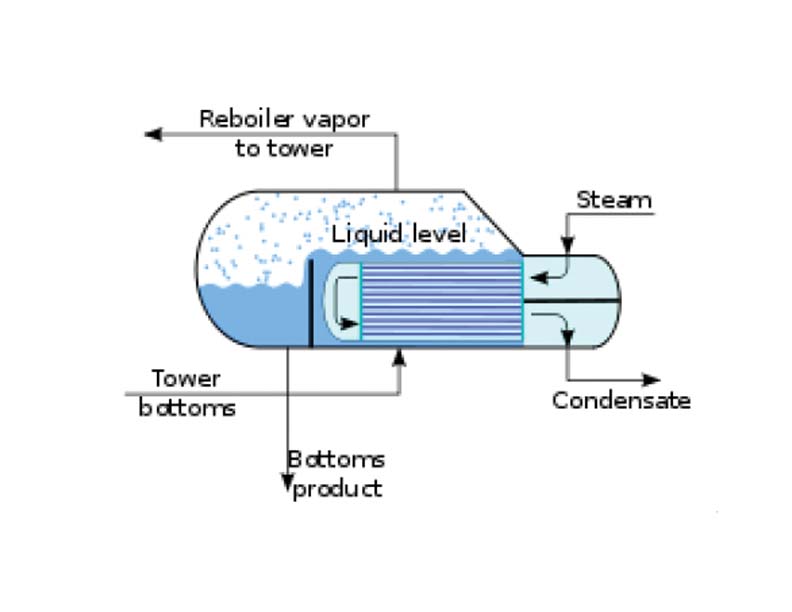
During evaporation, the working fluid absorbs heat and changes from liquid to vapour, while during condensation, it releases heat and changes from vapour to liquid. The high heat transfer coefficients associated with phase change processes result in compact and efficient designs. These heat exchangers can achieve significant energy savings and improved thermal performance compared to sensible heat exchangers.
The nearly constant temperature during phase transition makes them suitable for applications requiring precise temperature control. Proper design is essential to ensure effective liquid-vapour distribution and minimize pressure losses.
Surface enhancements such as fins, micro-channels, and textured surfaces are often used to improve heat transfer rates. Phase change heat exchangers can also be integrated with Phase Change Materials (PCMs) for thermal energy storage applications. They play an important role in waste heat recovery and industrial energy management.
Advances in manufacturing technologies have enabled the development of compact and lightweight PCHE designs. Their ability to transfer large quantities of heat over small temperature differences makes them highly attractive for modern thermal systems. Furthermore, phase change heat exchangers contribute to reducing energy consumption, improving system reliability, and supporting sustainable energy solutions across a wide range of engineering applications.
Spiral Heat Exchangers
A spiral heat exchanger is a compact and efficient heat transfer device consisting of two long metal plates wound around a central core to form two separate spiral flow channels as shown in Fig. 2. The fluids flow through these channels, usually in a counter-current arrangement, which maximizes heat transfer efficiency. Spiral heat exchangers are widely used in chemical, petrochemical, food processing, pulp and paper, wastewater treatment, and energy industries.
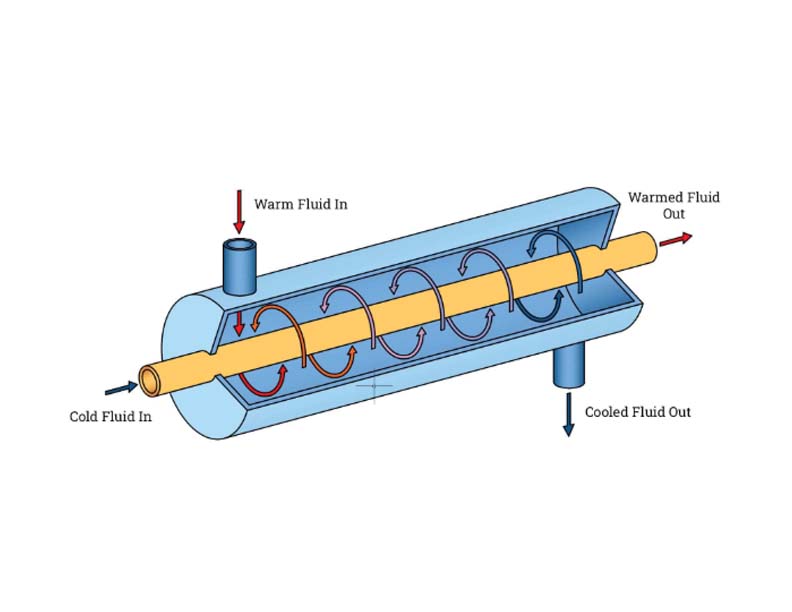
Their compact design provides a large heat transfer area within a small foot print, making them suitable for installations where space is limited. The curved flow path promotes turbulence even at relatively low flow rates, enhancing heat transfer performance. One of the key advantages of spiral heat exchangers is their self-cleaning effect, as the continuous curvature of the channels helps reduce fouling and deposit accumulation. They are particularly effective for handling viscous fluids, slurries, and fluids containing suspended solids.
The single-channel design on each side minimizes the risk of clogging and ensures uniform flow distribution. Spiral heat exchangers can operate efficiently under high pressures and temperatures, depending on the construction material. They are commonly manufactured from stainless steel, carbon steel, titanium, or other corrosion-resistant alloys. Their robust construction provides long service life and reliable operation in demanding industrial environments. Maintenance requirements are generally lower compared to many conventional heat exchanger types. The counter-flow arrangement allows for close temperature approaches and high thermal effectiveness.
These heat exchangers can be used for liquid-to-liquid, liquid-to-gas, and condensation applications. They are also suitable for heat recovery processes, helping industries improve energy efficiency and reduce operating costs. The simple yet effective design contributes to lower pumping power requirements and improved process performance. Due to their versatility, compactness, and fouling resistance, spiral heat exchangers remain an important technology in modern thermal systems and industrial heat transfer applications.
Heat Exchanger Retrofitting
- Heat exchanger retrofitting is the process of improving the performance of an existing heat exchanger through structural modifications, component replacement, or operational optimization without completely replacing the equipment. The primary objectives include:
- Increasing heat transfer rate
- Reducing energy consumption
- Minimizing pressure drop
- Enhancing operational reliability
- Extending equipment life
- Accommodating increased process loads
- Reducing maintenance costs
- Improving environmental performance
- Several factors that necessitate heat exchanger retrofitting include:
- Fouling and Scaling: Accumulation of deposits on heat transfer surfaces reduces heat transfer efficiency.
- Capacity Expansion: Industrial plants often increase production rates, requiring greater heat exchanger capacity.
- Energy Conservation: Retrofitting can significantly reduce utility consumption and operating costs.
- Equipment Aging: Old heat exchangers may suffer from corrosion, erosion, and mechanical deterioration.
- Environmental Regulations: New regulations may require improved energy efficiency and reduced emissions.
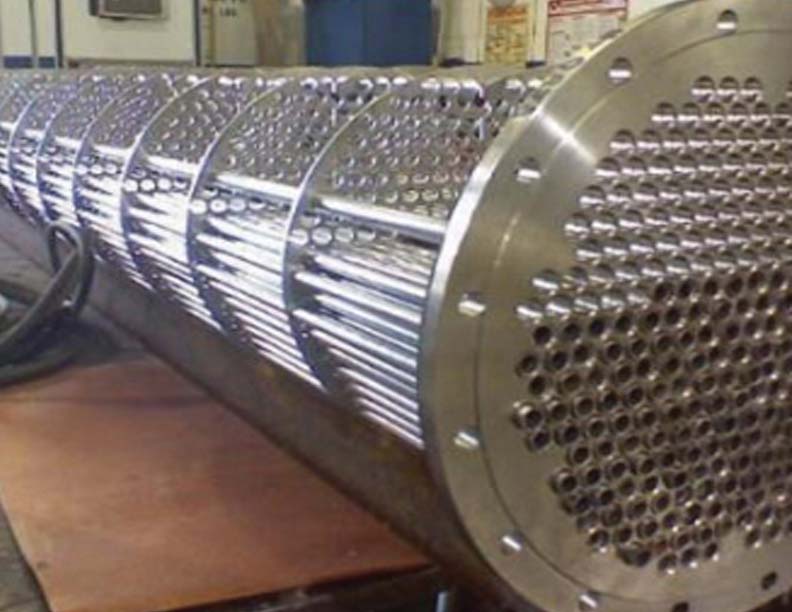
- Process Modification: Changes in process temperatures, pressures, or flow rates may exceed original design conditions. Heat exchanger retrofitting encompasses a variety of techniques aimed at enhancing the thermal performance, operational efficiency, reliability, and service life of existing heat exchangers without requiring complete replacement. One of the most common retrofit methods is tube bundle replacement, where old or damaged tubes are replaced with new tubes having improved thermal characteristics, corrosion resistance, or increased surface area.
Enhanced Surface Tube Retrofitting (Fig. 3)
This involves the installation of finned, corrugated, twisted, or micro-finned tubes to increase turbulence and heat transfer coefficients. Another widely adopted retrofit technique is baffle modification, in which existing segmental baffles are redesigned or replaced to improve shell-side flow distribution, reduce dead zones, and minimize pressure losses.
Helical Baffle Retrofitting
Helical baffle retrofitting has gained considerable attention because it creates a continuous spiral flow path, resulting in lower pressure drop, reduced fouling, and enhanced heat transfer performance. Fin addition retrofits are commonly applied in air-cooled heat exchangers and gas-side applications where increasing the external heat transfer surface area significantly improves thermal effectiveness.
Flow Arrangement Modification
This is another important retrofit approach, where parallel-flow configurations are converted to counter flow arrangements to achieve higher thermal efficiency and improved temperature effectiveness. Material upgrade retrofits involve replacing existing components with advanced materials such as stainless steel, titanium, nickel alloys, or copper-nickel alloys to enhance corrosion resistance, durability, and operational reliability.
Plate Heat Exchanger Retrofits
They often replace conventional shell-and-tube units in applications requiring compact design, higher heat transfer rates, and easier maintenance. Gasket and sealing system upgrades are frequently implemented to reduce leakage, improve safety, and accommodate higher operating pressures and temperatures.
Fouling Mitigation Retrofits
They involve the application of anti-fouling coatings, smooth surface finishes, or self-cleaning technologies to reduce deposit formation and maintain long-term performance. Tube insert retrofits use twisted tapes, wire matrix inserts, or turbulence promoters within tubes to enhance convective heat transfer. Pass arrangement modifications can be employed to optimize fluid velocities, improve temperature profiles, and maximize heat recovery.
Shell-Side Flow Enhancement Retrofits
They may include the installation of longitudinal baffles, rod baffles, or support structures designed to improve flow uniformity and heat transfer effectiveness.
Expansion of Heat Transfer Area through Additional Tube Rows or Extended Surfaces
This is another retrofit option used when process capacities increase beyond the original design specifications.
Compact Heat Exchanger Retrofits
These involve replacing older bulky systems with modern compact designs such as plate-fin, printed circuit, spiral, or micro-channel heat exchangers.
Control System Retrofits
These incorporate advanced sensors, monitoring devices, and automated control strategies to optimize exchanger operation under varying load conditions.
Pressure Drop Reduction Retrofits
They focus on redesigning flow passages and baffle arrangements to minimize pumping power requirements while maintaining high thermal performance.
Corrosion Protection Retrofits
They include the use of protective linings, coatings, cathodic protection systems, and corrosion-resistant materials to extend equipment lifespan.
Leak Prevention Retrofits
They involve upgrading tube-to-tube sheet joints, seals, and welding techniques to improve mechanical integrity.
Thermal Performance Enhancement Retrofits
These often utilize computational fluid dynamics and advanced thermal analysis tools to identify inefficiencies and optimize exchanger configurations.
In condensers and evaporators, retrofitting may include improved phase-change surfaces that enhance boiling and condensation heat transfer rates. Waste heat recovery retrofits are increasingly adopted to capture and reuse thermal energy that would otherwise be lost, thereby improving overall plant energy efficiency.
Retrofit projects may also involve the integration of phase change materials, nano-fluids, or advanced heat transfer fluids to further enhance thermal performance. Hybrid retrofit approaches combine multiple modifications, such as enhanced tubes, optimized baffles, and advanced materials, to achieve substantial gains in efficiency and capacity.
In industrial practice, the selection of a suitable retrofit strategy depends on process requirements, operating conditions, economic considerations, space constraints, and maintenance objectives. Through these diverse retrofit techniques, existing heat exchangers can achieve significant improvements in heat transfer effectiveness, energy conservation, operational flexibility, equipment reliability, and environmental sustainability while avoiding the high capital costs associated with complete equipment replacement.
Conclusions
Future research in heat transfer optimization for advanced heat exchangers should focus on the integration of smart control systems with predictive analytics to manage thermal gradients dynamically.
The use of machine learning algorithms and real-time sensor feedback can help predict potential heat losses and optimize coolant flow before critical thresholds are reached within the modern heat exchanger.
Development of next-generation nano-fluids with hybrid or bio-inspired nano-particles can further enhance thermal conductivity while minimizing environmental impact.
Additionally, the implementation of Phase-Change Materials (PCMs) for peak load management, coupled with waste heat utilization for district heating, represents a promising avenue for reducing the overall carbon foot print of thermal energy systems using advanced heat exchangers.
Pilot projects combining these approaches can establish long-term feasibility and cost-effectiveness for both retrofitting existing advanced heat exchangers and designing new facilities.

Dr. (Prof.) D. B. Jani received Ph.D. in Thermal Science (Mechanical Engineering) from Indian Institute of Technology (IIT) Roorkee. Currently he is a recognized Ph.D. Supervisor at Gujarat Technological University (GTU). He has published more than 280 Research Articles in reputed International Conferences and Journals. He has also published 25 reputed books/book chapters and patents in area of thermal engineering. He has been working as an Academic Editor for the Journal of Materials Science Research and Reviews. Presently, he is an Associate Professor at GEC, Bhavnagar, Gujarat Technological University, GTU, Ahmedabad (Education Department, State of Gujarat, India). He has obtained his Master of Engineering in Automobile Engineering from Gujarat University, Ahmedabad, Gujarat. He has more than 26 years of experience in teaching at various institutions at undergraduate and postgraduate/PhD level in mechanical engineering. He is a life member in professional societies and bodies like ISTE, ISHRAE, MTTF, REST, Green ThinkerZ etc. He is a recipient of Best Teacher award (2020), Excellent researcher award (2020), Innovative academician award (2024). His area of research is Desiccant cooling, ANN, TRNSYS, and Exergy.