
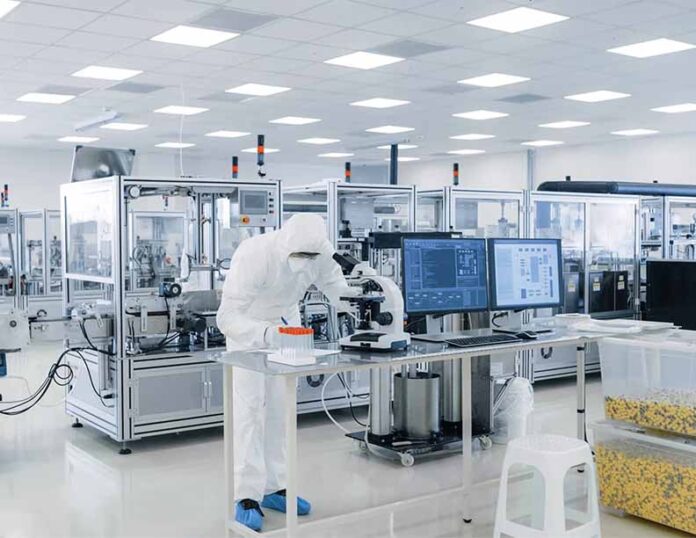
In industries where microscopic particles can cause catastrophic failures – such as Pharmaceuticals, Biotechnology, Semiconductors, and Healthcare – standard air conditioning is not enough. This is where Clean Room Technology enters. It is not just about temperature control; it is about the total mastery of the airborne environment.
A Clean Room is a controlled environment that has a low level of pollutants such as dust, airborne microbes, aerosol particles, and chemical vapours. But how is this ‘invisibility’ engineered?
The Core Principles of Air Treatment
Creating a Clean Room is a battle against contamination. The HVAC system (specifically the Air Handling Unit) must perform four critical functions simultaneously:
Concentration Control (Filtration)
The system must remove contaminants introduced by people, processes, and equipment. This is achieved through multi-stage filtration (discussed later).
Airflow Pattern Control
How the air moves is just as important as how clean it is.
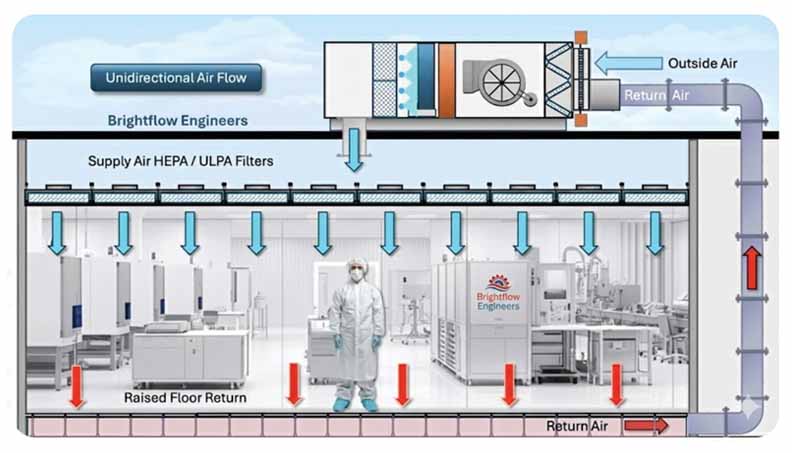
- Unidirectional (Laminar) Flow: Air moves in a single direction (usually top-to-bottom) in parallel streamlines at uniform velocity. This ‘piston effect’ flushes particles away immediately. Used in ISO 5 (Class 100) zones like operation theatres or microchip wafer handling.
- Non-Unidirectional (Turbulent) Flow: Air is supplied via diffusers and mixes with room air to dilute contamination. This is common in ISO 7 or ISO 8 (Class 10k/100k) areas like pharmaceutical packaging or corridors.
Pressurization (The Invisible Barrier)
Air acts like water; it flows from high pressure to low pressure.
- Positive Pressure: The Clean Room is kept at a higher pressure than the adjacent corridor (usually +10 to +15 Pascals). This ensures that when a door opens, clean air rushes out, preventing dirty air from entering.
- Negative Pressure: Used in containment zones (e.g., Virology labs, Isolation wards). The room is at lower pressure to keep dangerous pathogens inside.
Psychrometric Control (T & RH)
Certain pharmaceutical powders are hygroscopic (absorb moisture), and static electricity can destroy semiconductors. Therefore, precise control of Relative Humidity (RH) (often < 40% or 50% ± 5%) and Temperature (22°C ± 2°C) is non-negotiable.
The Heart of the System: The Hygienic AHU
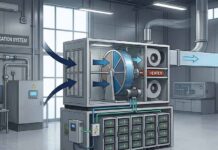
For a Clean Room, a standard commercial AHU is a contamination risk. A Hygienic Air Handling Unit is required to ensure zero bacterial growth and airtight performance.
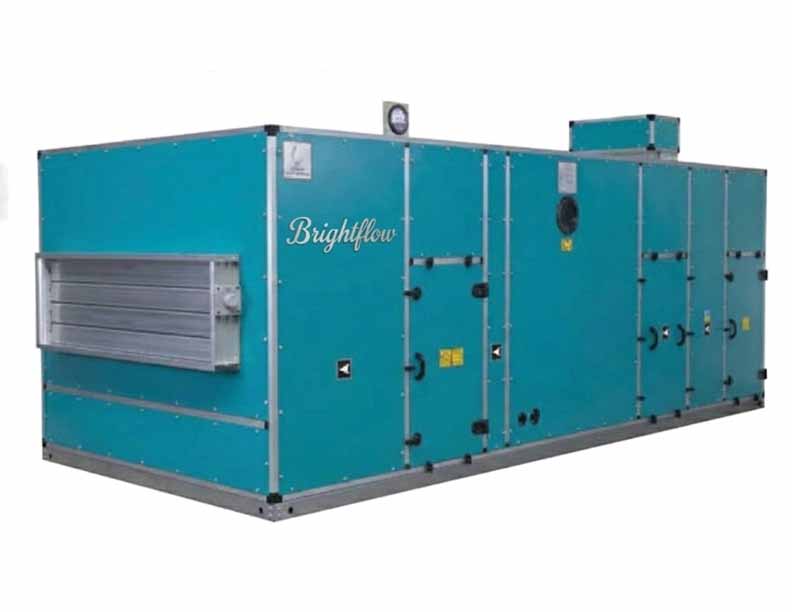
Leading specialised manufacturers, such as Brightflow Engineers Pvt. Ltd., engineer these units to meet stringent international standards, incorporating features such as:
- Double Skin Construction: To prevent condensation and facilitate cleaning. Inner skins are usually Stainless Steel (SS-304) or Pre-coated GI.
- Thermal Break Profiles: To prevent energy loss and sweating on the casing.
- Smooth Interiors: No protruding screws or sharp corners (coved corners are preferred) where dust can accumulate.
- Direct Driven Plug Fans: Eliminates belt dust generation (common in older belt-driven systems).
- The Filtration Spectrum: The Three-Stage Defense
Filtration in clean rooms is typically executed in three stages to extend the life of the expensive terminal filters.
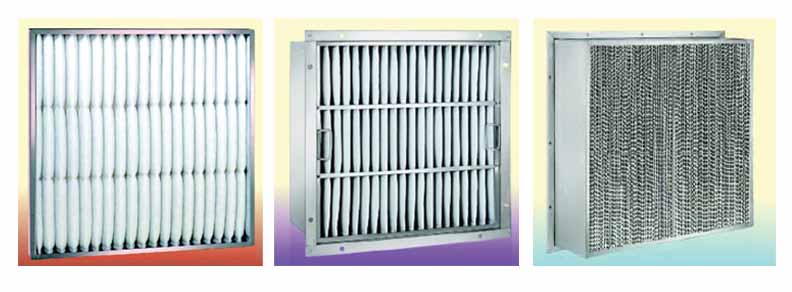
Stage 1: Pre-Filtration (Primary)
- Location: At the fresh air intake or mixing chamber of the AHU.
- Grade: G4 or M5 (EN 779 / ISO 16890 Coarse).
- Function: Captures large visible particles (dust, insects, pollen) > 10 microns. This protects the finer filters downstream.
Stage 2: Fine Filtration (Secondary)
- Location: Downstream of the cooling coil/fan in the AHU.
- Grade: F7 to F9 (ePM1 50-80%).
- Function: Captures fine dust (1 to 10 microns). This is the ‘workhorse’ filter that ensures the air entering the ducting is already 90-95% clean.
Stage 3: Terminal Filtration (The Final Barrier)
- Location: At the terminal entry point into the Clean Room (ceiling-mounted) or inside the AHU (for less critical zones).
- Grade: HEPA (H13 / H14) or ULPA (U15-U17).
Efficiency:
o H13: 99.95% efficiency @ 0.3 microns (MPPS).
o H14: 99.995% efficiency @ 0.3 microns.
Mechanism: HEPA filters do not work like sieves. They use Interception, Impaction, and Diffusion to trap particles far smaller than the gaps between the fibres.
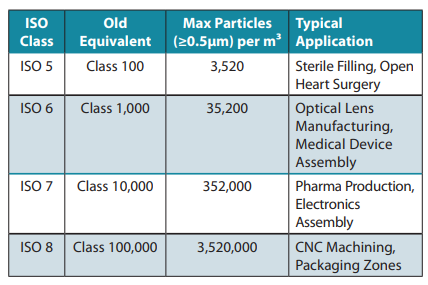
Understanding ISO Classes (ISO 14644-1)
The industry has moved away from the old US Fed Std 209E (Class 100, Class 10,000) to ISO Standards.

Driving operational excellence in the HVAC sector, Aman Taluja is a pivotal professional at Brightflow Engineers Pvt. Ltd. Kundli, Haryana-based leader in manufacturing Air Handling Units, Evaporative Cooling Units, Dry Scrubbers, and Fan Coil Units. Aman’s impressive track record spans successful installations for prestigious clients such as NTPC Dadri, Deloitte Gurugram, Le Meridien Hyderabad, Marriott Amritsar, and GAIL Dibiyapur. His profound expertise in crafting superior air management solutions underscores a steadfast commitment to elevating indoor air quality and optimizing operational efficiency.