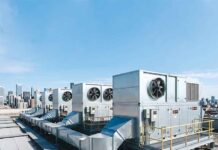

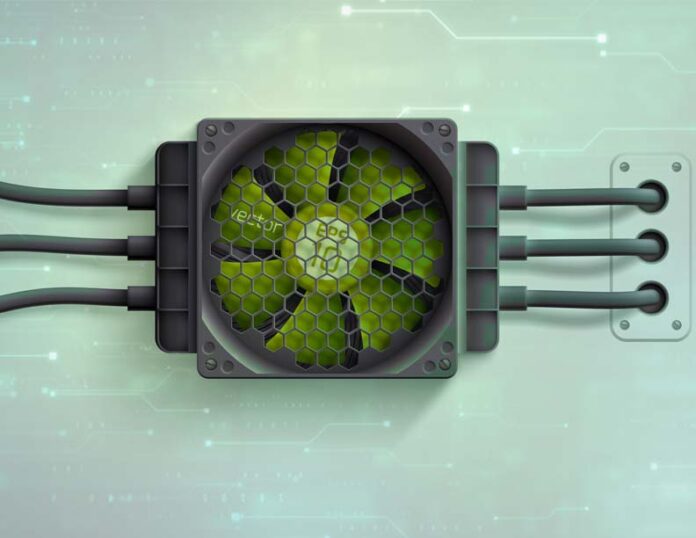
The global cooling industry is experiencing a significant evolution, fuelled by rising temperatures, the demands of AI-powered data centres, and stringent environmental regulations. This sector is increasingly adopting next-generation refrigerants, leveraging artificial intelligence for enhanced predictive efficiency, and implementing sustainable liquid cooling systems to mitigate the risk of power grid overloads.
Stricter eco-regulations, surging energy demands, and extreme climate conditions are accelerating the transformation in a never-seen-before way. Some of the prominent indications of this shift are listed below.
Global manufacturing trend
- Stress on local manufacturing: Like all other industries, in our HVAC-R industry too, globally manufacturers are scaling production locally to meet rising efficiency standards.
Just to cite an example: Schneider Electric inaugurated a 6.5-acre cooling solutions factory in Bengaluru (India) to support sustainable data centre ecosystems across India and global markets.
- Use of eco-friendly refrigerants: Nowadays, eco-friendly refrigerants are being used to replace traditional fluorocarbon gases (like CFCs and HFCs) because they have zero Ozone Depletion Potential (ODP) and a much lower Global Warming Potential (GWP). They are being adopted globally to fight climate change, improve energy efficiency, and comply with strict phase-down regulations like the Kigali Amendment.
- Advanced designing of components: Of late, a revolution is being observed in the field of designing heating or cooling components in the HVAC-R industry. Energy efficiency being one of the most sought priorities, development and adoption of new technologies are smoothening the path of progress. Integration of Variable Speed Drives (VSDs) and AI-powered IoT smart controls, and advanced heat exchangers and high-efficiency motors are quite common in the industry today.
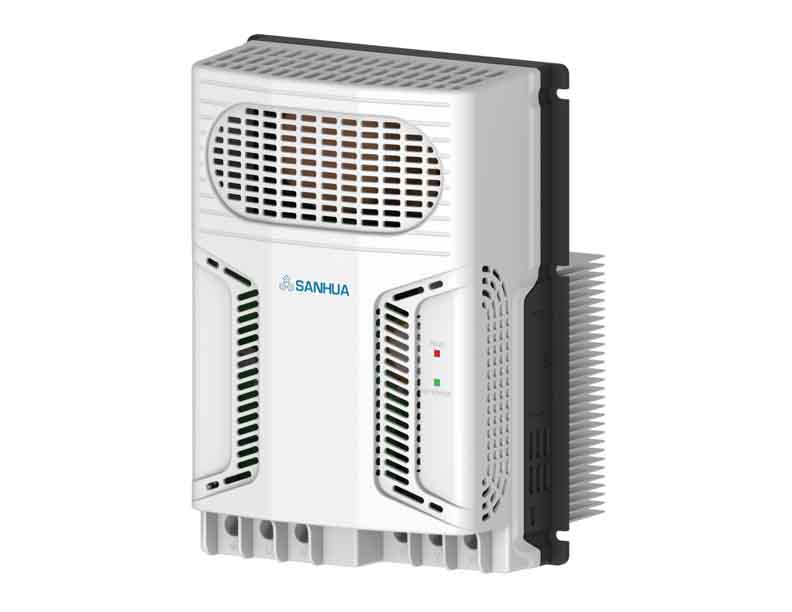
For example, in December 2025, Sanhua launched SD2 Variable Speed Drive extension for commercial and industrial HVAC&R applications.
- Research works on solid-state materials yielding results: New research outcomes in solid-state materials – such as thermoelectric, magnetocaloric, and electrocaloric substances – are transforming the cooling industry by replacing bulky, compressor-based vapour systems. By removing the need for chemical refrigerants and mechanical moving parts, these materials are now enabling development of refrigerant-free, ultra-quiet, energy-efficient cooling with zero direct global warming potential.
Recently, a team led by researchers from the Fraunhofer Institute for Physical Measurement Techniques (IPM) has developed a new technological concept that is expected to transform the cooling systems market. Founded in 2026, Qurie GmbH develops solid-state heat pumps based on electrocaloric materials.
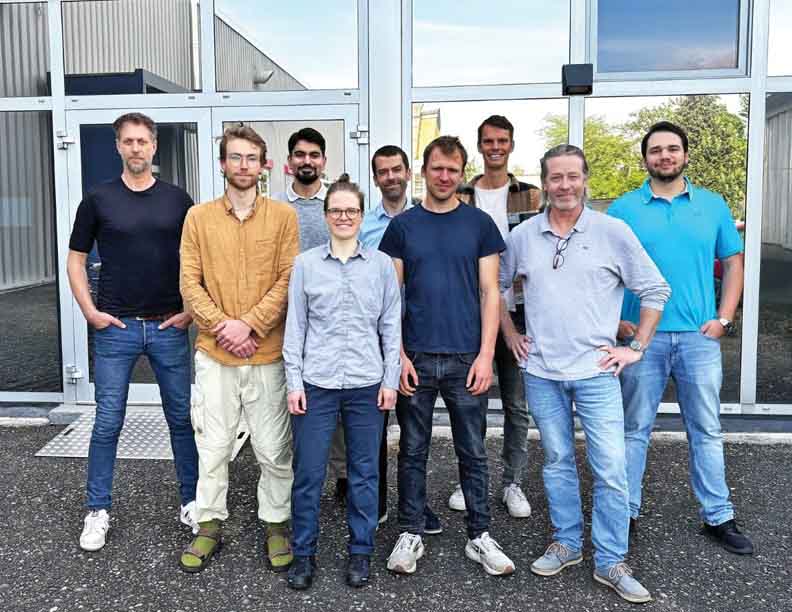
Ready to begin developing electrocaloric heat pumps in May: The founding team of Qurie GmbH in front of their newly
occupied laboratory and office space in the Haid industrial park in Freiburg. The team is led by Dr. Kilian Bartholomé (L)
and Dr. Christian Vogel (second from R)…For over ten years, Fraunhofer IPM has been conducting research on electro-, magneto-, and elastocaloric heat pumps. With Qurie, the institute’s researchers are entering the market with a focus on electrocaloric cooling technology. Electrocaloric heat pumps use the temperature change of a solid-state material under the influence of an electric field to establish a cooling cycle.
Compared to magneto- or elastocaloric materials, the system design is simple, as neither magnets nor actuator systems are required. Fraunhofer IPM is bringing one of its key innovations to the startup: a globally patented concept for heat dissipation based on Active Electrocaloric Heat pipes (AEH). AEH enables rapid latent heat transfer through the evaporation and condensation of a fluid, such as ethanol or water, on the caloric material.
A few prominent indicators of the technical transformation
The transformation in the cooling industry, all inclusively better to say HVAC-R industry is multi-dimensional. It is undergoing a big change driven by climate regulations, the AI computing boom, and a push for net-zero energy.
- Transition in refrigerants: The Kigali Amendment is a legal binding or an international agreement designed to gradually phase down the production and consumption of HydroFluoroCarbons (HFCs). Adopted in 2016, it as an update to the Montreal Protocol, its primary goal is to mitigate climate change.
Globally, traditional HFCs are being phased down. Systems now widely utilise eco-friendly, low-GWP alternatives such as R-32 and R-454B, shifting the focus to sustainable end-of-life management.
- Effect of adoption of AI and IoT: The adoption of AI and IoT in the cooling industry transforms passive refrigeration and HVAC-R systems into proactive, intelligent assets. This convergence reduces energy consumption by 20 to 40%, minimises unexpected equipment downtime through predictive maintenance, and significantly lowers carbon emissions.
For example, according to the information from Trane, “The development of smart thermostats has brought AI into the realm of HVAC. These devices use machine learning algorithms to learn occupants’ preferences and optimise temperature settings accordingly. The integration of IoT (Internet of Things) technology has enabled real-time monitoring and control of HVAC systems. Integration of AI into HVAC systems is transforming management and maintenance of buildings. Reduction in the amount of required human intervention is leading to more efficient, comfortable, cost-effective environments and allows building operators to spend their time on more critical tasks.”
Also, according to a communiqué from Schneider Electric, “The addition of AI to HVAC systems provides benefits that extend far beyond traditional solutions. The most significant improvement lies in the capability for real-time, adaptive control that happens directly within the device itself. This eliminates the need for a constant connection to remote servers or cloud-based computing systems and reduces response times to as little as one to two seconds. Such immediate adjustments are critical for maintaining a consistent level of comfort for occupants, especially in situations where even minor delays can cause temperature instability. Additionally, by limiting reliance on external networks, the system provides consistent performance even in areas where connectivity may be intermittent or unreliable. This localised data processing also reduces the amount of information that needs to be sent to centralised building management systems, lowering bandwidth usage and making the entire operation more efficient.”
- Advent of liquid cooling in data centres: Surging compute densities and AI workloads have been pushing traditional air cooling to its limits. Thus, nowadays, data centres are adopting Direct-to-Chip (D2C) and immersion cooling, submerging hardware in non-conductive fluids for superior thermal management.
According to the available information from Danfoss, “Liquid cooling is becoming the norm in high rack density applications like High-Performance Computing (HPC) and AI workloads. The technology involves bringing cold liquid closer to the IT equipment to remove heat, using either single-phase (only liquid) or two-phase (liquid evaporating to vapour) methods. Unlike traditional air-cooled systems that often struggle to manage higher thermal loads, liquid cooling – especially when integrated with Coolant Distribution Units (CDUs) – delivers superior thermal management, enhanced system reliability, and significant energy savings. CDUs efficiently regulate heat removal by optimising heat dissipation and reducing energy consumption, ensuring precise cooling performance. A Coolant Distribution Unit (CDU) is the heart of Direct-to-Chip (DtC) liquid cooling. Its primary objective is to deliver the required coolant flow at the required temperature to the racks. It is a critical component in the Technology Cooling System (TCS), which is a closed loop that delivers cold fluid to the racks and returns it to the CDU.”
- Sustainable building design techniques: Researchers have been relentlessly working on developing passive measures to attain cooling of spaces. Highly reflective materials are now being increasingly used to bounce sunlight away from buildings, mitigating the baseline heat before air conditioning even begins.
For example, researchers at the University of Sydney and start-up Dewpoint Innovations have developed a nanoengineered polymer paint-like coating that can passively cool buildings and capture water directly from the air – all without energy input. The invention could help tackle global water scarcity and help cool buildings, reducing the need for energy-intensive systems.
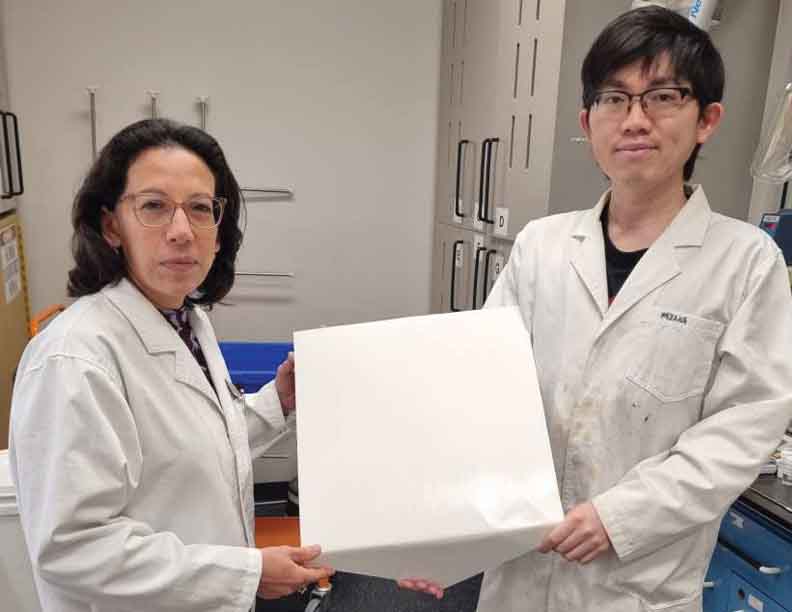
Professor Chiara Neto (L) and Dr. Ming Chiu are holding one of the polymer-coated tiles used in the experiment… The research team led by Professor Chiara Neto created a porous polymer coating that reflects up to 97% of sunlight and radiates heat into the air, keeping surfaces up to 6 degrees C cooler than the surrounding air even under direct sun. This process creates ideal conditions for atmospheric water vapour to condense into droplets on the cooler surface, the way steam condenses on any bathroom mirror.
Commenting on their research outcome, Professor Neto said, “This technology not only advances the science of cool roof coatings but also opens the door to sustainable, low-cost and decentralised sources of fresh water – a critical need in the face of climate change and growing water scarcity.”
Which way is the HVAC-R industry going to?
The efforts within the scope of the HVAC-R industry along with the infusion of other modern technologies will definitely lead the industry towards much more sustainability.
Although, in this small article, I have not mentioned anything about the integration of solar power, advancement in evaporative cooling, development of reefer vehicles etc., lot of developments are happening in those areas too.
I firmly believe that the time is not that far when our HVAC-R industry will be regarded as the most non-polluting one addressing the ubiquitous need of (majorly) cooling.
By P. K. Chatterjee (PK)