
It is understood that controlling humidity within warehouses is more than a comfort issue — it is a critical component of environmental management that directly impacts product quality, structural integrity, operational efficiency and long-term storage performance. Warehouses serve as central hubs in modern supply chains, accommodating a diverse range of goods from raw materials and semi-finished products through to high-value finished inventory.
Across these applications, excessive moisture can lead to condensation, mold growth, corrosion of metal components, compromised packaging, dimensional change in wood or paper products and even accelerated degradation of sensitive electronics. Conversely, air that is too dry can lead to static buildup, packaging cracking and product desiccation.
In many industrial environments, warehouse humidity control is as fundamental as temperature control. Yet it is often overlooked until problems emerge. As the approach of warehouse dehumidification work proactively, the innovative designing solutions are required that control moisture before it becomes a visible issue.
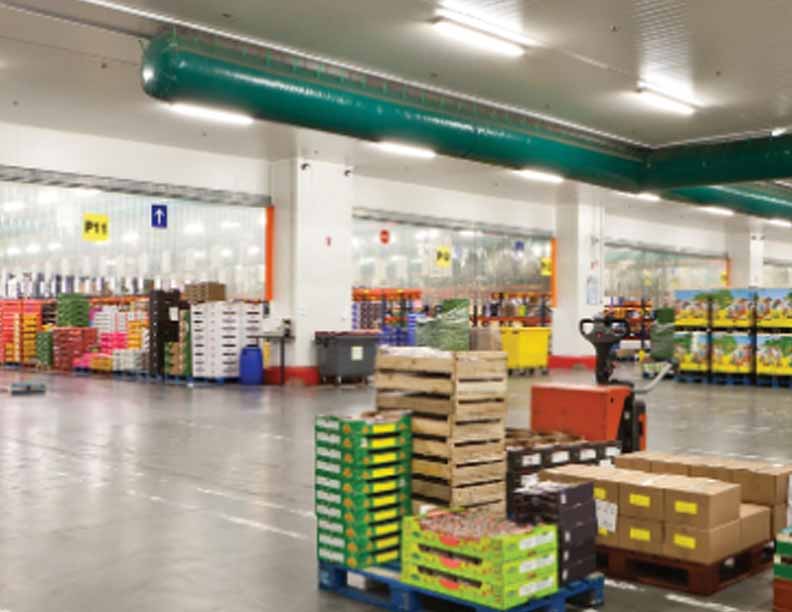
Warehouse spaces present unique humidity control challenges due to their scale, airflow patterns and operational dynamics. Large volume air spaces require robust capacity to manage moisture across an expansive environment. High door traffic, loading dock activity, seasonal climate variations and heat introduced by personnel and equipment all influence internal humidity levels.
Moisture can accumulate on racking systems, internal surfaces and within product packaging if not properly managed. Cold surfaces and night-time temperature drops exacerbate condensation risks, particularly in ambient cold stores or multi-temperature facilities where warm, moist air infiltrates cooler zones.
Additionally, warehouses often house heterogeneous goods with varying moisture tolerance thresholds. Pharmaceuticals and food ingredients have very different humidity sensitivity compared with industrial spares or packaged consumer goods. These variations require tailored humidity control strategies.
Ware house humidity control
An approach to warehouse humidity control begins with a detailed understanding of the space, the product types being stored and the environmental conditions experienced throughout the year. This can be started by evaluating the volume, layout, airflow circulation and occupancy patterns of the warehouse. From there, to assess moisture load sources — including external climate conditions, internal processing activities, infiltration at access points and process-related moisture generation. This assessment informs the selection of appropriately sized dehumidification equipment and associated airflow design.
The product range includes a broad selection of industrial dehumidifiers capable of meeting warehouse humidity control needs across many scales. Whether the requirement is for high-capacity refrigerant dehumidifiers for general storage environments, desiccant dehumidifiers for low temperature or ultra-low humidity applications, or hybrid solutions where multiple zones require different control strategies, this required the equipment and technical expertise to deliver effective solutions.
For typical warehouse conditions, desiccant dehumidifiers are often selected due to their energy efficiency and ability to maintain controlled relative humidity in moderate temperature environments. These units operate by removing humidity of moist air above its dew point, causing water vapour to be adsorbed and be removed from the air stream.
The dried air is then reheated slightly, stabilising the internal environment while minimising energy consumption. For more demanding environments — such as cold storage warehouses, pharmaceuticals distribution centres or facilities with very low target humidity — desiccant dehumidifiers may be more appropriate. These systems use moisture-adsorbing materials to remove water vapour even at lower temperatures or when very low humidity required. This technology is especially useful when temperatures fall below the range in which refrigerant based traditional dehumidifiers cannot operate efficiently.
Humidity control should not operate in isolation. An integration of desiccant dehumidification with existing warehouse ventilation, HVAC and control systems will ensure coordinated environmental management. This integration can involve communication between dehumidifiers and Building Management Systems (BMS), allowing centralised monitoring and automated control logic. This also allows airflow distribution throughout the space.
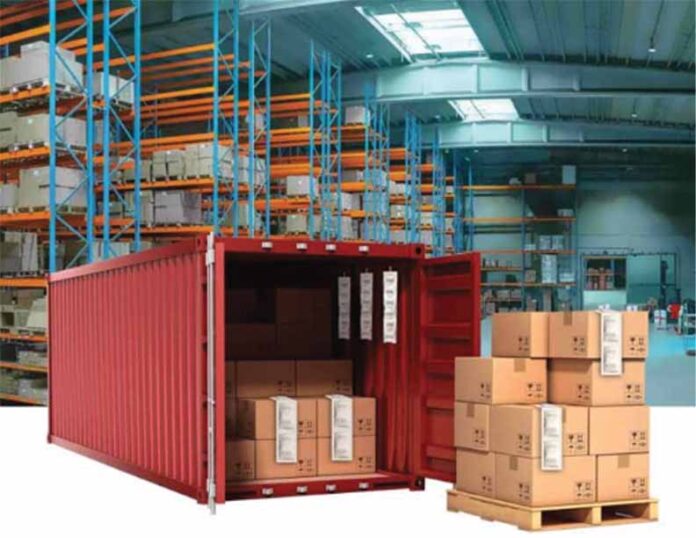
Strategic placement of dehumidifiers and ducted discharge systems ensures even air treatment, minimises moisture pockets and supports uniform environmental conditions regardless of rack layout or obstacle placement to balance humidity control with energy consumption objectives. By analysing space usage patterns, forecasting moisture load trends and modelling return on investment, can help to configure systems that deliver consistent performance without over sizing equipment. The success of a warehouse humidity control project depends not only on specification but also on installation and commissioning (Fig. 1).
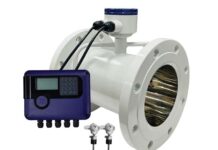
The equipment installation is required to ensure the correct positioning, electrical integration, condensate management and airflow optimisation. Commissioning is a crucial stage where to verify system performance under operational conditions that monitor humidity levels (Fig. 2), airflow movement and dehumidifier cycling behaviour to ensure the system meets the desired set points and responds correctly to environmental changes.
Performance testing and calibration at this stage reduce the likelihood of post-installation adjustments and support consistent long-term operation. This ensures that facilities management teams understand how to operate and maintain the humidity control system effectively. Warehouse conditions are dynamic, and humidity control systems require periodic assessment to ensure continued performance.

The dehumidifier maintenance also required that include routine inspection, cleaning, filter replacement and performance evaluation. Regular maintenance reduces the risk of downtime, supports energy efficiency and helps avoid moisture-related issues from recurring.
For facilities where operational continuity is imperative, one can provide breakdown cover and emergency response services. Rapid technical support ensures that unplanned faults are resolved promptly, maintaining optimal humidity control and protecting stored inventory.
Caring for sustainable solutions by seeking to reduce product waste, it’s important to focus on the source of the problem – the moisture. With desiccant based dehumidification HVAC, one can keep the relative humidity at optimal levels for facilities and the products stored. With a desiccant dehumidification solution, moisture will be removed from cold room or warehouse, and thereby reduce the overall energy consumption.
Conclusions
When humidity is proactively managed, warehouses experience reduced condensation, lower corrosion risk, improved indoor air quality and extended product shelf life.
Controlled humidity by use of desiccant based sorptive dehumidifiers can also support better performance of automated material handling equipment, reduces static electricity issues and enhances worker comfort.
Furthermore, effective humidity control can contribute to energy savings. By stabilising internal conditions by use desiccant dehumidifiers, HVAC systems operate more predictably, reducing unnecessary cycling and lowering peak load demand.
In spaces where moisture load variation is significant due to external weather shifts or internal activity, a well-designed humidity control solution can considerably reduce overall environmental control costs.

Dr. (Prof.) D. B. Jani received Ph.D. in Thermal Science (Mechanical Engineering) from Indian Institute of Technology (IIT) Roorkee. Currently he is a recognized Ph.D. Supervisor at Gujarat Technological University (GTU). He has published more than 280 Research Articles in reputed International Conferences and Journals. He has also published 25 reputed books/book chapters and patents in area of thermal engineering. He has been working as an Academic Editor for the Journal of Materials Science Research and Reviews. Presently, he is an Associate Professor at GEC, Bhavnagar, Gujarat Technological University, GTU, Ahmedabad (Education Department, State of Gujarat, India). He has obtained his Master of Engineering in Automobile Engineering from Gujarat University, Ahmedabad, Gujarat. He has more than 26 years of experience in teaching at various institutions at undergraduate and postgraduate/PhD level in mechanical engineering. He is a life member in professional societies and bodies like ISTE, ISHRAE, MTTF, REST, Green ThinkerZ etc. He is a recipient of Best Teacher award (2020), Excellent researcher award (2020), Innovative academician award (2024). His area of research is Desiccant cooling, ANN, TRNSYS, and Exergy.