

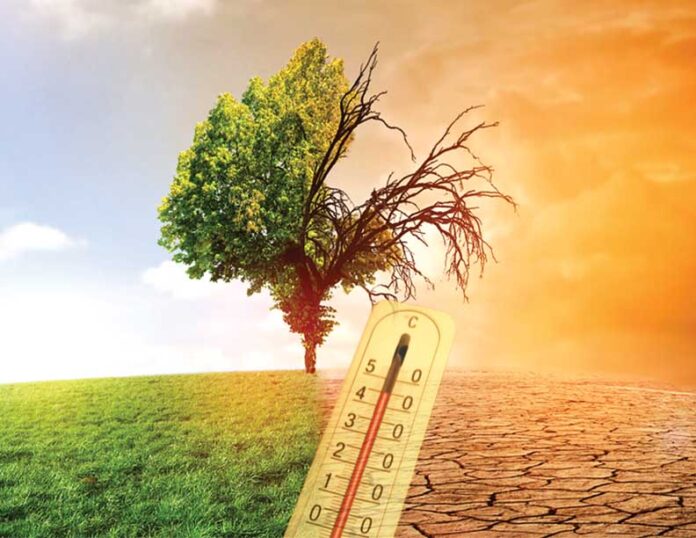
We are about to step into March, when the summer season will begin to show its terrible form. Already, in February, New Delhi has experienced a rise up to 30 deg C, when instead of using winter garments, the residents had to wear light clothing.
Based on early reports and forecasts from the India Meteorological Department (IMD) for early 2026, the Indian government anticipates an early-arrival, above-normal, and potentially harsh summer, with increased risks of severe heatwaves. The government is bracing for a long summer following a warmer-than-usual February.
Already as per India Meteorological Department’s (IMD’s) prediction, from the last week of February till the first week of March, the maximum temperatures are likely to continue to be above normal by 3-5°C over many parts of north-west India.
Although, IMD has developed indigenous, technology-driven, and citizen-centric weather forecasting systems that strengthen disaster preparedness and improve public safety across India, it is wise to remain prepared for an unprecedently rough and tough summer in 2026. And of course, as per IMD’s prediction, the temperature rise in summer 2026 may cross the highest observed in 2025.
Recently at Mumbai Climate Week, the WHO-WMO Climate and Health Joint Programme, a frightening fact was discussed, which is: “In India and Pakistan, pre-monsoon temperatures regularly rise above 50°C, and heat-related mortality in the region today exceeds 200,000 deaths per year. At the same time, extreme heat undermines economic stability and productivity. In 2024 alone, heat exposure in India led to 247 billion potential labour hours lost – reducing labour capacity and leading to an estimated $194 billion loss in income, according to the Lancet Countdown.”
With this backdrop, let us see what can be done to beat the heat.
A brief look at the extreme possibilities in summer 2026
It is expected that the outset of summer season in 2026 will be earlier than usual. Rajasthan, Madhya Pradesh etc., which are parts of northwest and central India, are expected to witness temperatures between 42°C to 45°C or higher.
Heatwaves will be too common in North and Central India. Although intense humidity will be there, some coastal areas towards southern India may experience less temperature compared to northern India.
A few useful suggestions from AIDMI
According to All India Disaster Mitigation Institute (AIDMI), cooling for the summer of 2026 is not about inventing new solutions; it is about acting early, targeting wisely, and aligning local action with state support and national direction. When cities, State Disaster Management Authorities (SDMAs), and National Disaster Management Authority (NDMA) priorities work together, cooling becomes not just an emergency response but a sustained strategy for enduring extreme heat.
AIDMI states that extreme heat has become a defining condition of urban life in India. Each summer now arrives earlier, lasts longer, and places increasing strain on health systems, livelihoods, and local economies. As the summer of 2026 approaches, effective cooling requires alignment between immediate actions, state-level institutional support, and national policy direction. Together, these form the foundation for enduring extreme heat in cities.
What needs to be done
As per AIDMI, the most urgent cooling actions for 2026 are those that can be implemented before and during peak heat, using existing systems and local capacity. First, cities must act early, treating heat as a seasonal risk rather than an emergency. Cooling measures – such as water access, shade, ventilation, and service adjustments – should be in place before temperatures cross danger thresholds.
Second, cooling must be prioritised where heat is actually felt: dense neighbourhoods, market areas, transport hubs, public service points, and poorly ventilated housing. Place-based action is more effective than citywide averages.
Third, cities should scale low-cost, high-impact measures. Simple interventions – shade structures, reflective surfaces, improved airflow, and cooling spaces – can significantly reduce heat stress when applied widely. These actions work best when affected people and small businesses are supported to adopt them proactively.
Connecting climate science to health action to prevent heat impacts
UN Secretary-General António Guterres has called for urgent global action to address the growing risk of extreme heat worldwide, which takes a heavy toll on health in South Asia – the world’s most populated region. According to WMO, Asia is warming nearly twice as fast as the global average, intensifying extreme weather and placing growing pressure on lives and livelihoods, health systems, economies, and ecosystems across the region, putting the most vulnerable and exposed communities at critical risk.
In the WHO-WMO Climate and Health Joint Programme meeting, The Rockefeller Foundation, and Wellcome have announced two new integrated initiatives to protect South Asians from extreme heat – a rapidly escalating threat to human health and economic stability in the subcontinent.
The new initiatives, funded by The Rockefeller Foundation and Wellcome, are expected to strengthen South Asia’s ability to detect, prepare for, and respond to extreme heat and other weather– and climate-related health impacts.
The South Asia Climate-Health Desk, established as part of the WHO–WMO Climate and Health Joint Programme and implemented with the Indian Institute of Tropical Meteorology (IITM), India Meteorological Department (IMD), and other partners will improve how climate and weather information is translated into action to protect health.
Complementing this work, the South Asia Scientific Research Consortium, supported through a Rockefeller Foundation grant to the Indian Institute of Science Education and Research (IISER) Pune, will deepen the region’s scientific understanding of how heat affects different populations. These projects are the first two components of a broader, more ambitious regional strategy to address extreme heat risks to health. As part of a growing suite of Joint Programme initiatives, including regional activities of the Global Heat Health Information Network, these are first steps of coordinated science-driven efforts to protect communities.
A few practical suggestions
As temperature will continue to rise, we have to gear up – and in our sub-continent it will definitely be better to act based on localised temperature data, rather than broad city averages, to target high-risk areas.
Already in India, we have started using AI-based forecasting system to predict and manage heatwaves. That process needs to be strengthened further.
We have to create more shaded areas and hydration points. Local administrative bodies and people have to play an active role in this regard.
Any planning for shading and cooling must give priority to the places where it is actually needed. ‘First local then overall’ should be our MANTRA in this initiative…
By P. K. Chatterjee (PK)