
As India continues its rapid journey of urbanization and infrastructure expansion, the conversation around air quality is gaining increasing importance. While outdoor pollution often dominates public discourse, Indoor Air Quality (IAQ) deserves equal attention. After all, people spend nearly 90 percent of their time indoors—in offices, hospitals, airports, factories, schools, and homes. The quality of air within these spaces has a direct influence on health, productivity, and overall well-being.
Ensuring cleaner indoor environments requires more than advanced filtration technologies. It requires robust standards that define how air filtration systems should perform, be tested, and be implemented in real-world environments. This is where the Bureau of Indian Standards (BIS) plays a crucial role.
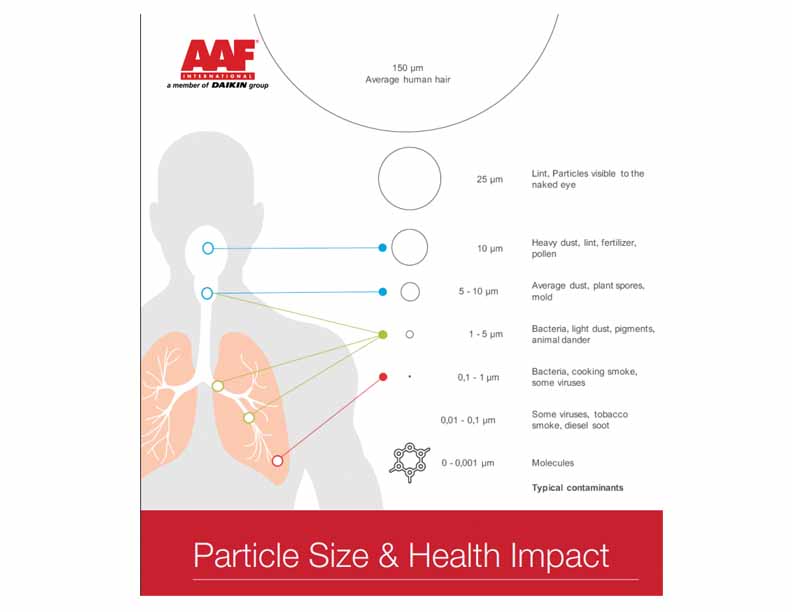
BIS provides the national framework that guides the performance and safety benchmarks for air filtration products and air handling equipment used across India’s built environment. A key development in this direction is IS 17570 (Part 1): 2021, which specifies the classification and testing methodology for air filters used in general ventilation systems. Aligned with the international ISO 16890 framework, the standard classifies filters based on their ability to remove particulate matter such as PM₁₀, PM₂.₅, PM₁, and enabling a more practical and health-focused approach to evaluating filtration performance.
Beyond filter classification, BIS standards also address broader aspects of air
handling technologies, including product performance, testing protocols, and safety considerations. These guidelines ensure that air filtration and purification systems used across residential, commercial, and industrial environments meet reliable benchmarks for quality and operational safety. Collectively, such standards help establish a strong foundation for consistency, accountability, and measurable performance in India’s air handling ecosystem.
For the air filtration industry, such standards serve as a common technical language. They enable manufacturers to design products that meet clearly defined performance criteria while giving consultants, HVAC designers, and facility managers the confidence to select solutions backed by verified testing methodologies.
Without standardized benchmarks, markets can easily become fragmented with inconsistent product claims and varying quality levels. BIS standards help address this challenge by introducing uniform testing procedures, certification frameworks, and quality assurance mechanisms, thereby strengthening trust across the ecosystem.
Their relevance is becoming even more significant as India’s buildings evolve. Modern commercial spaces, healthcare facilities, and manufacturing environments are increasingly designed to be energy efficient and tightly sealed. In such environments, effective ventilation and high-performance air filtration become essential to maintaining healthy indoor conditions.
Poor indoor air quality can contribute to respiratory issues, reduced cognitive performance, and lower workplace productivity. Conversely, well-designed filtration systems supported by robust standards help create healthier spaces that enhance occupant comfort and operational efficiency.
Importantly, standards do more than ensure compliance—they drive industry progress. By defining clear performance expectations, BIS standards encourage manufacturers and technology providers to innovate, improve filtration efficiency, and develop solutions that balance air quality with energy efficiency.
As India moves forward with smart cities, advanced healthcare infrastructure, and sustainable building initiatives, indoor air quality must become a central element of building design and management. Strong and evolving standards will continue to guide this transformation.
Ultimately, clean indoor air is not merely a technical requirement—it is a public health imperative and a key pillar of sustainable development. By aligning industry practices with robust standards, India can move beyond compliance and build lasting confidence in the quality of the air we breathe indoors.

Shailesh Nigam, COO – AAF International
(EEMEA, CIS & SAARC)