
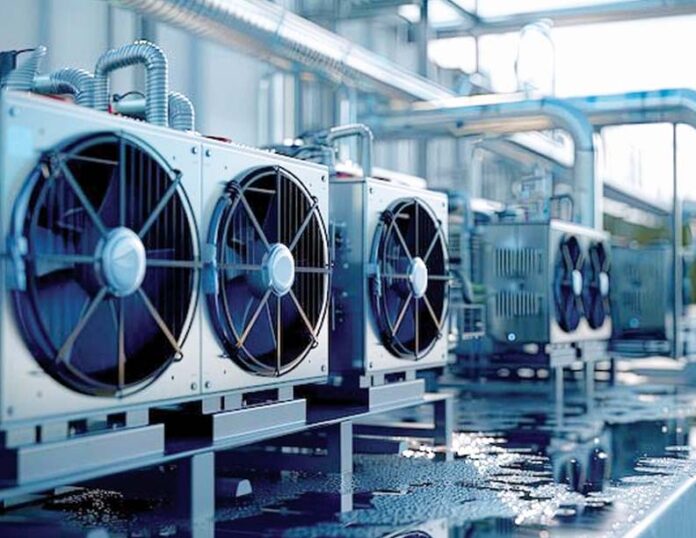
Industrial ventilation systems are specialised engineering controls designed to manage indoor air quality in workplaces by controlling airborne contaminants such as dust, fumes, vapours, mists, gases, and heat. These systems protect worker health, ensure regulatory compliance, maintain product quality, and support safe, efficient operations in manufacturing, chemical processing, woodworking, welding, painting, food production, and other heavy industries.
Core Purposes and Benefits
Industrial ventilation achieves several key objectives:
- Removes harmful airborne contaminants at or near their source.
- Dilutes contaminant concentrations when source capture isn’t feasible.
- Controls heat, humidity, and odors to improve worker comfort and productivity.
- Prevents fire/explosion risks from flammable vapours or dust.
- Complies with standards from OSHA, ACGIH, ASHRAE, NFPA, and SMACNA.
Benefits include reduced health risks (e.g., respiratory issues, long-term diseases), lower absenteeism, extended equipment life, and minimised environmental emissions through proper discharge.
Main Types of Industrial Ventilation Systems
There are two primary categories of mechanical industrial ventilation, with hybrid approaches common in complex facilities.
Dilution (General) Ventilation
This method introduces large volumes of clean outdoor air to mix with and dilute contaminants throughout the space, lowering overall concentrations to safe levels. It is suitable for low-to-moderate contaminant generation, heat removal, or when sources are diffuse (e.g., assembly lines, large open warehouses).
- Advantages: Simpler design, lower initial cost, handles widespread heat/odors.
- Disadvantages: Ineffective for highly toxic or high-concentration sources; requires significant airflow; can spread contaminants before dilution.
These are often combined with exhaust fans and supply air units.
Local Exhaust Ventilation (LEV)
The preferred method for hazardous processes, LEV captures contaminants at the point of generation before they disperse into the workspace.
- Advantages: Highly effective for toxic, carcinogenic, or high-volume emissions; minimises worker exposure; energy-efficient for targeted control.
- Disadvantages: Higher design complexity and cost; requires precise hood placement and maintenance.
Common in welding, grinding, spray painting, chemical mixing, and machining.
Hybrid Systems
Hybrid systems combine both types – for example, LEV at high-risk stations with dilution for general air quality.
Key Components of Industrial Ventilation Systems
A complete system typically includes supply and exhaust sides.
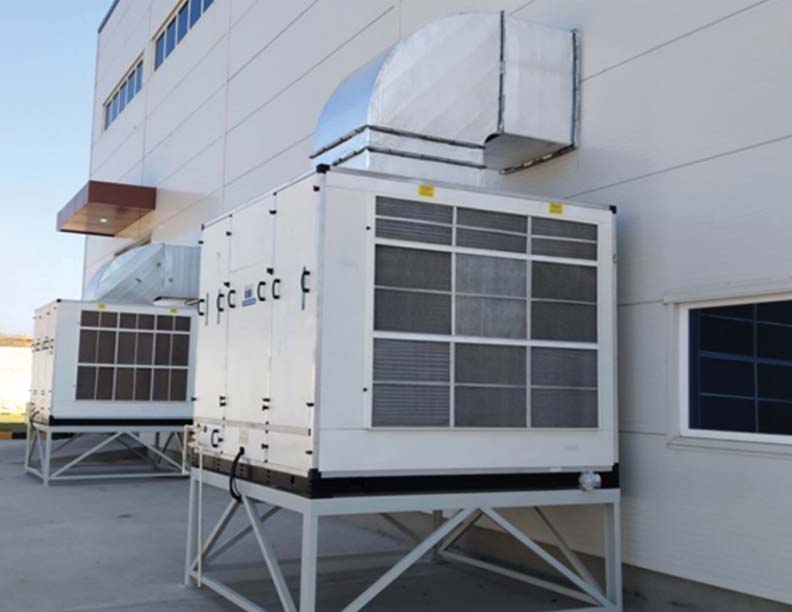
Supply (Makeup Air) System
- Air inlets/louvers for fresh air intake.
- Filters to remove outdoor particulates.
- Heating/cooling coils (for tempered makeup air in extreme climates).
- Fans (centrifugal or axial) to push air in.
- Ductwork and diffusers/registers for even distribution.
Exhaust System
- Hoods/Capture Devices: The critical first element – enclosing, capturing, receiving, or push-pull types designed as per ACGIH guidelines to achieve capture velocity.
- Ductwork: Transports contaminated air; sized for transport velocity (to prevent settling), constructed per SMACNA standards (gages, reinforcements, clean-out doors for particulates).
- Air Cleaners/Collectors: Filters, cyclones, baghouses, electrostatic precipitators, scrubbers, or HEPA units to remove contaminants before discharge.
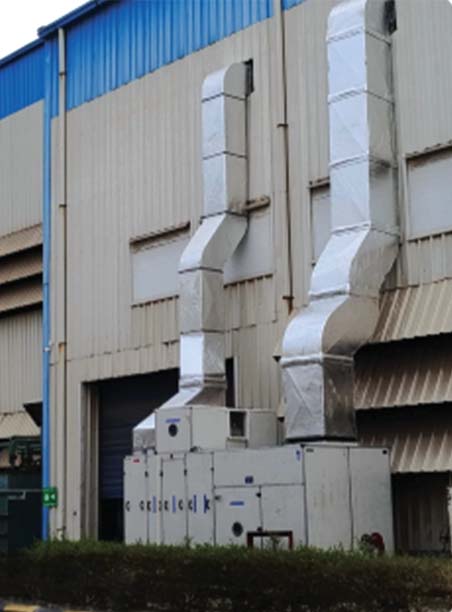
- Fans/Exhausters: Centrifugal or axial, AMCA-certified, located downstream of cleaners to avoid contamination; often roof-mounted or outdoors.
- Discharge Stacks: Tall, vertical, rain-protected stacks for safe atmospheric release, designed per ACGIH dispersion criteria.
Additional elements include dampers, silencers, sensors, controls (VFDs for variable flow), and monitoring (pressure, flow, contaminant levels).
Industry-Specific Challenges
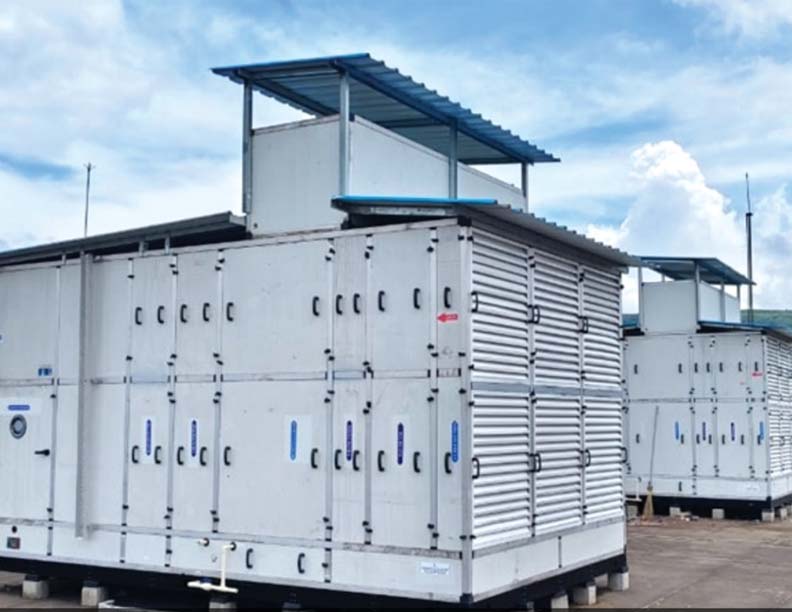
The Steel Plant Environment (e.g., SAIL Rourkela)
- The Problem: Heavy coal dust, high ambient temperatures, and 24/7 operation.
- The Solution: Air Washers are preferred here because they provide “Adiabatic Cooling” and handle high dust loads better than standard fabric filters.
- Critical Factor: Corrosion. Systems must be scrapped and painted regularly to survive the acidic atmosphere.
Modern Efficiency: The VFD Revolution
Traditional systems run at 100% speed even when the kitchen is slow or the plant is cool. By using a Variable Frequency Drive (VFD), the motor speed is adjusted based on demand.
- Impact: Reducing fan speed by just 20% can reduce power consumption by nearly 50%, thanks to the Affinity Laws of fans.
Maintenance, Monitoring, and Best Practices
- Regular inspection is essential: Check hood capture (smoke tubes/visual tests).
- Clean ducts/filters to prevent build-up/fire risk.
- Monitor fan performance, pressure drops, and airflow.
- Recalibrate/rebalance annually or after changes.
- Train workers on system use and limitations.
- Poor maintenance leads to reduced effectiveness, energy waste, and regulatory violations.
Maintenance Checklist for Longevity
For a ventilation system to maintain its design CFM, the following are non-negotiable:
- Filter Integrity: Clogged filters increase static pressure and drop airflow.
- Belt Tension: Loose V-belts lead to “slippage,” meaning the motor turns but the fan doesn’t reach the required RPM.
- Coil Cleaning: In Air Washers, scale buildup on the 8-row coil reduces heat transfer efficiency.
Emerging Trends
Modern systems integrate:
- Variable Frequency Drives (VFDs) for energy savings.
- IoT sensors and smart controls for real-time optimisation.
- Low-energy designs and heat recovery.
- Advanced filtration (e.g., nanofiber filters).
- Sustainable refrigerants and low-emission discharge.

Driving operational excellence in the HVAC sector, Aman Taluja is a pivotal professional at Brightflow Engineers Pvt. Ltd. Kundli, Haryana-based leader in manufacturing Air Handling Units, Evaporative Cooling Units, Dry Scrubbers, and Fan Coil Units. Aman’s impressive track record spans successful installations for prestigious clients such as NTPC Dadri, Deloitte Gurugram, Le Meridien Hyderabad, Marriott Amritsar, and GAIL, Dibiyapur. His profound expertise in crafting superior air management solutions underscores
a steadfast commitment to elevating indoor air quality and optimising operational efficiency.