

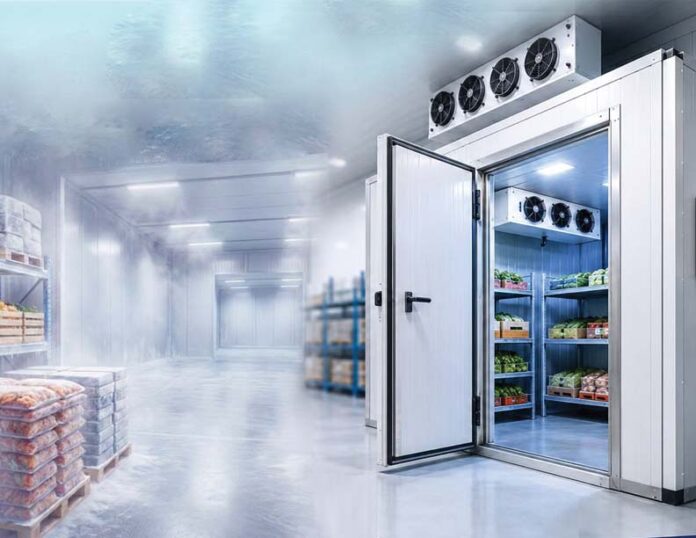
India is the world’s second largest producer of fruits and vegetables, contributing over 320 million tonnes annually to global supply. Yet, an estimated 15 to 18% of this produce — valued at over Rs. 92,000 crore — is lost every year to post-harvest decay, spoilage and improper storage. The culprit is not the farmer. It is the broken cold chain: the absence of reliable, well-engineered refrigeration and temperature-controlled storage at every link between the farm and the consumer.
The discipline that addresses this gap — Horticulture HVAC&R (Heating, Ventilation, Air Conditioning and Refrigeration) — is among the most consequential and technically demanding branches of the refrigeration industry. A cold room for horticultural produce is not simply a large freezer. It is a precisely calibrated ecosystem where temperature, humidity, air circulation, ethylene concentration and even atmospheric composition must be controlled simultaneously to extend the shelf life of living produce without compromising its nutritional value, flavour or appearance.
This article explores the engineering fundamentals, equipment considerations, challenges and emerging trends shaping horticulture HVAC&R and cold room design in India.
Why Horticultural Produce Demands Specialised Refrigeration
Unlike processed food or pharmaceuticals, fresh horticultural produce is biologically active. After harvest, fruits and vegetables continue to respire, consuming their own carbohydrates and releasing heat, water vapour and carbon dioxide. This ongoing metabolic activity generates what engineers call the heat of respiration — a significant and variable internal heat load that must be factored into cold room design alongside conventional loads from transmission, infiltration and product pull-down.
Different commodities have vastly different thermal and physiological requirements. Mangoes stored below 13°C suffer chilling injury; potatoes stored below 4°C convert starch to sugar and develop an unpleasant taste. Onions need low relative humidity around 65–70% to prevent sprouting, while leafy greens require near-saturation humidity of 95–98% to retain crispness. Ethylene-sensitive produce such as broccoli must be stored well away from ethylene-producing commodities like apples and pears.
These requirements demand that the engineer move beyond simple thermostat-controlled box cooling and design a system that is produce-specific, climate-aware and load-adaptive.
Types of Cold Rooms Used in Horticulture
Horticulture cold storage is not a monolithic concept. Depending on the commodity, quantity, handling frequency and geographic context, engineers choose from a hierarchy of cold room types:
Pre-Cooling and Vacuum Cooling Chambers
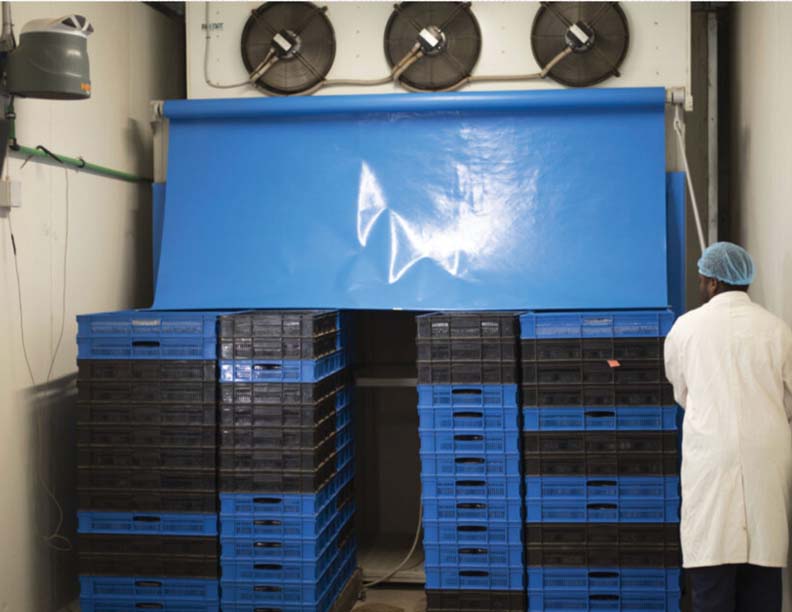
Deployed immediately at harvest or at pack-house entry, pre-cooling chambers rapidly remove field heat from produce before it enters main storage. Forced-air pre-coolers blow refrigerated air directly through stacked cartons at high velocity, achieving core temperature reduction within two to six hours. Vacuum coolers use low-pressure evaporation to chill leafy greens within 20 to 30 minutes and are standard for lettuce, spinach and cut flowers exported by air freight.
Cold Storage Warehouses (Bulk Storage)
Large-capacity rooms operating at a fixed temperature and humidity band for extended storage of a single commodity. Potato cold stores typically maintain 2–10°C with strict humidity control. Onion stores operate at 0–1°C with active dehumidification. These facilities may store thousands of metric tonnes and are designed for minimal door-opening cycles to protect temperature stability.
Multi-Commodity Cold Rooms
Smaller, partition-flexible rooms serving multiple produce types at different temperatures. Common in wholesale markets, airport cargo hubs and hotel or restaurant supply chains. The HVAC&R design must accommodate separate refrigerant circuits or zone control valves to maintain independent temperature and humidity conditions within the same physical envelope.
Controlled Atmosphere (CA) Stores
CA stores extend the shelf life of apples, pears and kiwi fruit by reducing oxygen concentration (typically to 1.5–2.5%) and elevating CO₂ levels within an airtight chamber, dramatically suppressing respiration and ethylene activity. These rooms demand gas-tight construction, CO₂ scrubbers, nitrogen generators and sophisticated atmospheric monitoring — adding engineering complexity and capital cost but enabling storage of 9–12 months against 2–3 months in conventional cold rooms.
HVAC&R System Design Considerations
Effective cold room engineering for horticulture involves the precise calculation and selection of several interdependent system elements:
Refrigeration Load Calculation
The total refrigeration load includes transmission load through insulated panels and floor, infiltration load through door openings, product pull-down load (cooling the incoming warm produce), heat of respiration from stored produce, and miscellaneous loads from lighting and personnel. In practice, the heat of respiration alone can account for 30–50% of total load in a fresh produce store, making commodity-specific data tables essential at the design stage.
Insulation
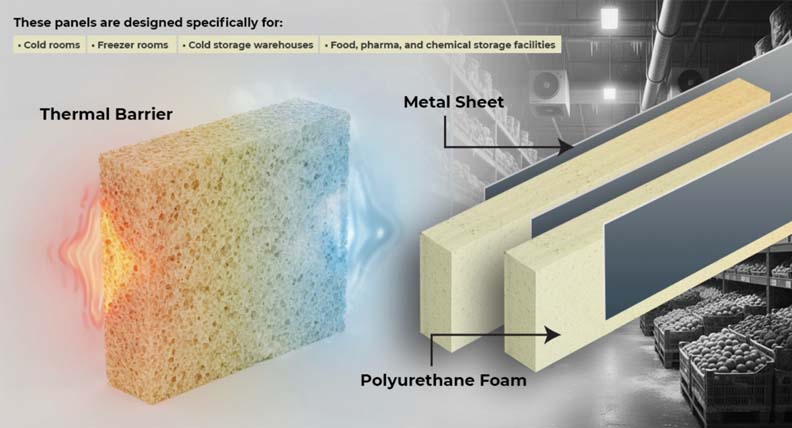
PUF (Polyurethane Foam) sandwich panels of 80–150mm thickness are the industry standard, offering excellent thermal resistance (typical U-value 0.20–0.25 W/m²K). Vapour barriers on the warm side of panels prevent moisture migration that degrades insulation performance over time. Floor insulation is often overlooked but critical — a cold room without floor insulation loses energy continuously to ground temperatures and risks frost heave in sub-zero applications.
Air Distribution and Humidity Control
High-humidity environments demand careful coil selection. A small Temperature Difference (TD) between the evaporator coil surface and the room air — typically 3–6°C — minimises moisture deposition on the coil and preserves relative humidity in the room. Wide-fin-pitch coils with hot-gas or electric defrost are selected for high-humidity fruit and vegetable rooms to prevent excessive ice build-up. Ceiling-mounted air coolers with multiple fans ensure uniform air distribution across deep storage aisles.
Refrigerant Selection
R-404A, historically the dominant refrigerant for medium and low temperature applications, is being phased down under India’s HFC reduction roadmap aligned with the Kigali Amendment. R-449A, R-452A and R-407F are gaining adoption as lower-GWP alternatives compatible with existing equipment with minor modifications. New greenfield installations increasingly adopt R-717 (ammonia) for large-scale cold stores given its zero GWP, excellent thermodynamic properties and low operating cost — subject to appropriate safety provisions under IS 660 and ASHRAE 15.
Cold Chain Infrastructure in India — The Ground Reality
India has approximately 8,186 cold storage facilities with a combined capacity of around 374 lakh metric tonnes, according to the National Horticulture Board. However, the distribution of this capacity is severely skewed: over 75% of installed capacity is dedicated to a single commodity — the potato — and concentrated in Uttar Pradesh, West Bengal and Gujarat. Tropical and subtropical horticulture across Maharashtra, Andhra Pradesh, Karnataka and the North-East remains grossly under-served.
The Pradhan Mantri Kisan Sampada Yojana (PMKSY) and the National Horticulture Mission (NHM) have accelerated investment through capital subsidies of up to 35–50% for cold chain infrastructure. The Agriculture Infrastructure Fund (AIF) offers low-cost credit of up to Rs. 2 crore per project. These programmes are drawing private investment into micro-cold stores of 10–50 metric tonne capacity at the farm gate — the weakest link in the chain — where produce loss is highest and refrigeration penetration is lowest.
Key Government Schemes Supporting Cold Chain Investment in India
• Pradhan Mantri Kisan Sampada Yojana (PMKSY) — up to 35% capital subsidy on cold chain projects
• Agriculture Infrastructure Fund (AIF) — low-interest credit up to Rs. 2 crore per facility
• National Horticulture Mission (NHM) — grants for pre-cooling, pack-houses and reefer transport
• Integrated Cold Chain Scheme (MoFPI) — end-to-end infrastructure subsidy for farm-to-consumer chain
• PLI Scheme for Food Processing — incentives for large-scale integrated cold storage investment
For HVAC&R engineers, this represents a significant pipeline of new projects at diverse scales, from 5 TR solar-powered farm-gate cool stores to 500– 1000 TR integrated pack-house complexes serving export markets.
Emerging Technologies and Trends
Solar-Powered and Off-Grid Cold Rooms
In areas where grid power is unreliable or absent — which describes a significant proportion of rural India — solar-photovoltaic-powered refrigeration systems are gaining traction. Hybrid PV-battery systems powering DC compressors can maintain 10–15°C storage in 5–10 MT rooms with six to eight hours of daily sunshine. Phase-Change Materials (PCMs) are being deployed as thermal batteries, absorbing cold energy during daylight hours and releasing it through the night to bridge the solar gap.
IoT and Remote Monitoring
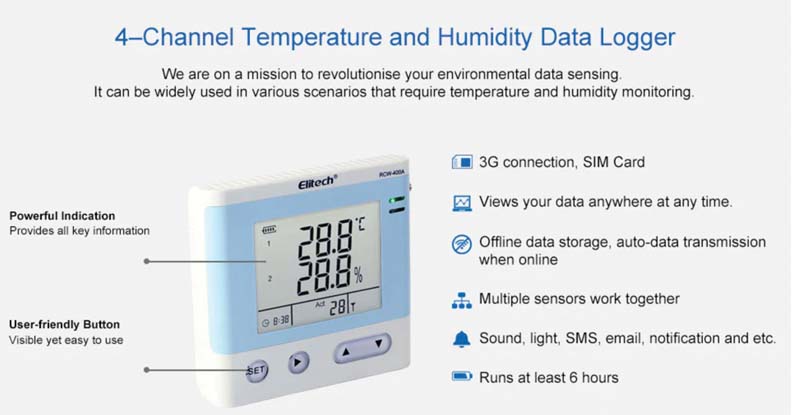
Temperature and humidity loggers with GSM or Wi-Fi connectivity now enable remote monitoring of cold room conditions from a smartphone. Alerts for door-open events, power failures, compressor trips and temperature excursions can be received in real time, preventing spoilage during unattended night or weekend operation. For large multi-room facilities, SCADA-based building management systems provide centralised energy management and predictive maintenance scheduling.
Eutectic Plates and Refrigerated Transport Integration
The last-mile cold chain — from collection centre to retail store — remains the most difficult segment to electrify reliably. Eutectic plate systems, which freeze a eutectic solution at a defined melting temperature overnight using cheaper off-peak power and then release cold during the delivery day without requiring active refrigeration, are well-suited to short-haul distribution of 4–8 hours in three-wheeler and light commercial vehicles.
Challenges Facing the Industry
Despite promising policy support and growing private investment, several structural challenges continue to slow the expansion of horticulture HVAC&R in India. Fragmented farm holdings make it economically difficult for individual farmers to invest in or access cold rooms of viable size. Erratic grid power — particularly in rural areas — causes compressor
cycling, temperature fluctuations and premature equipment failure. Diesel genset backup adds cost and carbon footprint.
A shortage of trained refrigeration technicians capable of maintaining and servicing cold room equipment in Tier 2 and Tier 3 markets results in preventable breakdowns and post-harvest loss even where cold rooms exist. The lack of commodity-specific operating protocols — temperature setpoints, humidity targets, stacking patterns, ventilation schedules — in many smaller facilities means that technically sound equipment is frequently operated in a sub-optimal manner.
Finally, the absence of a national traceability and cold chain logging standard makes it difficult for exporters to provide the temperature-record documentation increasingly demanded by import regulations in the European Union, the United States and the Middle East.

Aman Taluja is the Operations Head at Brightflow Engineers Pvt. Ltd. With hands-on experience in executing complex commercial and industrial projects, he specializes in delivering practical, performance-oriented HVAC solutions. At Brightflow, the focus is on the design, manufacturing, and execution of Air Handling Units (AHUs), air washers, ventilation systems, and air quality solutions, catering to a wide range of industries including hospitality, manufacturing, healthcare, and infrastructure. Over the years, he has been associated with reputed projects such as Le Méridien Hyderabad, NTPC Dadri, HAL Nashik, and Marriott Amritsar, delivering projects on time, within budget, and with a strong emphasis on quality.