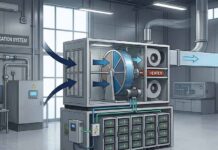

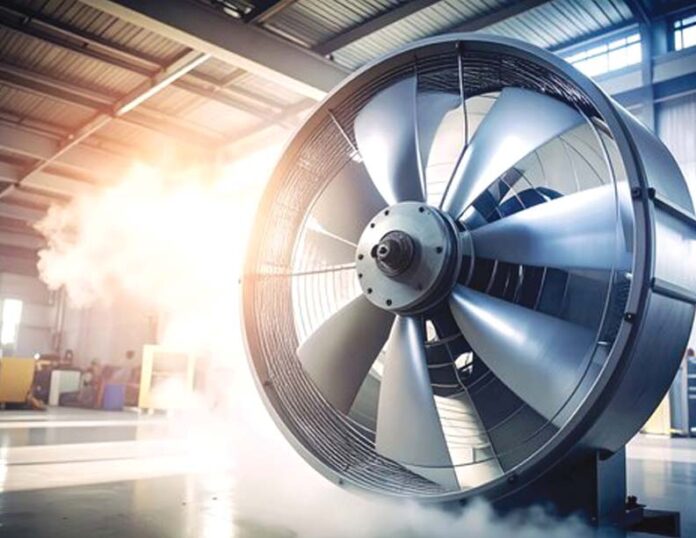
In the modern built environment, the ventilation system is often compared to the respiratory system of a building. At the heart of this system lies the fan or blower – the mechanical driver responsible for moving air through complex networks of ducts, filters, and heat exchangers. From ventilation systems to Air Handling Units (AHUs) and Air Washers, fans and blowers play a crucial role in maintaining thermal comfort, air quality, and energy efficiency.
With evolving technologies such as direct-driven plug fans and VFD integration, the HVAC industry is moving toward smarter, more energy-efficient air movement solutions.
Fundamental Classification: Fans vs. Blowers
While the terms are often used interchangeably, engineering standards (such as AMCA) distinguish them based on the pressure ratio:
- Fans: These are designed to move large volumes of air at relatively low static pressures. The pressure ratio is generally below 1.1.
- Blowers: These are utilized when the system resistance (static pressure) is higher. They have a higher pressure ratio (1.1 to 1.2) and are essential for pushing air through long duct runs or high-efficiency filtration stages.
Axial Flow Fans: The Masters of Volume
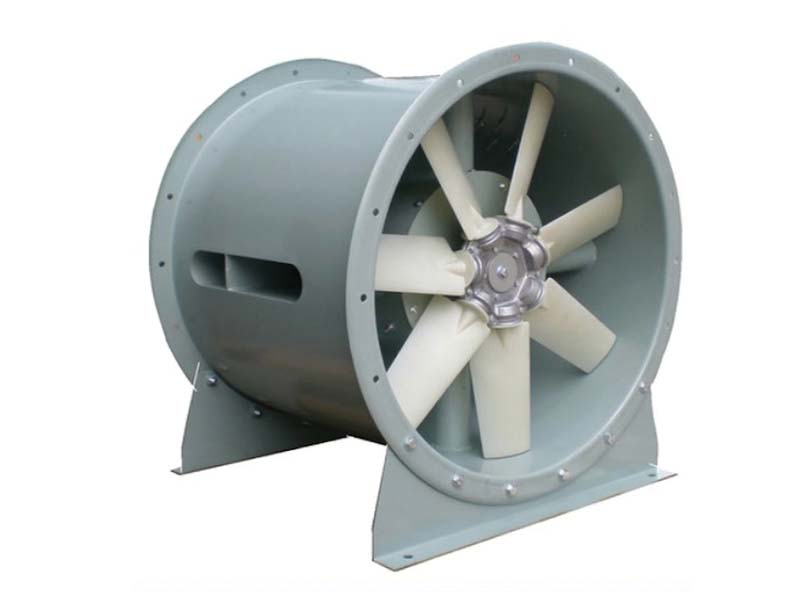
Axial fans move air along the axis of the fan’s rotation. They are the workhorses of the ventilation sector due to their ability to handle massive volumes of air.
- Smoke Exhaust Applications: In places of public assembly, such as the PVR Cinemas project, axial fans are fire-rated. Their aerofoil blades are designed to exhaust toxic smoke rapidly, providing a clear path for evacuation.
- Fresh Air & General Exhaust: These fans maintain the oxygen-CO2 balance in basements and large halls.
Centrifugal Fans: The Masters of Pressure
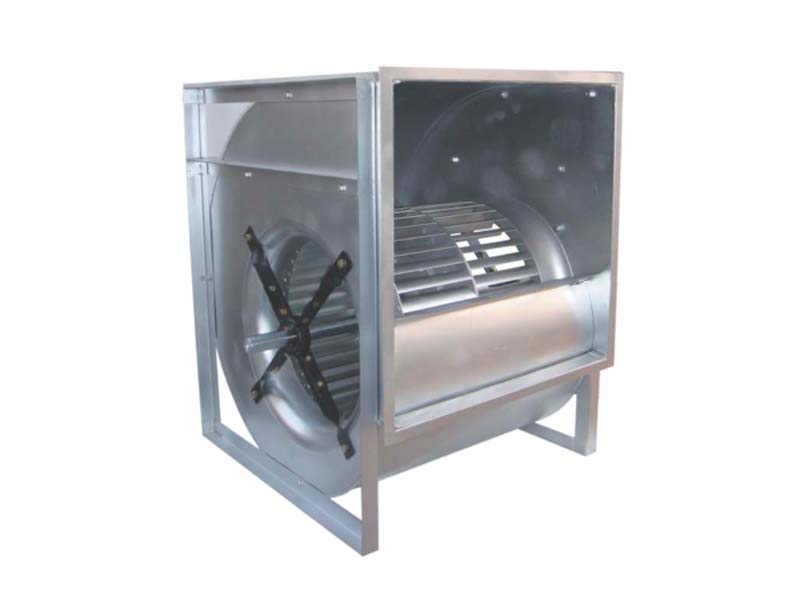
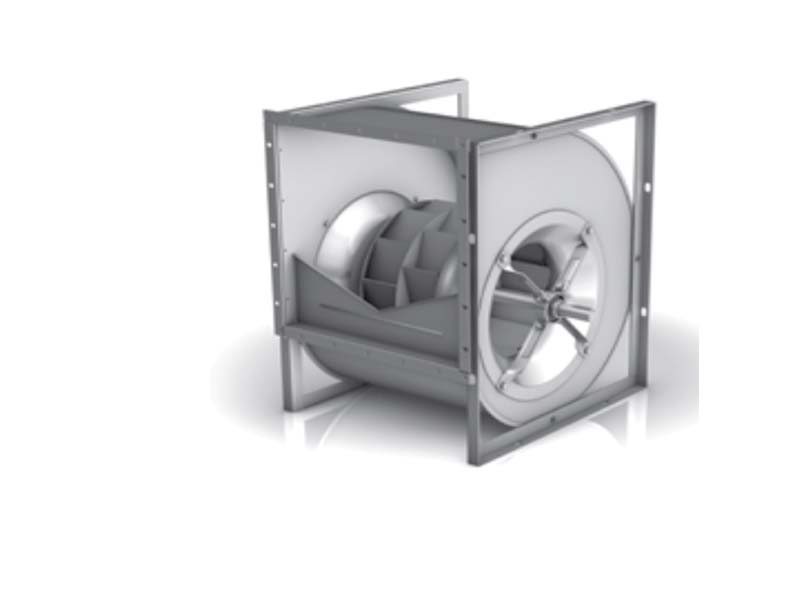
Centrifugal fans change the direction of airflow by 90 degree. They are categorized by their blade geometry:
- Forward Curved: Best for low-pressure, low-noise domestic applications.
- Backward Curved: These are the industry standard for high-performance HVAC. They are “non-overloading,” meaning the motor won’t burn out if the system resistance changes. They are ideal for AHUs where air must be pushed through cooling coils and HEPA filters.
Integration in Air Handling Units (AHUs)
The Air Handling Unit is the most critical component in centralized air conditioning. The selection of the fan inside the AHU dictates the unit’s footprint, noise levels, and energy footprint.
The Shift from Belt-Driven to Direct-Driven
For decades, DIDW (Double Inlet Double Width) belt-driven fans were the standard. However, they carried several disadvantages:
- Transmission Loss: Belts lose 5-10% of energy due to friction.
- Maintenance: Belts require periodic tensioning and replacement.
- Particle Contamination: Belt wear generates rubber dust, which is unacceptable in sterile environments like hospitals or high-end hotels.
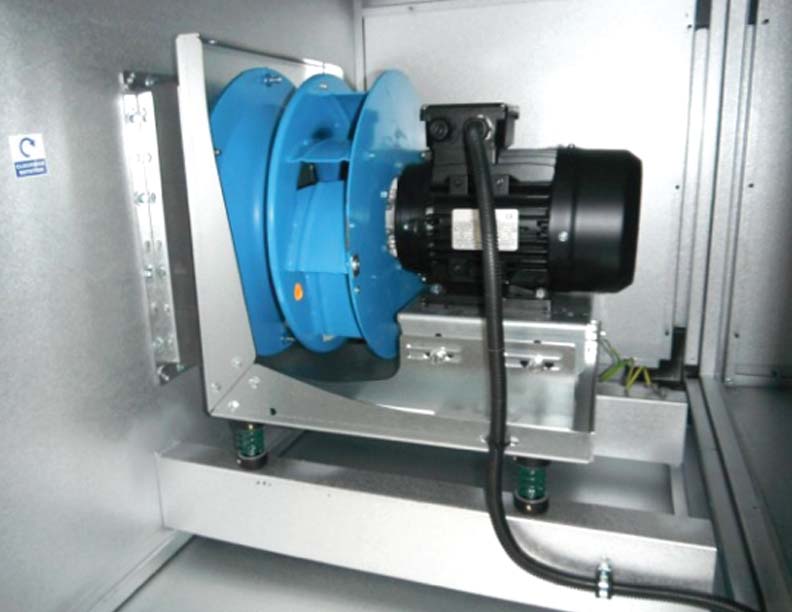
AHU manufacturers in India have been a pioneer in advocating for Direct-Driven Plug Fans. By mounting the impeller directly onto the motor shaft, we eliminate transmission losses and significantly reduce the maintenance cycle.
Case Study: DoubleTree by Hilton, Bengaluru Airport
- The Challenge: The hospitality sector at a busy international airport demands 24/7 operation with zero tolerance for noise or downtime. The DoubleTree by Hilton required a robust HVAC solution that could handle high latent heat loads while fitting into compact mechanical rooms.
- The Solution: Brightflow Engineers supplied and installed advanced Air Handling Units specifically designed for the Bengaluru climate.
- The Technology: Instead of traditional belt-driven fans, these AHUs incorporated Direct-Driven Plug Fans.
- VFD Integration: Every fan was paired with a Variable Frequency Drive (VFD). This allows the fan speed to modulate based on real-time occupancy. During late-night hours when the lobby or banquet areas are empty, the VFD reduces the fan speed, leading to exponential energy savings (as per the Fan Laws, power is proportional to the cube of the speed).
Results:
- Energy Efficiency: A measurable 15% reduction in power consumption compared to standard belt-driven AHUs.
- Hygiene: Zero belt-dust contamination, ensuring pristine air quality for guests.
- Acoustics: Significant reduction in vibration and mechanical noise, essential for a luxury hotel environment.
Air Washers: Evaporative Cooling Efficiency
In industrial settings and commercial kitchens, Air Washers provide a cost-effective alternative to refrigerated air conditioning. The fan in an Air Washer must overcome the pressure drop of the Cellulose Cooling Pads.
The Air Washers utilize high-static centrifugal blowers or axial fans depending on the throw required. By using Double Skin construction, we ensure that the fan noise is dampened, and the unit remains thermally efficient, preventing condensation on the outer panels.
Scrubbers: Managing Exhaust Air
Blowers in Wet Scrubbers face the most hostile environments. They must pull air laden with grease, smoke, and chemical vapours.
- SISW Backward Curved Fans: These are preferred in scrubbers because the blade design prevents the accumulation of grease, which would otherwise unbalance the impeller.
- Material Integrity: To prevent the blower from corroding, we often utilize SS-304 impellers or specialized anti-corrosive coatings.
The Role of VFDs and Smart Control
The future of Fans and Blowers lies in Demand Controlled Ventilation (DCV). By integrating VFDs with CO2 Sensors or Pressure Transducers:
- Automatic Air Balancing: The fan automatically speeds up as filters get dirty to maintain a constant airflow.
- Soft Starts: VFDs prevent the ‘inrush current’ that occurs when a motor starts, protecting the building’s electrical infrastructure.
Emerging Technologies: EC Fans and Their Superior Efficiency
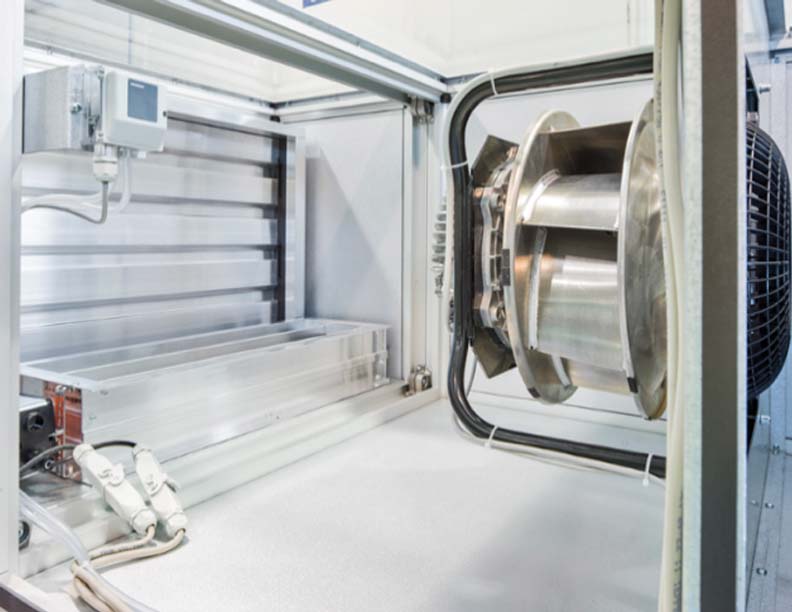
Among the most significant advancements in recent years is the rise of Electronically Commutated (EC) fans – also known as brushless DC or EC motor-driven fans. EC technology integrates a high-efficiency permanent magnet motor with built-in electronic commutation and speed control electronics, eliminating the need for external VFDs in many cases.
Key Advantages of EC Fans Include
- Exceptional energy efficiency: EC motors routinely achieve 80–90% efficiency across a wide speed range (10–100%), compared to 60–75% for traditional AC induction motors. This translates to 30–70% lower power consumption than conventional AC fans, especially at part-load conditions common in variable-air-volume (VAV) systems.
- Precise, integrated control: Built-in electronics allow direct 0–10 V, PWM, or Modbus/BACnet communication for speed modulation, airflow/pressure constant control, and feedback monitoring – without additional drives or sensors.
- Lower noise and heat: Smoother operation reduces acoustic levels (often 5–10 dBA quieter) and motor temperatures, extending bearing and component life.
- Maintenance-free design: No brushes, slip rings, or belt drives mean virtually zero routine servicing beyond basic cleaning.
- Retrofit-friendly: Many EC plug fans drop into existing AHU cabinets, delivering quick payback (often 1–3 years) through energy savings alone.
In AHU applications, EC plug fans excel in scenarios requiring precise modulation, such as demand-controlled ventilation, cleanrooms, or hotels with fluctuating occupancy. For instance, when paired with pressure-independent control, they maintain exact static pressure or airflow setpoints while minimizing energy use. In air washers, EC fans ensure uniform pad face velocity even as resistance varies with wetting or dust accumulation.
Compared to conventional AC plug fans (even with external VFDs), EC versions offer 10–30% additional savings in real-world part-load operation, lower total harmonic distortion (cleaner power draw), and simpler wiring/installation. Leading manufacturers now offer EC versions in backward-curved plug configurations up to 20,000+ CFM, making them ideal for modern, energy-code-compliant buildings.
Jet Fans for Ductless Ventilation
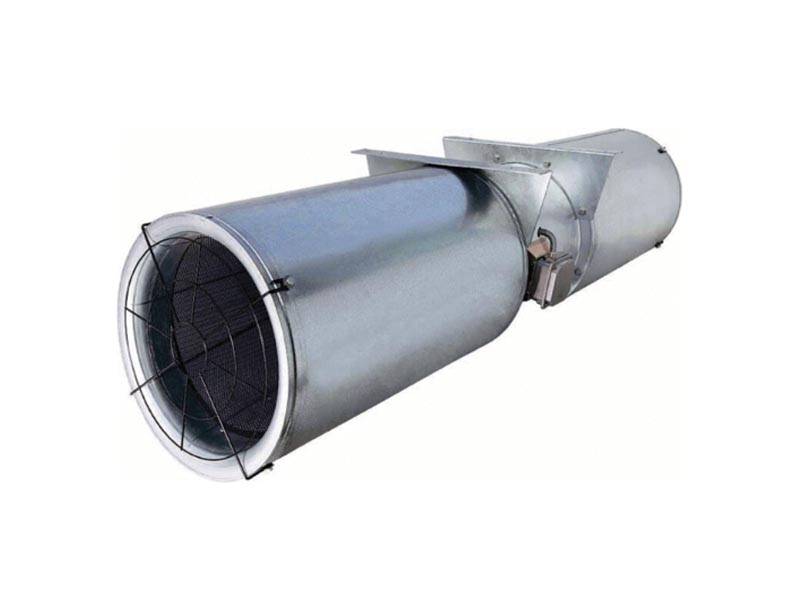
While most HVAC discussions focus on ducted systems, jet fans represent a powerful alternative for large-volume, enclosed spaces where traditional ductwork is impractical or costly. Jet fans are compact, high-velocity axial units (typically 300–800 mm diameter) that generate a powerful, focused jet of air to induce secondary airflow over long distances.
The Primary Applications Include
- Underground parking garages: Jet fans mounted on ceilings or beams create continuous air movement, diluting carbon monoxide (CO), nitrogen oxides (NOx), and other vehicle emissions. They push contaminated air toward exhaust points or extract shafts, eliminating stagnant zones and ensuring CO levels stay below safe thresholds (e.g., 25–50 ppm per standards like ASHRAE 62.1 or local codes).
- Road and metro tunnels: Larger jet fans maintain longitudinal airflow for normal ventilation and smoke control during fires, directing smoke away from escape routes.
- Loading bays, warehouses, and industrial halls: Ductless design reduces installation costs, maintenance, and pressure losses associated with extensive ducting.
Jet fans operate on the induction principle: the high-velocity primary jet entrains surrounding air, creating 5–15 times the primary volume in induced flow. This results in efficient mixing and contaminant removal with minimal energy input. Modern jet fans feature:
- Reversible operation (for bi-directional flow in tunnels)
- Tiltable nozzles or adjustable discharge angles
- EC or IE3 motors for energy efficiency
- Low-noise designs (<65–70 dBA at 3 m)
- Integrated sensors for CO/NOx-linked speed control
In parking garage projects, arrays of 10–50 jet fans spaced 20–40 m apart replace bulky duct networks, cutting construction costs by 30–50% and improving aesthetics. During fire mode, they switch to high-speed operation to support smoke extraction, aiding firefighter access and safe evacuation. Jet fans complement traditional AHU and air washer applications by handling large-scale dilution ventilation where high static pressure is unnecessary. Their adoption has grown rapidly in India’s expanding urban infrastructure, including multi-level basements, malls, and airports.
The future of HVAC lies in smarter, more efficient air movement. By embracing EC fans for precision and jet fans for large-scale induction, engineers and building owners can achieve superior IAQ, lower OPEX, and compliance with evolving green standards – all while ensuring occupant comfort and safety.

Driving operational excellence in the HVAC sector, Aman Taluja is a pivotal professional at Brightflow Engineers Pvt. Ltd. Kundli, Haryana-based leader in manufacturing Air Handling Units, Evaporative Cooling Units, Dry Scrubbers, and Fan Coil Units. Aman’s impressive track record spans successful installations for prestigious clients such as NTPC Dadri, Deloitte Gurugram, Le Meridien Hyderabad, Marriott Amritsar, and GAIL, Dibiyapur. His profound expertise in crafting superior air management solutions underscores a steadfast commitment to elevating indoor air quality and optimising operational efficiency.