
With rising urbanisation, increasing incomes, and steadily climbing summer temperatures, air conditioners have shifted from being a luxury to a near necessity in Indian homes. While air conditioners provide much-needed thermal comfort, their energy consumption places a significant burden on household electricity bills, power infrastructure, and the environment.
Studies and utility data indicate that a room air conditioner alone accounts for nearly 55–60% of total household electricity consumption during summer months. Improving the way air conditioners are selected, installed, and operated is therefore one of the most effective strategies for saving energy and reducing carbon emissions.
Understanding Heat Ingress: The Root of High Cooling Load
The primary function of an air conditioner is not to generate cold air, but to remove heat from an enclosed space. The amount of heat entering a room – known as ‘heat ingress’ – determines how hard the AC must work and how much electricity it consumes. In Indian climatic conditions, west-facing walls and windows receive intense afternoon solar radiation, contributing to the highest heat gain. Similarly, terraces and roofs absorb heat throughout the day and radiate it indoors during the evening and night.
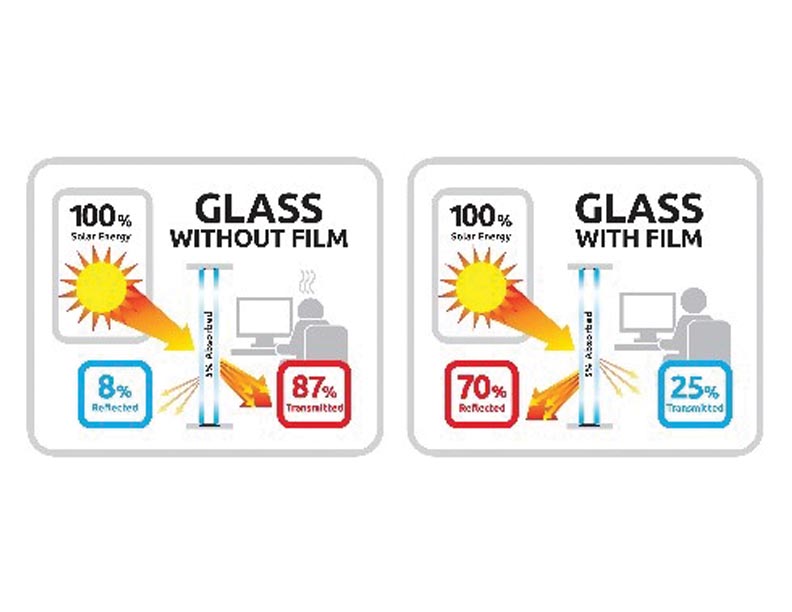
Simple architectural and behavioural interventions can drastically reduce this heat load. Applying reflective or solar-control films on window panes blocks a significant portion of solar radiation. Keeping curtains or blinds closed during peak sunlight hours further reduces direct heat entry. On terraces, the use of reflective or cool roof paints can lower surface temperatures by several degrees, directly reducing the cooling demand inside the home. Reducing heat ingress is often the most cost-effective and long-lasting energy-saving measure.
Temperature Settings: Small Changes, Big Savings
One of the most common misconceptions is that setting the air conditioner to a very low temperature cools the room faster. In reality, an air conditioner cools at a fixed rate; lowering the set temperature only makes it operate for longer periods. Research shows that every 1°C increase in the thermostat setting can save approximately 5–6% of electricity under climatic conditions prevalent in cities like Delhi.
To promote energy conservation, the Bureau of Energy Efficiency (BEE) has mandated manufacturers to program AC controllers with a factory default setting of 24°C.
The ideal set temperature, however, depends on ambient temperature and humidity. In hot and dry climates, a higher set temperature is sufficient for thermal comfort.
A setting of 26°C or 27°C, combined with a ceiling fan running at low speed, provides excellent comfort while significantly reducing energy consumption. In humid coastal or monsoon climates, a slightly lower setting of 24–25°C may be required to effectively remove moisture from the air.
Choosing the Right Air Conditioner
Energy efficiency begins at the time of purchase. The Bureau of Energy Efficiency (BEE) introduced the mandatory star labelling programme for room air conditioners in 2010 to guide consumers towards energy-efficient choices. Under this programme, ACs are rated from One Star (least efficient) to Five Star (most efficient). BEE periodically upgrades efficiency criteria and conducts strict compliance checks, imposing heavy penalties on manufacturers in case of default. The programme has undergone multiple revisions, significantly raising minimum efficiency standards over time.
As a result, a Five Star AC manufactured under the latest norms is approximately 1.8 times more efficient than 2010 manufactured Five Star models, and vastly superior to One Star ACs of the past. Indian consumers have increasingly recognised the economic benefits of energy-efficient appliances. Today, Three Star ACs account for the highest sales, followed by Five Star models, and many manufacturers have discontinued One and Two Star ACs altogether.

Consumers should look beyond star ratings alone and carefully examine the annual electricity consumption (units per year) printed on the energy label. Comparing models using the BEE mobile application helps identify the most efficient option across brands and capacities. While high-efficiency ACs may involve a slightly higher upfront cost, the lifetime savings in electricity bills far outweigh the initial price difference.
Importance of Correct Installation
Even the most energy-efficient air conditioner can perform poorly if installed incorrectly. The indoor unit should be positioned such that there is no obstruction to air intake or air throw. Restricted airflow forces the system to work harder, increasing electricity consumption and reducing cooling effectiveness.
The outdoor unit plays an equally critical role. It must be installed in a well-ventilated area with free airflow across the condenser coil. Installing outdoor units inside enclosed building ducts or cramped spaces severely hampers heat rejection, leading to higher power consumption, reduced cooling capacity, and frequent breakdowns. Adequate clearance and easy access for servicing are essential for sustained performance. AC should be installed with easy access for servicing.
Smart Operation and User Behaviour
Human thermal comfort requirements change during the night. After about two hours of sleep, the body’s metabolic rate decreases, and a higher room temperature is sufficient for comfort. Most modern air conditioners offer a SLEEP mode, which automatically increases the set temperature by 1–2°C every hour. Using this feature enhances comfort while reducing energy use.
Remote controls also provide timer functions, allowing users to switch off the AC during early morning hours when outdoor temperatures naturally fall. Smart and Wi-Fi-enabled ACs offer advanced features such as scheduling, usage monitoring, and remote operation. When used effectively, these functions prevent unnecessary operation and energy wastage.
Maintenance: The Hidden Efficiency Factor
Regular maintenance is crucial for sustaining energy efficiency. Indoor unit air filters should be cleaned periodically using soap and water, as clogged filters restrict airflow and increase power consumption. The outdoor unit coils accumulate dust and debris over time, reducing heat transfer efficiency. Cleaning these coils using a blower restores performance.
Ideally, air conditioners should undergo complete servicing before the onset of summer, when they are subjected to prolonged and continuous operation. Well-maintained systems consume less electricity, cool more effectively, and have a longer operational life.
Replacing Old Air Conditioners
Older air conditioners consume significantly more electricity due to component degradation, refrigerant leakage, and outdated efficiency standards. Advances in inverter compressors, heat exchangers, and control technologies have made modern ACs substantially more efficient.
Studies indicate that a 10-year-old air conditioner consumes nearly 40% to 60% more electricity than a new high-efficiency model of the same capacity as a combination of wear and tear and enhanced efficiency table by BEE. Recognising this, the government is exploring an AC scrappage policy, similar to vehicle scrappage programmes, to accelerate the replacement of inefficient appliances. From both economic and environmental perspectives, it is advisable to replace air conditioners that are more than 10 years old.
Environmental Impact and the Bigger Picture
Residential air conditioning contributes significantly to peak electricity demand, driving the need for additional power generation capacity – often based on fossil fuels. Higher electricity consumption also leads to increased greenhouse gas emissions, worsening climate change and intensifying heat waves, thereby creating a vicious cycle.
By improving efficiency and adopting responsible usage practices, households can collectively reduce stress on the power grid, lower emissions, and enhance energy security. Seemingly small individual actions – such as raising the thermostat by a degree, cleaning a filter, or choosing a more efficient appliance – can create a powerful cumulative impact when adopted at scale.

Jitendra Bhambure was Executive Vice President in Blue Star and presently works as an Advisor Technology. He is also a member of RTOC, Ozone Secretariate, UNEP).