
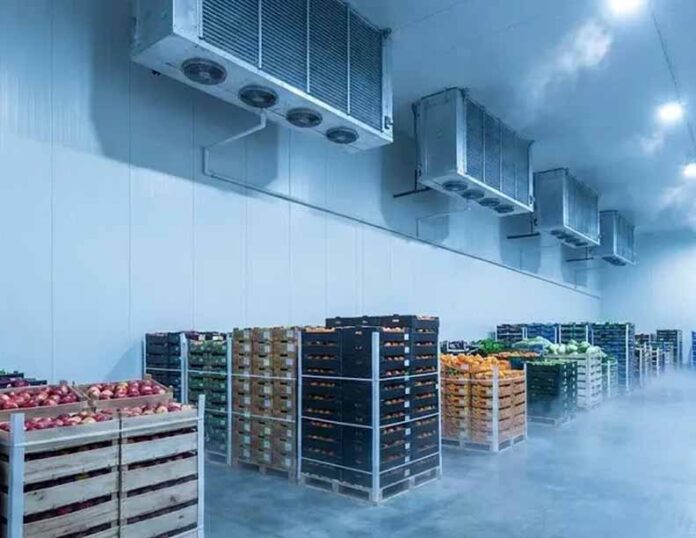
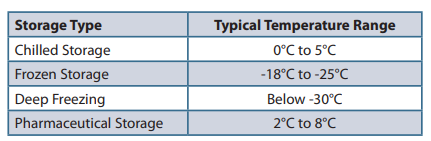
Cold storage refers to a temperature-controlled environment used for preserving products under refrigerated or frozen conditions. Depending on the product type and storage requirements, cold storage facilities can operate at different temperature ranges.
The primary purpose of cold storage is to reduce microbial growth, chemical reactions, and moisture loss. This helps in maintaining product freshness and preventing deterioration during storage and transportation.
Cold storage facilities are commonly used in:
- Food processing industries
- Dairy and meat processing plants
- Pharmaceutical warehouses
- Ice cream manufacturing
- Seafood storage and export facilities
- Agricultural produce preservation
A typical cold storage facility consists of insulated walls, refrigeration equipment, evaporators, condensers, HVAC systems, air distribution units, monitoring controls, and backup power systems.
HVAC Systems in Cold Storage
The HVAC system in a cold storage facility is designed to maintain controlled environmental conditions by regulating:
- Temperature
- Relative humidity
- Air circulation
- Ventilation
- Indoor air cleanliness
Unlike conventional comfort cooling systems used in buildings, cold storage HVAC systems are process-oriented and require precise thermal control. Even small temperature fluctuations can lead to product spoilage, condensation, frost formation, or energy losses.
Refrigeration Cycle in Cold Storage
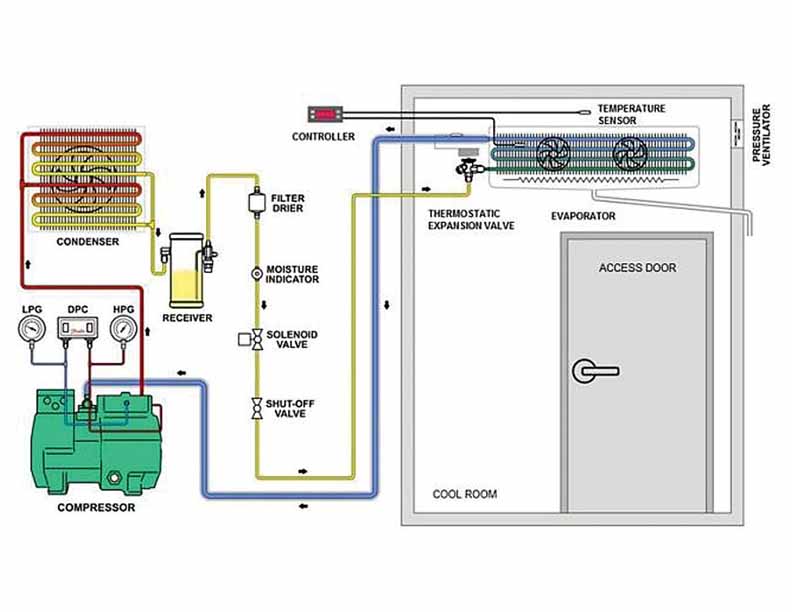
Cold storage systems primarily operate using the vapour compression refrigeration cycle, which is the most widely used refrigeration principle in commercial and industrial cooling applications. The main objective of this cycle is to continuously remove heat from the storage chamber and maintain the required low-temperature conditions for preserving products such as food, pharmaceuticals, chemicals, and other temperature-sensitive materials. The refrigeration process is carried out through four major stages, which work in a continuous closed-loop cycle.
Compression
The refrigeration cycle begins at the compressor, often referred to as the ‘heart’ of the refrigeration system. In this stage, the refrigerant enters the compressor in the form of a low-pressure, low-temperature vapour after absorbing heat from the cold storage space. The compressor compresses this vapour, significantly increasing its pressure and temperature. As a result, the refrigerant leaves the compressor as a high-pressure, high-temperature vapour. This high-energy vapour is then circulated to the condenser for heat rejection. Different types of compressors such as reciprocating, screw, scroll, and centrifugal compressors may be used depending on the size and application of the cold storage facility.
Condensation
After compression, the hot refrigerant vapour flows into the condenser. The primary function of the condenser is to reject the heat absorbed from the storage chamber, along with the heat generated during compression, to the surrounding environment. This heat rejection may occur through air-cooled, water-cooled, or evaporative condensers. As the refrigerant releases heat, it gradually changes its state from a vapour to a high-pressure
liquid refrigerant. Proper condenser operation is essential for maintaining system efficiency and reducing energy consumption.
Expansion
The high-pressure liquid refrigerant then passes through an expansion valve or throttling device. In this stage, the refrigerant experiences a sudden drop in pressure, causing a significant reduction in temperature. The expansion valve also regulates the amount of refrigerant entering the evaporator based on the cooling demand. Due to the pressure reduction, part of the refrigerant may instantly vapourise, producing a cold mixture of liquid and vapour refrigerant at low pressure and low temperature.
Evaporation
The cold refrigerant mixture enters the evaporator, which is located inside the cold storage chamber. Here, the refrigerant absorbs heat from the stored products and the surrounding air. As heat is absorbed, the refrigerant evaporates completely into a low-pressure vapour. Fans are commonly used in the evaporator section to circulate air uniformly across the cooling coils, ensuring even temperature distribution within the storage area. The cooled air maintains the desired storage temperature, while the refrigerant vapour returns to the compressor to repeat the cycle.

This continuous refrigeration cycle efficiently maintains low temperatures inside the cold storage facility, ensuring product preservation, minimizing spoilage, and maintaining the required environmental conditions for long-term storage.
Refrigerants commonly used in cold storage include:
- Ammonia (NH3)
- R404A
- R134a
- Hydrofluoroolefins (HFOs)
Natural refrigerants such as ammonia and CO2 are increasingly preferred due to their low environmental impact and reduced global warming potential.
Design Considerations for Cold Storage HVAC Systems
Heat Load Calculation
Accurate heat load estimation is critical for selecting refrigeration capacity. Heat loads originate from:
- Transmission through walls and roofs
- Product loading
- Occupancy
- Lighting
- Equipment operation
- Door openings
- Infiltration air
Improper load calculation can lead to oversized or undersized systems, affecting both efficiency and performance.
Humidity Control
Humidity management is a critical aspect of cold storage and HVAC system operation, as improper humidity levels can directly affect product quality, equipment performance, and storage safety. Excessively low humidity can lead to product dehydration, causing weight loss, shrinkage, and deterioration of stored fruits, vegetables, meat, and other perishable goods. On the other hand, high humidity may result in ice formation on evaporator coils and storage surfaces, reducing cooling efficiency and increasing energy consumption. Poor humidity control can also promote mold and bacterial growth, which may contaminate stored products and create unhygienic conditions. In addition, excessive moisture in the air can cause condensation on walls, ceilings, and products, leading to structural damage, corrosion, and slippery surfaces inside the facility.
To maintain optimal relative humidity, HVAC and refrigeration systems use dehumidification techniques, such as cooling and moisture removal through evaporator coils, along with controlled ventilation systems that regulate the exchange of indoor and outdoor air. Proper humidity control ensures product preservation, operational efficiency, and a safe storage environment.
Air Distribution
Uniform airflow ensures consistent temperature distribution throughout the storage area. Poor air circulation can create hot spots and uneven cooling.
Energy Efficiency
Cold storage facilities consume a significant amount of electrical energy due to the continuous operation of refrigeration and HVAC systems required to maintain low temperatures. Therefore, energy efficiency plays a crucial role in reducing operational costs and improving system performance. Several energy-efficient practices are commonly implemented in modern cold storage facilities, including the use of Variable Frequency Drives (VFDs), which regulate motor speed based on cooling demand and reduce unnecessary power consumption.
High-efficiency compressors are also used to improve refrigeration performance while consuming less energy. LED lighting systems help minimize electricity usage and generate less heat compared to conventional lighting, thereby reducing the cooling load. Heat recovery systems can capture waste heat from refrigeration equipment and reuse it for other applications, improving overall energy utilization.
In addition, smart controls and automation systems optimize equipment operation through continuous monitoring and adaptive control strategies. Proper insulation and effective air sealing further reduce heat gain from the external environment, helping maintain stable indoor temperatures and minimizing refrigeration energy demand.
Defrost Systems
Frost accumulation on evaporator coils is a common issue in cold storage and refrigeration systems, as it reduces heat transfer efficiency and restricts airflow across the coils. This results in decreased cooling performance, increased energy consumption, and potential system malfunction if not properly managed.
To maintain efficient operation, various defrost methods are used to remove the accumulated frost from the evaporator surfaces. Electric defrost systems use electric heaters installed near the coils to melt the ice buildup. Hot gas defrost utilizes high-temperature refrigerant gas redirected from the compressor discharge to warm the coils and remove frost. Water defrost systems spray water over the evaporator coils to melt accumulated ice quickly and effectively.
Off-cycle defrost, commonly used in medium-temperature applications, temporarily shuts down the refrigeration cycle, allowing the frost to melt naturally using the ambient air temperature. Selecting an appropriate defrost method is essential for maintaining system efficiency, reducing energy losses, and ensuring reliable cold storage operation.
Challenges in Cold Storage HVAC Operation
Cold storage facilities face several operational challenges that can affect system performance, product quality, and energy efficiency. One of the major issues is temperature fluctuation, which often occurs due to frequent door openings, improper air balancing, or inadequate insulation, leading to unstable internal conditions.
Frost formation is another common challenge caused by moisture infiltration, resulting in ice buildup on evaporator coils and structural surfaces that reduces heat transfer efficiency and airflow. In addition, cold storage systems consume large amounts of electrical energy because compressors, fans, and refrigeration equipment operate continuously to maintain low temperatures.
Refrigerant leakage can further reduce cooling efficiency, increase operating costs, and create environmental concerns due to the release of harmful refrigerants into the atmosphere. Moreover, these facilities require regular maintenance of compressors, coils, filters, insulation panels, piping, and control systems to ensure smooth operation and prevent unexpected failures. Preventive maintenance practices are therefore essential for improving system reliability, enhancing energy performance, reducing downtime, and extending equipment lifespan.
Modern Advancements in Cold Storage HVAC Systems
Technological developments have significantly improved the efficiency, reliability, and sustainability of modern cold storage facilities. Advanced automation and smart monitoring systems are now widely integrated through Building Management Systems (BMS) and (IoT)-based sensors, enabling real-time temperature and humidity monitoring, remote system control, alarm notifications, predictive maintenance, and efficient energy management.
These technologies help operators quickly identify system abnormalities, reduce downtime, and optimize overall performance. In addition, energy recovery systems have become an important innovation in cold storage applications, where waste heat generated by refrigeration systems is recovered and reused for water heating or space heating purposes.
Such advancements not only improve operational efficiency but also reduce energy consumption, maintenance costs, and environmental impact, making cold storage facilities more sustainable and cost-effective.
Applications for Cold Storage HVAC Systems
Cold storage HVAC systems are widely used across various industries to preserve temperature-sensitive products and maintain product quality throughout storage and transportation processes.
In the food industry, these systems are essential for storing meat, dairy products, fruits, vegetables, and frozen foods under controlled temperature conditions to prevent spoilage and extend shelf life. The pharmaceutical industry relies on cold storage facilities for the safe preservation of vaccines, medicines, and other medical products that require strict temperature control.
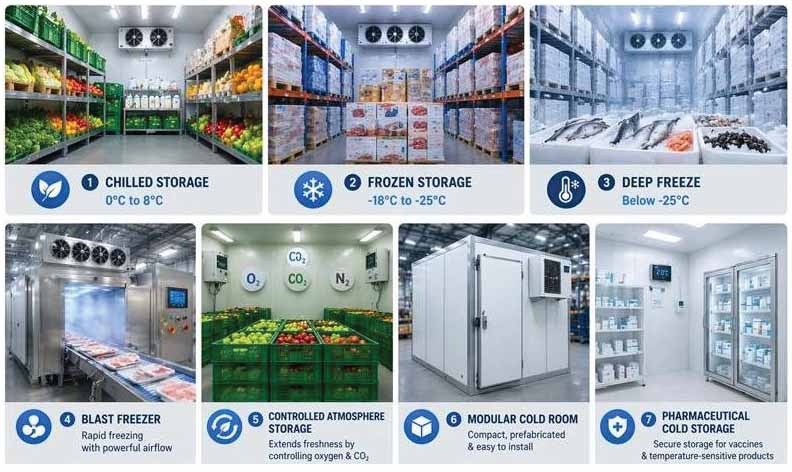
In the chemical industry, cold storage systems help maintain the stability and safety of temperature-sensitive chemicals and industrial materials.
Agricultural applications include the preservation of seeds, crops, and harvested produce to reduce post-harvest losses and maintain freshness. Additionally, the logistics sector uses refrigerated warehouses and transport hubs to support cold chain operations for domestic and international distribution. With the increasing demand for global food distribution and pharmaceutical supply chains, the importance of reliable and energy-efficient cold storage infrastructure has grown significantly in recent years.
Conclusion
Cold storage facilities are essential for preserving perishable products and supporting modern industrial supply chains. HVAC systems form the backbone of these facilities by maintaining precise environmental conditions, controlling humidity, ensuring proper airflow, and improving product safety.
An efficient cold storage HVAC system requires careful design, accurate heat load calculations, proper insulation, optimized airflow distribution, and advanced control strategies. With increasing emphasis on sustainability and energy conservation, the industry is rapidly adopting environmentally friendly refrigerants, smart automation systems, and energy-efficient technologies.
As global demand for food preservation, pharmaceutical storage, and refrigerated logistics continues to grow, the role of advanced HVAC systems in cold storage applications will become even more significant. Future developments in automation, AI-driven optimization, and green refrigeration technologies are expected to further improve the efficiency, reliability, and sustainability of cold storage facilities worldwide.

Dipanwita Samaddar is a Subject Matter Expert – HVAC from ZURU Tech India Pvt. Ltd.