
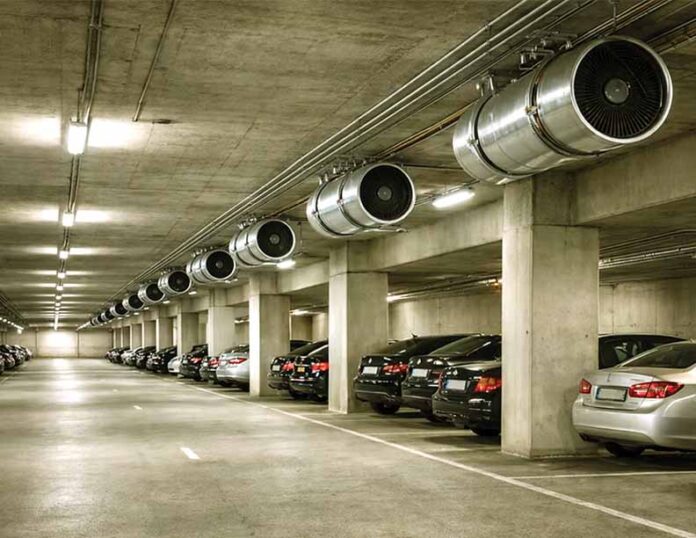
Basement car parks in high-rise buildings present unique challenges in maintaining air quality and ensuring fire safety. These enclosed spaces are prone to accumulating hazardous gases like Carbon Monoxide (CO) from vehicle emissions and can quickly fill with smoke during a fire.
Effective ventilation systems are crucial for mitigating the above-mentioned risks, protecting occupants, and facilitating safe evacuation.
The Critical Need for Ventilation
Basement car parks, by their nature, have limited natural ventilation. The lack of airflow leads to the build-up of pollutants, primarily CO, which is a colourless, doorless, and highly toxic gas produced by the incomplete combustion of fuel in vehicle engines. The primary goal is to remove harmful pollutants like Carbon Monoxide (CO), Nitrogen Oxides, and Volatile Organic Compounds (VOCs) emitted by vehicles, as well as to manage heat buildup and clear smoke in case of fire. Poor ventilation can lead to dangerous CO levels, which can cause health issues ranging from headaches to death.
Even low concentrations of CO can cause headaches, dizziness, and nausea, while higher concentrations can lead to loss of consciousness and death. Unlike above-ground or open-sided parking, basement car parks always require mechanical ventilation systems due to their enclosed nature and lack of natural airflow.
In the event of a fire, the situation becomes even more critical. Smoke, heat, and toxic gases can rapidly accumulate in the confined space, creating a life-threatening environment for anyone trapped inside. Smoke obscures visibility hinders evacuation efforts and can quickly incapacitate occupants.
Therefore, a well-designed and properly functioning ventilation system is not merely a convenience but a critical life safety system in basement car parks. It serves two primary purposes:
- Maintaining Acceptable Air Quality: Controlling CO levels and removing other pollutants to ensure a safe and healthy environment for occupants.
- Smoke Control During Fires: Extracting smoke and heat to improve visibility, facilitate evacuation, and assist firefighters in locating and extinguishing the fire.
Components of a Basement Car Park Ventilation System
A comprehensive basement car park ventilation system typically comprises several key components working in concert:
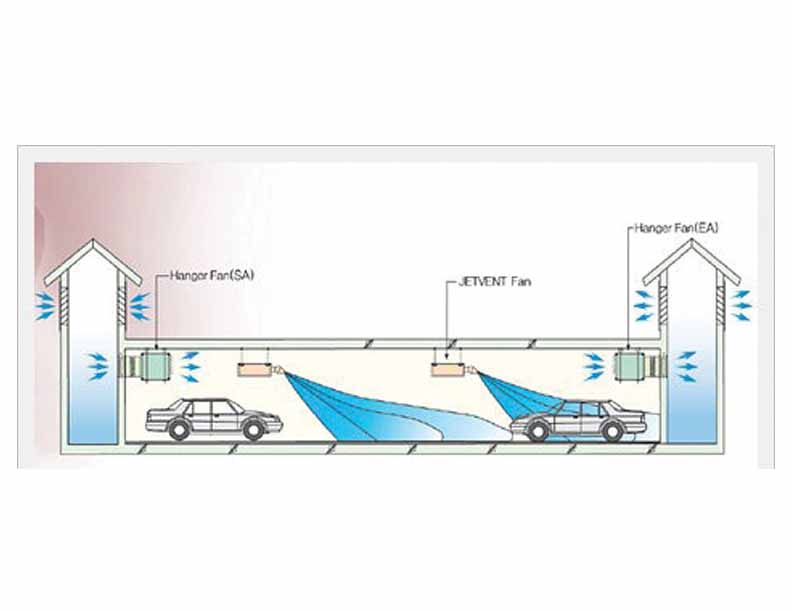
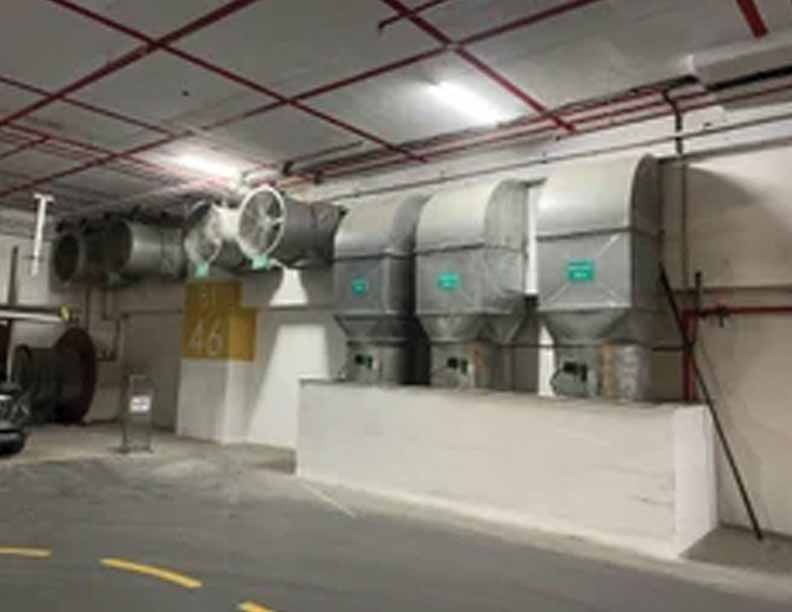
- Fresh Air Fans: These fans draw fresh air from outside the building and supply it into the car park. The fresh air dilutes the concentration of pollutants, providing a healthier environment for occupants. The strategic placement of fresh air inlets is crucial to ensure effective distribution of clean air throughout the space.
- Exhaust Air Fans: Exhaust fans extract contaminated air from the car park and discharge it outside the building. These fans are essential for removing CO and other pollutants generated by vehicle emissions. The exhaust fan system should be designed to effectively capture and remove pollutants from all areas of the car park, paying particular attention to areas with high traffic density or limited natural ventilation.
- Jet Fans: Jet fans are ceiling mounted fans that create a directed airflow within the car park. Unlike ducted systems, jet fans do not rely on ductwork to distribute air. Instead, they use high-velocity air streams to induce airflow and push contaminated air towards the exhaust fans.
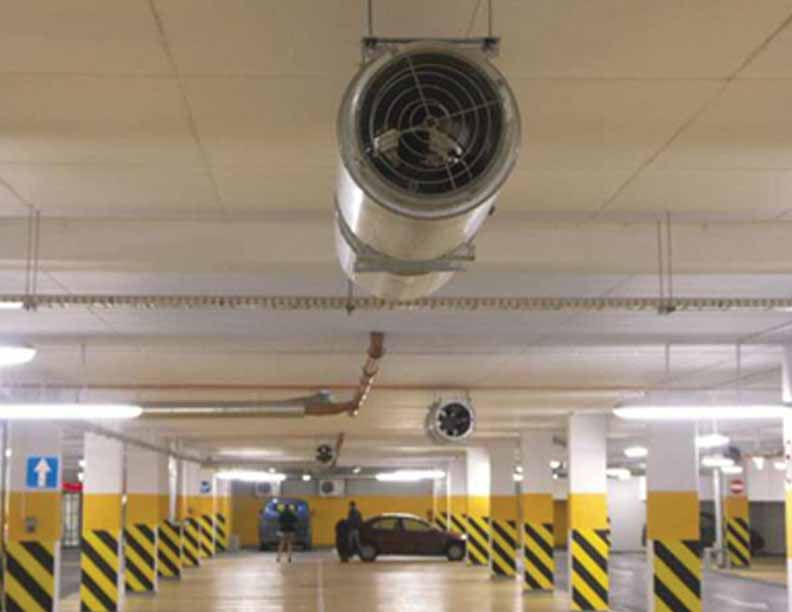
Jet Fans Set-up… Jet fans are particularly effective in large, open car parks where they can improve air circulation and prevent the formation of stagnant zones. They also play a vital role in smoke control during a fire, directing smoke towards the exhaust points.
- Control Panels (PLCs): Programmable Logic Controllers (PLCs) manage the entire ventilation system. They receive input from CO sensors and fire alarms, then intelligently control the fans to maintain air quality and respond to emergencies.
- Fire-Resistant Components: In the event of a fire, the ventilation system must remain operational to extract smoke. This requires fire-resistant materials for fans, ductwork, and electrical cables.
- Operating Modes: Normal Ventilation vs Fire Mode:- A well-designed ventilation system will have different operating modes to address the distinct requirements of normal day-to-day operation and fire emergencies.
- Normal Ventilation: During normal operation, the ventilation system operates to maintain acceptable air quality by controlling CO levels. 6 ACPH is acceptable during normal operation in underground car parks. This typically involves continuous or intermittent operation of the fresh air and exhaust air fans, based on CO sensor readings. The system may adjust fan speeds to optimize energy efficiency while maintaining air quality standards. Jet fans may also operate continuously or intermittently to enhance air circulation and prevent pollutant build-up.
- Fire Mode: Ventilation systems play a critical role in fire scenarios by extracting smoke to maintain clear escape routes for occupants and aid firefighters. This often involves higher air change rates during emergencies. In the event of a fire, the ventilation system switches to fire mode to extract smoke and heat. This typically involves activating all exhaust fans at full speed to maximize smoke extraction.
Maximum up to 30 ACPH should be considered for fire emergencies. The fresh air fans may be shut down or operated at a reduced speed to prevent the fire from being fuelled by the incoming air. Jet fans play a critical role in directing smoke towards the exhaust points, creating clear pathways for evacuation and assisting firefighters in locating the source of the fire. Fire-rated dampers are essential to isolate the fire zone and prevent the spread of smoke to other areas of the building.
Carbon Monoxide (CO) Monitoring and Control
Continuous monitoring of CO levels is essential for ensuring the effectiveness of the ventilation system and protecting occupants’ health. CO sensors should be strategically placed throughout the car park to provide real-time readings of CO concentrations. These sensors are typically connected to a control system that automatically adjusts the ventilation system’s operating parameters to maintain CO levels within acceptable limits. When CO levels exceed a set threshold (e.g., 25 ppm normal, 125 ppm peak), the system automatically activates or adjusts fans to increase ventilation.
CO monitoring systems should be calibrated regularly to ensure accuracy. Alarm systems should be in place to alert occupants and building management if CO levels exceed pre-defined thresholds. In addition to continuous monitoring, periodic inspections and maintenance of the ventilation system are crucial to ensure its continued proper functioning.
The Role of Computational Fluid Dynamics (CFD) Analysis
CFD analysis is a powerful tool for optimizing the design of basement car park ventilation systems. CFD simulations use computer models to predict airflow patterns, temperature distribution, and pollutant concentrations within the car park. This allows engineers to evaluate different ventilation system designs and identify potential problems before construction begins. CFD analysis can be used to:
- Optimize Fan Placement: Determine the optimal locations for fresh air inlets, exhaust outlets, and jet fans to maximize air circulation and minimize pollutant concentrations.
- Evaluate Ventilation Effectiveness: Assess the ability of the ventilation system to maintain acceptable air quality under various operating conditions.
- Simulate Fire Scenarios: Predict smoke movement and temperature distribution during a fire, allowing for the design of effective smoke control strategies.
- Identify Stagnant Zones: Detect areas with poor air circulation where pollutants may accumulate.
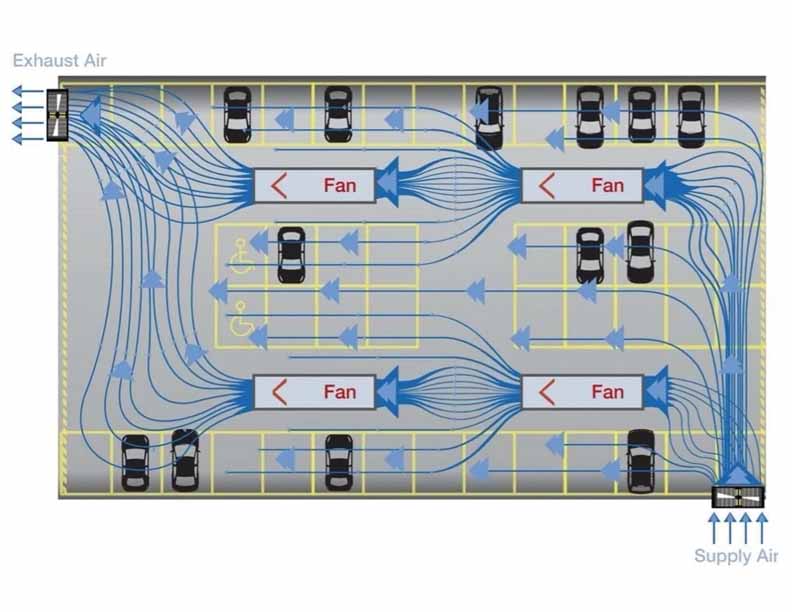
By using CFD analysis, engineers can design more efficient and effective ventilation systems that provide a safer and healthier environment in basements.
Standards and Regulations
The design and operation of basement car park ventilation systems are typically governed by local building codes and regulations. These codes often specify minimum ventilation rates, maximum allowable CO levels, and requirements for smoke control systems. It’s important to consult with local authorities and qualified engineers to ensure that the ventilation system complies with all applicable regulations. Some relevant standards include:
- ASHRAE Standard 62.1: Ventilation for Acceptable Indoor Air Quality
- NFPA 92: Standard for Smoke Control Systems
- National Building Code (NBC)
Regulations for car park ventilation aim to protect occupants from harmful vehicle emissions and ensure smoke control during fires. These often vary by country and region, but generally align with international standards:
- Carbon Monoxide Limits: Building codes, such as the National Building Code of India (NBC 2016) and ASHRAE standards, specify maximum permissible CO levels. For instance, the NBC 2016 mandates CO levels within 29 mg/cu.m (25 ppm) with peak levels not exceeding 137 mg/cu.m (125 ppm). ASHRAE recommends an 8-hour exposure limit of 25 ppm and a 1-hour exposure limit of 35 ppm.
- Air Change Rates (ACPH/ACH): These specify how many times the air in a space should be replaced per hour. For basement car parks, typical requirements range from 9 to 12 ACPH under normal conditions (often designed for 10 ACPH). In a fire emergency, this can increase significantly to around 30 ACPH for smoke clearance.
- Mechanical Ventilation Requirements: For any below-ground parking area, mechanical ventilation is mandatory. Natural ventilation is only permissible for above-ground or partially open car parks, and even then, there are strict requirements for opening sizes and distances from other buildings.
- NFPA 88A (USA): This standard from the National Fire Protection Association provides guidelines for parking structures. Recent updates emphasize the addition of mixing fans and post-fire smoke control operations.
- Demand-Controlled Ventilation (DCV): To improve energy efficiency, many regulations encourage or require DCV systems, where fan operation is linked to real-time CO levels and occupancy, rather than running at a constant maximum rate.
Maintenance and Inspection
Regular maintenance and inspection are crucial for ensuring the continued proper functioning of the ventilation system. A comprehensive maintenance program should include:
- Regular Inspection of Fans: Check for damaged blades, loose connections, and unusual noise or vibration.
- Motor Maintenance: Lubricate motors according to manufacturer’s recommendations.
- CO Sensor Calibration: Calibrate CO sensors regularly to ensure accuracy.
- Ductwork Inspection: Inspect ductwork for leaks and damage.
- Testing of Fire Mode Operation: Periodically test the fire mode operation of the ventilation system to ensure that it functions correctly in the event of a fire.
Proper maintenance and inspection can help in identifying and address potential problems before they become major issues, ensuring the long-term reliability and effectiveness of the ventilation system.
Conclusion
Basement ventilation in car parks of high-rise buildings is a critical life safety system. A well-designed and properly maintained ventilation system is essential for maintaining acceptable air quality, controlling CO levels, and extracting smoke during a fire.
By incorporating fresh air fans, exhaust fans, and jet fans, and by utilizing CFD analysis to optimize system design, building owners and engineers can create a safer and healthier environment for occupants in basements.
Regular maintenance, adherence to relevant standards and regulations, and continuous CO monitoring are crucial for ensuring the long-term effectiveness of the ventilation system.
Investing in a robust and reliable ventilation system is an investment in the safety and well-being of everyone who uses the car park. The integration of smart technologies, such as automated monitoring and control systems, will further enhance the performance and efficiency of these vital systems in the future.

G.J.Jiwani is a post graduate mechanical engineer (Thermal Engineering) from IIT Delhi, a fellow of Institution of Engineers (India) and a chartered engineer. He pursued his career as an HVAC consultant since 1985 onwards in the Vidarbha region. He is regarded as a prominent icon for ventilation systems and evaporative cooling systems. He is the Founder President of ISHRAE Nagpur chapter. He has been conferred with Lifetime Service Award and honoured with the title Chapter President Emeritus by ISHRAE.