
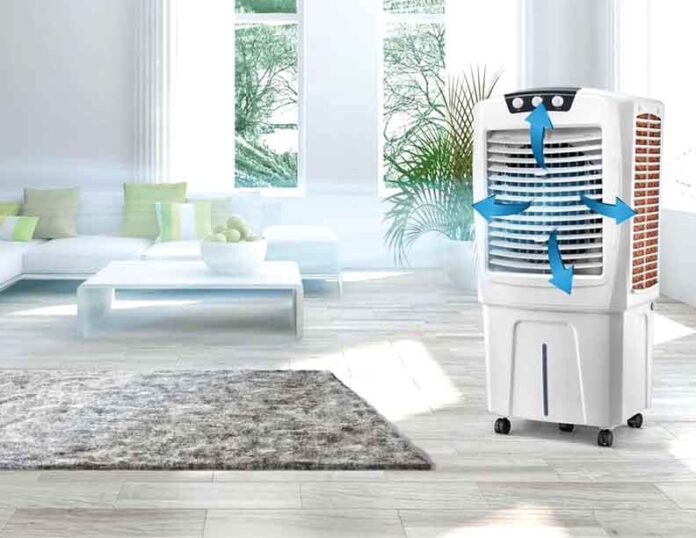
The summer season presents significant challenges across most regions of the Indian subcontinent. While air conditioners are widely used in Indian households, they remain expensive to purchase and operate. Additionally, their high-power consumption makes them environmentally unsustainable and increases energy expenses substantially. In areas with notably low relative humidity during summer months, evaporative air-cooling systems are recommended as a preferable alternative to conventional air conditioners, offering advantages in terms of initial capital cost, hygiene, maintenance, and energy efficiency.
These systems play a crucial role in providing continuous, natural, and energy-efficient indoor cooling. Constructing a truly sustainable evaporative air-cooling system requires careful design considerations and seamless integration of components. Technical specifications such as airflow rates, media selection, and water quality can significantly impact performance. Overlooking these factors may reduce system efficiency and shorten operational lifespan. Failure to address seemingly minor details can often lead to critical failures, including reduced cooling effectiveness, premature wear of equipment, and decreased durability.
An evaporative air-cooling system comprises several key components: a fan, a heat exchange medium, a water sump/basin, and an integrated water pump housed within the cabinet structure. The system primarily employs cooling media such as cellulose pads or woodwool, which serve the dual function of water retention and provide substantial surface area for evaporation. As outdoor dry air passes through these saturated media, water evaporation occurs, effectively cooling the air. The media’s primary role is to facilitate efficient heat exchange in low-humidity environments by transferring the absorbed water’s cooling effect to the passing airstream.
This cool air is then distributed throughout space via the system’s fan. The water pump maintains continuous operation by drawing water from the sump and distributing it across the media’s upper surface, ensuring consistent saturation. When activated, the system’s high-capacity fan forces air through the moistened media, initiating the evaporation process that produces cooled, humidified air. This conditioned air is subsequently discharged into the interior space, thereby lowering the ambient temperature.
A primary consideration involves selecting the appropriate cooling medium. Evaporative air-cooling systems utilise various cooling media, each with distinct characteristics. Pad selection and choosing pads with the right thickness, material, and wetting characteristics for local climate conditions are highly crucial. Prior to finalising a decision, several key factors must be evaluated, beginning with an understanding of the fundamental differences between these options. This knowledge ensures informed selection and prevents incompatible substitutions within the same system.
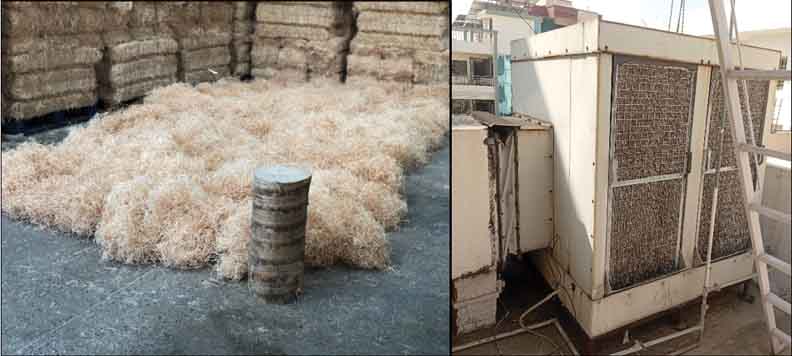
Wood wool cooling pads derive their name from their composition of fine wood fibers. These pads consist of wood shavings with a texture similar to dried grass or silage. The specialised structure of wood fibers enables efficient water absorption, facilitating the conversion of hot, dry air into cool, moist air for effective temperature reduction.
Notably, wood wool cooling pads deliver reliable cooling performance, representing one of their most beneficial characteristics. A primary advantage of wood wool cooling pads is their cost-efficiency, contributing to overall system affordability. Additionally, these pads emit a naturally refreshing fragrance, reminiscent of rain on warm summer days, further enhancing the cooling experience.
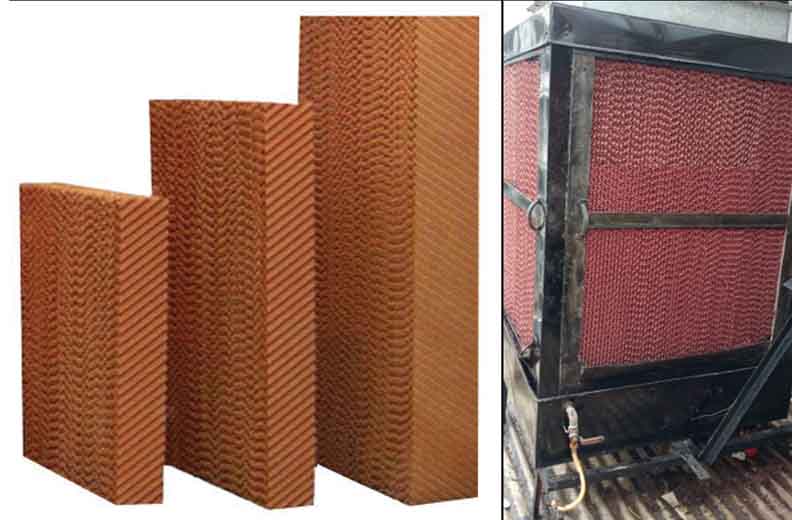
Honeycomb cooling pads derive their name from their structural resemblance to bee honeycombs. These synthetic pads are constructed from dense cellulose paper and feature specialised moisture-retention chambers designed to efficiently convert hot air into cool, humid air by retaining chilled water for prolonged durations. Their honeycomb configuration maximises surface area for evaporation, facilitating rapid and highly effective cooling over expansive areas.
Consequently, these pads are frequently employed in conjunction with centrifugal fans. The pairing with centrifugal fans is necessitated by the significant static pressure drop inherent to cellulose pads. This pressure drops correlates directly with pad thickness—greater thickness yields higher pressure reduction. Optimal cellulose pad thickness is determined by desired cooling efficiency specifications, as well as flute dimensions within the honeycomb structure. The thickness of the cooling pads is another important component that significantly impacts the cooler’s cooling performance. Thicker pads have a larger surface area, resulting in higher evaporation and overall cooling.
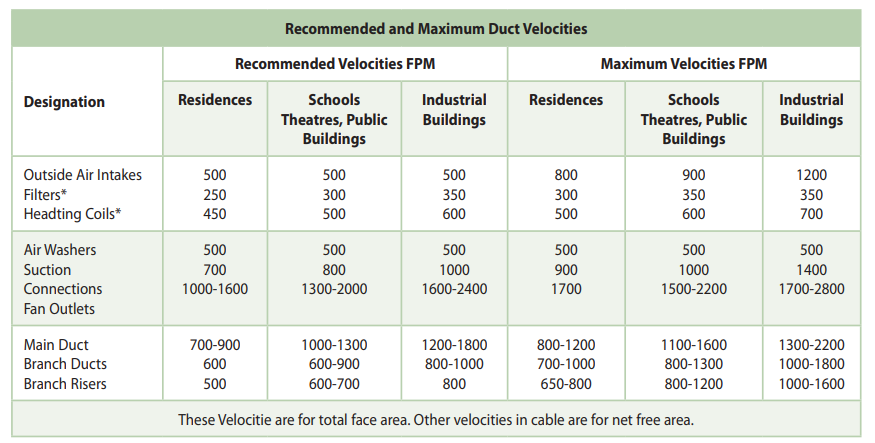
The selection of fan is another crucial aspect as the fan is responsible to the volume of air to be delivered, by overcoming the pressure drop offered by various elements in the air flow transit. In addition to the delivery of the air volume, the velocity at which the air is propagated also matter. Proper fan sizing and duct design ensure uniform distribution of cooled air and prevent hot spots.
A critical factor in system efficiency is the accurate regulation of air velocities across six distinct operational stages, as inaccuracies can result in performance degradation and system instability. Face velocity should be matched to pad type and system layout. Too fast cause the cooling to drops. Too slow rise the risk of high humidity and microbial growth. Additionally, the evaporative medium must be carefully matched to the fan type to ensure optimal airflow compatibility. For example, wood wool mediums perform best with axial fans, while cellulose pads which exhibit higher pressure drops require the enhanced capabilities of centrifugal fans.
The recommended air intake velocity (face velocity) for wood wool cooling pads typically ranges from 2.2 to 4.4 meters per second (m/s), contingent upon design specifications and performance requirements. Reduced air velocities generally enhance cooling efficiency by allowing extended contact time for heat and mass transfer (evaporation) through the wet media.
Research indicates peak efficiency occurs at approximately 2.2 m/s for certain materials. While elevated air velocities can improve total cooling capacity (heat removal rate), they may reduce saturation efficiency – the degree to which air approaches 100% relative humidity. Higher velocities combined with increased media thickness result in greater pressure differentials across the cooling matrix, necessitating more robust fan systems to sustain proper airflow.
Optimal velocity parameters are influenced by the structural configuration, material properties, porosity characteristics, and thickness of wood wool media. Commercial air cooler designs typically optimise operational parameters to achieve an effective balance between thermal performance, airflow requirements, and acoustic output. For standard residential evaporative coolers utilising wood wool media, operational velocities generally fall within the specified range. Regular measurement and tuning of static pressure and flow rates keep the system operating at design capacity.
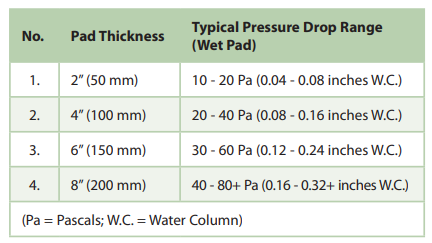
Pad designs exhibit varying pressure drop characteristics. The pressure drop across any media – such as cellulose pads – is primarily influenced by air velocity, pad geometry (including flute angle), and wet versus dry conditions. Pressure drop rises with increasing air velocity, following a squared relationship. For instance, a pad subjected to 2 m/s airflow will demonstrate significantly higher pressure drop than at 1 m/s. Media thickness also impacts resistance; thicker pads inherently create greater airflow obstruction. Additionally, pressure drop escalates with water flow rate, as wetted pads experience reduced porosity compared to dry ones. Scale accumulation on cooling media further elevates airflow resistance over time, a critical factor in pressure drop considerations.
The values provided correspond to standard commercial cellulose pads operating at recommended face velocities – typically 1 to 1.5 m/s (~200-300 FPM).
While general ranges are indicated above, precise figures require manufacturer-specific data. Consulting performance curves from the manufacturer ensures accuracy for a particular media type.
Water management is the second pillar beyond air dynamics, that cannot be overstated. Water quality, flow rate, and distribution across evaporative pads determine cooling efficiency and maintenance needs. Water quality plays a vital role in the performance and lifespan of evaporative air-cooling systems demanding utmost importance to prevent scaling and biofouling, and crucially.
Hard water or high mineral content shortens pad life and clogs distribution systems; softened or treated water extends service intervals. If the water contains hard minerals like calcium or magnesium, it can form deposits on cooling pads and components, reducing airflow and cooling capacity.
Scheduled blowdown and controlled bleed-off prevent mineral buildup and maintain steady cycles of concentration. High-quality water, free from excessive minerals, salts, and impurities, prevents scale buildup and corrosion inside the system.
Additionally, poor water quality can encourage bacterial growth, causing unpleasant odours and potential health risks. By ensuring good water quality, evaporative coolers run more efficiently, require less maintenance, and provide a clean, fresh cooling experience, making them an eco-friendly and cost-effective cooling option.
In addition to maintaining water quality, consistent water flow must be maintained for wetting of pads. Uneven wetting reduces cooling and encourages mold growth. Water use should be tracked and optimised through efficient distribution, recirculation where feasible, and leak prevention. Since, these systems rely on water evaporation to lower air temperature, so the water usage directly impacts cooling efficiency.
Air coolers are central to delivering steady, natural, and energy-efficient cooling. To keep an evaporative cooling system reliable and sustainable, operators must follow a set of clear technical parameters that govern performance, durability, and safety. Properly maintained evaporative coolers deliver cooling with far lower electrical input than conventional compressors.
Optimal performance can only be achieved through meticulous attention to all technical parameters, ensuring reliable operation within environmental constraints throughout the system’s lifecycle.
In sum, sustaining reliable evaporative cooling depends on disciplined attention to airflow control, water quality and distribution, and pad choice. When these technical parameters are respected, air coolers provide continuous, natural, and cost-effective
cooling with predictable performance and minimal environmental impact.

G J Jiwani is a post graduate Mechanical Engineer (Thermal Engineering) from IIT Delhi, a fellow of Institution of Engineers (India) and a chartered engineer. He pursued his career as an HVAC consultant since 1985 onwards in the Vidarbha region. He is regarded as a prominent icon for ventilation systems and evaporative cooling systems. He is the Founder President of ISHRAE Nagpur chapter. He has been conferred with Lifetime Service Award and honoured with the title Chapter President Emeritus by ISHRAE..