
Ventilation is one of the three fundamental pillars of HVAC (Heating, Ventilation, and Air Conditioning). While heating and cooling control temperature, ventilation controls air quality. Its primary role is to supply fresh outdoor air and remove stale, contaminated indoor air, ensuring healthy, safe, and comfortable indoor environments.
In modern buildings – especially hotels, malls, hospitals, offices, kitchens, and industrial facilities – proper ventilation is not optional. It is a code-mandated, health-critical system that directly impacts occupant comfort, productivity, equipment life, and regulatory compliance.
Ventilation systems in HVAC are essential for delivering fresh air, removing contaminants, and maintaining indoor air quality across residential, commercial, and industrial applications.
Core Purpose
HVAC ventilation ensures controlled airflow to dilute pollutants, control humidity, and prevent stagnation while integrating with heating and cooling processes. These systems exchange stale indoor air with filtered outdoor air, critical for occupant health and equipment efficiency in spaces like offices, hospitals, and factories.
Key Components
Ventilation relies on interconnected elements working together.
- Air Handling Units (AHUs): Central units containing fans, filters, heating/cooling coils, and dampers to condition and distribute air through ductwork.
- Fans and Blowers: Centrifugal (forward/backward curved) or axial fans generate airflow; AMCA-certified models ensure certified performance for specific CFM requirements.
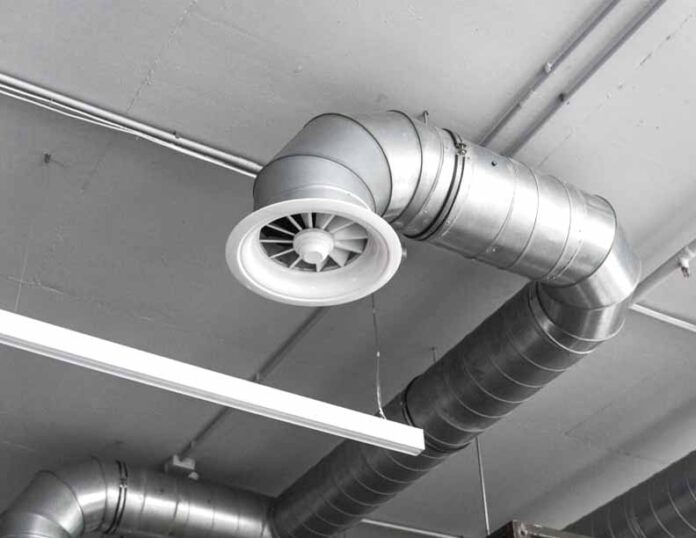
- Ductwork: Galvanised steel or insulated flexible ducts transport air; proper sizing prevents pressure loss and noise.
- Filters: Pre-filters, HEPA, or bag filters capture dust, VOCs, and microbes; MERV ratings determine efficiency.
- Dampers: Volume control, fire, or smoke dampers regulate airflow and ensure safety during emergencies.
- Exhaust Systems: Kitchen exhausts, lab fume hoods, or toilet extractors remove contaminated air; wet scrubbers enhance pollutant capture in industrial settings.
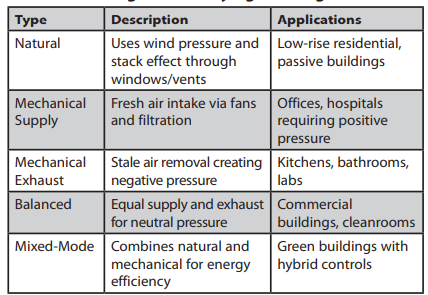
Types of Ventilation
Different strategies suit varying building needs
Ventilation Equipment
Specialised units handle demanding environments.
Air Washers
- Function: Wash incoming air with water sprays over cellulose pads for cooling, humidification, and particulate removal.
- Capacity: 10,000-50,000 CFM typical; 50 mm WG static pressure.
- Components: DIDW fans, recirculation pumps, drain pans, mist eliminators.
- Wet Scrubbers
- Function: Capture fumes, odours, and grease via water scrubbing for kitchen/industrial exhaust.
- Efficiency: 95%+ particulate removal; PVC media prevents re-entrainment.
- Features: SS-304 sumps, multi-bank nozzles, 1.5-3 HP pumps.
Design Calculations
Proper sizing prevents under/over-ventilation.
Air Changes per Hour (ACH):
ACH = CFM × 60 / Room Volume (cu.ft.)
- Outside Air Requirement: ASHRAE 62.1 standards specify 5-20 CFM/person + 0.06-0.12 CFM/sq.ft.
- Static Pressure: Total system resistance (ducts + filters + coils) determines fan selection.
- Velocity: Supply ducts 800-1200 FPM; return 400-600 FPM for quiet operation.
Standards and Compliance
- ASHRAE 62.1: Minimum ventilation rates for acceptable IAQ.
- SMACNA: Duct construction and leakage standards.
- NBC India: Ventilation for different occupancy types.
- Energy Conservation Building Code (ECBC): Energy-efficient ventilation mandates.
Advanced Technologies
Modern systems incorporate:
- Variable Frequency Drives (VFDs): Match fan speed to demand, saving 30-50% energy.
- CO2 Sensors: Demand-controlled ventilation activates at 800-1000 ppm.
- Heat Recovery Ventilators (HRVs): Recover 70-85% sensible heat from exhaust air.
- BMS Integration: Centralised monitoring of airflow, pressure, and IAQ parameters.
Maintenance Best Practices
Regular upkeep ensures performance.
- Filter Replacement: Monthly inspection; change per pressure drop (0.5” WG).
- Belt Tension: Check quarterly; replace cracked belts.
- Duct Cleaning: Annual for commercial; every 3-5 years residential.
- Fan Balancing: Vibration analysis detects imbalance early.
- Water Treatment: Air washers/scrubbers require biocide dosing to prevent legionella.
Effective HVAC ventilation balances air quality, energy use, and comfort, making it foundational to modern building design and operation.

Driving operational excellence in the HVAC sector, Aman Taluja is a pivotal professional at Brightflow Engineers Pvt. Ltd. Kundli, Haryana-based leader in manufacturing Air Handling Units, Evaporative Cooling Units, Dry Scrubbers, and Fan Coil Units. Aman’s impressive track record spans successful installations for prestigious clients such as NTPC Dadri, Deloitte Gurugram, Le Meridien Hyderabad, Marriott Amritsar, and GAIL Dibiyapur. His profound expertise in crafting superior air management solutions underscores a steadfast commitment to elevating indoor air quality and optimising operational efficiency.