
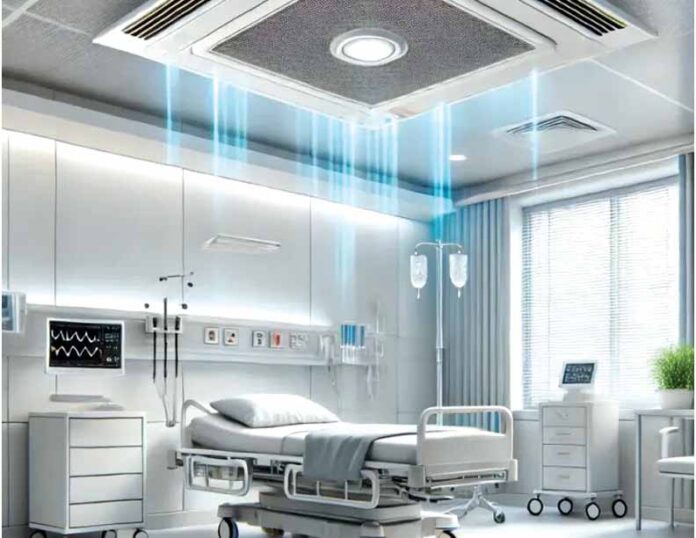
Indoor Air Quality (IAQ) is a critical determinant of safety, recovery, and operational efficiency in healthcare facilities. Unlike conventional buildings, hospitals and clinics must continuously manage airborne pathogens, chemical pollutants, and particulate matters while supporting vulnerable patients with compromised immune systems. A well-designed healthcare air filtration system is therefore not merely a comfort feature, it is a life-safety system.
With increasing awareness of airborne disease transmission, antimicrobial resistance, and post-pandemic preparedness, healthcare air filtration systems have evolved from simple mechanical filters to multi-layered, intelligent, and performance-verified systems. This article explores traditional foundations, regulatory requirements, and advanced air filtration technologies shaping modern healthcare environments.
Importance of Infiltration at Health Care Facilities
Air filtration in healthcare facilities plays a decisive role in infection control, patient safety, clinical outcomes, and operational continuity. Unlike residential or commercial buildings, hospitals function as high-risk environments where airborne contaminants can directly contribute to disease transmission, treatment complications, and even mortality. The importance of air filtration in such settings extends far beyond comfort – it is an essential component of medical care and public health protection.
Control of Airborne Infection Transmission
One of the primary functions of healthcare air filtration systems is the reduction of airborne transmission of infectious agents. Many pathogens responsible for Hospital-Acquired Infections (HAIs) are transmitted through aerosols or droplet nuclei that remain suspended in air for extended periods.
High-efficiency filtration, particularly HEPA filtration, removes these microscopic particles before they can spread between patients, healthcare workers, and visitors.
Protection of Immunocompromised Patients
For these patients, even low concentrations of airborne microorganisms can cause serious or fatal infections. High-grade air filtration systems create protective environments by maintaining ultra-clean air with minimal microbial load.
In areas such as bone marrow transplant units, HEPA-filtered air combined with controlled pressure differentials is considered a standard of care, not an optional feature.
Reduction of Hospital Acquired Infection
Advanced air filtration systems reduce the concentration of airborne bacteria and particulates that may settle on surgical instruments, open wounds, or sterile surfaces. Studies have demonstrated that operating rooms with properly designed HEPA-filtered airflow systems show significantly lower Surgical Site Infection (SSI) rates.
Effective air filtration in healthcare facilities supports faster patient recovery and overall comfort by reducing fine particulates, allergens, and chemical pollutants that can aggravate respiratory conditions and delay healing. It also protects healthcare staff and visitors from continuous exposure to airborne pathogens and harmful fumes, helping reduce illness, absenteeism, and occupational health risks.
In addition, advanced filtration systems control gaseous contaminants from anaesthetics, disinfectants, and laboratory chemicals, creating a safer indoor environment. Proper air filtration is essential for meeting regulatory and accreditation requirements set by health and building authorities, while also strengthening preparedness for pandemics and emerging airborne diseases. When integrated with modern HVAC design and smart monitoring, these systems further contribute to energy-efficient, resilient, and sustainable hospital operations.
Types of Air Filters Used
Air filters used in healthcare facilities are specifically designed to meet strict requirements for infection control, patient safety, and regulatory compliance. Unlike standard commercial buildings, hospitals and clinical environments require multi-stage filtration systems capable of removing particulates, microorganisms, and gaseous contaminants from the air. The selection and arrangement of these filters depend on the function of the space, risk level, and applicable standards such as ASHRAE 170, CDC, WHO, and NABH guidelines.
Healthcare air filtration typically follows a layered or staged approach, combining different filter types to achieve high air cleanliness while maintaining system efficiency.
Pre Filters
Pre-filters serve as the first line of defence in healthcare HVAC systems by capturing large airborne particles such as dust, lint, hair, and coarse debris before the air reaches higher-efficiency filters. Typically classified as MERV 6–8, these filters are installed at Air Handling Unit (AHU) inlets to protect downstream fine and HEPA filters from premature loading, thereby extending their service life and reducing maintenance frequency and operational costs. Pre-filters are commonly used in general wards, outpatient areas, and administrative zones and are an essential first-stage filtration component in all hospital AHUs.
HEPA Filters
HEPA (High-Efficiency Particulate Air) filters are the backbone of healthcare air filtration systems because they provide a quantified and verifiable level of air cleanliness essential for infection control. Technically, HEPA filters are designed and tested to remove 99.97% of airborne particles ≥0.3 microns, which represents the most penetrating particle size making this efficiency a conservative and reliable benchmark. Filtration occurs through a combination of interception, inertial impaction, diffusion, and electrostatic attraction, allowing HEPA filters to effectively capture bacteria-laden droplets, fungal spores, fine particulate matter, and virus-carrying aerosols.
In healthcare HVAC systems, HEPA filters are typically classified and certified in accordance with EN or ISO standards, and their performance is validated through test to ensure zero leakage at the filter frame and gasket interfaces. Due to their relatively high pressure drop, HEPA filters are installed downstream of pre-filters and fine filters to optimise airflow performance and extend filter life. They are commonly integrated within terminal housings, ceiling-mounted laminar airflow diffusers, or dedicated HEPA filter boxes to achieve uniform air distribution and controlled air cleanliness levels.
HEPA filtration is mandatory in critical healthcare areas where airborne contamination poses a severe risk, including operating theatres, where they support unidirectional or laminar airflow to minimise surgical site infections; Intensive Care Units (ICUs) and Neonatal ICUs (NICUs), where immunocompromised patients require ultra-clean air; isolation and transplant rooms, where HEPA filters are combined with pressure differentials to prevent cross-contamination; and pharmaceutical preparation and compounding areas, where strict particulate control is necessary to meet sterility and regulatory requirements. When properly designed, installed, and maintained, HEPA filters function as a cornerstone of hospital infection control strategy, ensuring both patient safety and regulatory compliance.
Activated Carbon Filter
Activated carbon filters play a critical complementary role in healthcare air filtration systems by addressing contaminants that particulate filters such as HEPA cannot remove. While HEPA filters are highly effective against solid and biological particles, they are incapable of capturing gaseous pollutants and chemical vapours. Activated carbon filters are specifically engineered for gas-phase filtration, using highly porous carbon media with an extremely large internal surface area to adsorb harmful gases through physical and chemical adsorption mechanisms. These filters are effective in removing Volatile Organic Compounds (VOCs), anesthetic gases, formaldehyde, disinfectant fumes, ethylene oxide, and unpleasant odours, all of which are commonly present in healthcare environments.
From a technical standpoint, activated carbon filters may be manufactured in granular, pelletised, or impregnated carbon formats, with media selection based on the target contaminant, concentration, and required removal efficiency. Impregnated carbons are often used in hospitals to enhance adsorption of specific chemicals such as acidic or alkaline gases. Performance is governed by parameters such as carbon type, bed depth, dwell time, airflow velocity, and relative humidity, and these filters are typically installed downstream of particulate pre-filters to prevent dust loading that would reduce adsorption capacity. Unlike mechanical filters, activated carbon filters do not have a fixed efficiency rating; instead, their effectiveness is measured by breakthrough time and adsorption capacity, requiring careful design and periodic replacement.
Activated carbon filtration is widely used in operation theatres, where anaesthetic gases must be controlled; laboratories and pathology departments, where chemical vapours are generated; sterilisation and disinfection areas, where ethylene oxide and cleaning chemicals are present; and pharmaceutical preparation spaces, where chemical purity and odour control are essential. When integrated with HEPA filtration and properly maintained, activated carbon filters significantly improve indoor air quality, protect healthcare staff and patients from chemical exposure, and support compliance with healthcare ventilation and safety standards.
Filtration Matrix
The filtration performance matrix is a comprehensive technical tool used in the design, selection, and evaluation of air filtration systems in healthcare facilities, where air quality directly impacts patient safety and infection control. Rather than assessing filters based solely on nominal efficiency, the performance matrix evaluates a range of interrelated parameters that collectively determine how effectively a filter performs under real operating conditions. Key parameters include particle removal efficiency across defined size ranges (as measured by standards such as ASHRAE 52.2), with particular attention to the most penetrating particle size, which is critical for healthcare applications. The matrix also assesses initial and final pressure drop, as pressure resistance directly influences fan energy consumption, airflow stability, and system sizing.
In addition, the filtration performance matrix incorporates dust-holding capacity and loading behaviour, which determine filter service life and replacement intervals – important factors in hospitals where maintenance activities must be minimised to avoid disruption and contamination. Airflow uniformity, filter leakage, sealing integrity, and compatibility with housing systems are also evaluated, especially for HEPA and ULPA filters that require integrity testing to verify zero bypass. For healthcare-specific applications, the matrix may further include gas-phase removal efficiency for activated carbon filters, resistance to microbial growth, and compliance with regulatory standards such as ASHRAE 170, EN, ISO, NABH, and WHO guidelines.
Energy performance and lifecycle cost analysis form another critical dimension of the matrix, linking filtration efficiency to operational energy use, maintenance frequency, and total cost of ownership. By integrating all these parameters into a single decision-making framework, the filtration performance matrix enables engineers and healthcare planners to select filter combinations that achieve the required level of air cleanliness and infection control while maintaining system reliability, energy efficiency, and long-term sustainability in healthcare environments.
Application
Filtration requirements in healthcare facilities vary significantly depending on the function of the space, level of infection risk, and patient vulnerability. To ensure effective infection control and regulatory compliance, healthcare HVAC systems are designed using a space-specific filtration strategy, as defined by standards such as ASHRAE 170, WHO, NABH, and HTM guidelines. Rather than applying a single filter type across the entire facility, hospitals implement graduated filtration levels that increase in efficiency as the criticality of the space increases.
General areas such as lobbies, corridors, waiting rooms, and administrative offices typically require two-stage filtration, consisting of coarse pre-filters followed by fine filters (MERV 11–13). This level of filtration is sufficient to control dust, outdoor pollutants, and general particulate matter while maintaining energy efficiency and acceptable indoor air quality for occupants.
Patient care areas, including general wards and inpatient rooms, require enhanced protection to limit airborne contaminants that may affect recovery. These spaces commonly use pre-filters combined with high-efficiency fine filters (MERV 13–14) to reduce fine particulates and bioaerosols. In some facilities, localised HEPA filtration may be added for high-risk patients.
Critical care spaces such as Intensive Care Units (ICUs), Neonatal ICUs (NICUs), and High Dependency Units (HDUs) demand a higher level of air cleanliness due to immunocompromised patients and invasive medical procedures. These areas typically require HEPA-filtered supply air, delivered either through terminal HEPA housings or centralised systems with strict sealing and integrity testing. Filtration in these spaces is often combined with precise airflow control and pressure differentials to prevent cross-contamination.
Operation theatres represent the most stringent filtration environments within hospitals. They require multi-stage filtration culminating in terminal HEPA filters, often integrated with laminar or unidirectional airflow systems to minimise surgical site infections. The filters must meet EN or ISO standards and undergo routine integrity testing. Exhaust air may also be HEPA-filtered, particularly in surgery involving infectious patients.
Isolation rooms, both airborne infection isolation rooms (negative pressure) and protective environment rooms (positive pressure), rely heavily on filtration to control pathogen spread. Supply air is typically HEPA-filtered, while exhaust air is also HEPA-filtered before discharge to the atmosphere, ensuring that infectious particles are not released into adjacent spaces or the external environment.
Laboratories, pharmacies, and pharmaceutical preparation areas require specialised filtration depending on the nature of activities performed. HEPA filtration is often mandatory to maintain sterile conditions, while activated carbon or gas-phase filters are added where chemical vapours, anesthetic gases, or disinfectants are present. In compounding pharmacies and cleanrooms, filtration may approach ULPA-level performance.
Support and service areas, such as sterile processing departments, imaging rooms, and waste handling zones, require tailored filtration strategies that balance contamination control with operational efficiency. These areas often use fine filters combined with localised HEPA filtration where contamination risk is elevated.
Filtration requirements in healthcare facilities are space-driven and risk-based, escalating from basic particulate control in non-clinical areas to ultra-high-efficiency filtration in critical and sterile environments. Properly matching filtration levels to healthcare space functions is essential to ensure patient safety, regulatory compliance, and efficient hospital operation.
Integration with HVAC System
The integration of air filtration systems with HVAC (Heating, Ventilation, and Air Conditioning) systems is a critical aspect of healthcare facility design, as it directly influences infection control, indoor air quality, energy efficiency, and regulatory compliance. In healthcare environments, filters are not standalone components; they are carefully engineered as part of a fully integrated HVAC system that controls airflow, pressure relationships, temperature, and humidity in a coordinated manner.
Healthcare HVAC systems typically employ a multi-stage filtration strategy integrated within Air Handling Units (AHUs). Coarse pre-filters are installed at the AHU air intake to remove large particles and protect downstream components, followed by fine filters that capture smaller particulates and improve overall air cleanliness. In critical areas, HEPA filters are integrated either centrally within the AHU or as terminal filters at the point of air supply, ensuring that highly filtered air is delivered directly into sensitive spaces. Proper filter placement is essential to minimise bypass leakage and maintain consistent filtration performance across varying airflow conditions.
Integration also involves careful coordination between filtration and airflow management. HVAC systems are designed to maintain prescribed Air Change Rates (ACH) and pressure differentials – such as positive pressure in operation theatres and protective isolation rooms, and negative pressure in airborne infection isolation rooms. Filters must be selected with appropriate pressure drop characteristics so that airflow rates and pressure relationships are maintained throughout the filter lifecycle without overloading fans or compromising system stability.
From a control and monitoring perspective, modern healthcare HVAC systems integrate filtration performance into Building Management Systems (BMSs). Differential pressure sensors across filters monitor loading conditions, enabling predictive maintenance and timely replacement before performance degradation occurs.
Filtration integration also extends to energy and sustainability considerations. High-efficiency filters increase resistance to airflow, so HVAC systems must be designed with energy-efficient fans, Variable Frequency Drives (VFDs), and optimised duct layouts to balance filtration effectiveness with energy consumption. In addition, filtration systems are coordinated with humidity and temperature control to prevent microbial growth on filters and downstream components.
Overall, the integration of air filtration systems with HVAC in healthcare facilities creates a cohesive environmental control strategy, where filtration, ventilation, pressurisation, and thermal comfort function together as a unified system. This integrated approach is essential for delivering clean, safe air, ensuring patient and staff protection, and maintaining reliable, compliant, and efficient healthcare operations.
Emerging Trends and Technologies
The integration of HVAC systems and air filtration in healthcare facilities is rapidly evolving in response to rising infection control demands, energy efficiency goals, and lessons learned from global health crises. Emerging trends focus on transforming conventional HVAC–filtration systems into intelligent, adaptive, and resilient environmental control solutions that actively support clinical safety and operational sustainability.
One of the most significant trends is the adoption of smart and sensor-driven filtration systems. Advanced HVAC systems now incorporate real-time sensors that monitor particulate concentration, differential pressure across filters, airflow rates, temperature, and humidity. When integrated with Building Management Systems (BMSs) and equivalent platforms, these sensors enable continuous performance verification, predictive maintenance, and automated alerts, ensuring that filtration efficiency is maintained without relying solely on fixed replacement schedules.
Another key development is the use of advanced filter media technologies, such as nanofiber-based filters and low-pressure-drop HEPA filters. These materials provide higher particle capture efficiency at reduced airflow resistance, allowing healthcare facilities to meet stringent air cleanliness requirements while minimising fan energy consumption. This trend directly supports the growing emphasis on energy-efficient and net-zero healthcare buildings, where filtration performance must be balanced with sustainability objectives.
The integration of hybrid air purification technologies is also gaining traction. Modern healthcare HVAC systems increasingly combine mechanical filtration with Ultraviolet Germicidal Irradiation (UVGI), Photocatalytic Oxidation (PCO), and antimicrobial surface treatments. These hybrid systems enhance pathogen inactivation, reduce microbial growth on filters and coils, and provide an additional layer of protection against airborne infections, especially in high-risk zones such as ICUs and operating theatres.
A further emerging trend is the shift toward room-level and decentralised filtration solutions. Instead of relying solely on centralised AHUs, healthcare facilities are incorporating terminal HEPA units, localised air cleaning modules, and adaptive airflow diffusers that respond to room occupancy and clinical activity. This approach improves flexibility, supports rapid space conversion during pandemics, and enhances control over pressure zoning and contamination pathways.
Digitalisation and simulation-driven design are also shaping future HVAC–filtration integration. Engineers increasingly use computational fluid dynamics (CFD), digital twins, and energy modelling tools to simulate airflow patterns, contaminant transport, and filter performance under different operating scenarios. These tools enable optimised system design, validation of infection control strategies, and data-driven decision-making throughout the building lifecycle.
Finally, there is a growing emphasis on resilient and future-ready systems. Healthcare HVAC designs now prioritise redundancy, modular filtration units, and easy retrofit capability to adapt to emerging pathogens, changing regulations, and evolving clinical needs. Filtration systems are increasingly viewed not just as mechanical components, but as active clinical safety infrastructure that must evolve alongside medical science.
In summary, emerging trends in HVAC and air filtration integration for healthcare facilities are driven by intelligence, efficiency, adaptability, and resilience. By embracing smart technologies, advanced materials, hybrid purification methods, and data-driven design, modern healthcare facilities are redefining air filtration as a proactive, technology-enabled defence against airborne health risks.
Conclusion
Air filtration systems, when effectively integrated with HVAC design, form a critical foundation for safe, efficient, and resilient healthcare facilities. As hospitals and clinical environments continue to face increasing challenges from airborne infections, chemical pollutants, and evolving regulatory requirements, filtration can no longer be treated as a passive mechanical function. Instead, it must be recognised as an essential clinical safety system that directly influences patient outcomes, staff well-being, and operational reliability.
The progression is from conventional filters to multi-stage, high-efficiency systems combined with intelligent controls, advanced materials, and hybrid purification technologies that demonstrates a clear shift toward proactive and performance-driven air quality management.

Dipanwita Samaddar is a Subject Matter Expert – HVAC from ZURU Tech India Pvt. Ltd.